The Unread Library
If you have ever bought a book knowing perfectly well that you already have a dozen unread books at home, you are not alone. The Japanese have a word for this: tsundoku — the act of acquiring books and letting them pile up without reading them. It is a behavior so common among readers that it has generated its own vocabulary, its own humor, and, increasingly, its own psychological research. Understanding why we accumulate more books than we can possibly read reveals fascinating insights about human psychology, identity construction, and the peculiar emotional relationship we have with physical objects that contain stories and ideas.
The Optimism of the Unread
At its most basic level, buying books we don't immediately read is an act of optimism. Each unread book represents a future version of ourselves — someone who will have the time, energy, and intellectual curiosity to read it. When you buy a challenging philosophy book, you're investing in the version of you who will sit down on a quiet weekend and engage with deep ideas. When you grab a novel set in a place you've never been, you're believing in a future self who will take that imaginative journey.
Psychologists call this "future self continuity" — the degree to which we feel connected to our future selves. People who feel strongly connected to their future selves tend to save more money, exercise more regularly, and, apparently, buy more books. The unread book is a promissory note to your future self, and buying it feels like an act of self-improvement even if the reading never actually happens.
This optimism bias extends to how we estimate our reading time. Studies show that people consistently overestimate how much free time they will have in the future. We know we're busy today, but we believe next month will somehow be different. This cognitive bias keeps us buying books at a rate that far exceeds our reading speed, creating ever-growing stacks of aspirational literature.
Books as Identity Objects
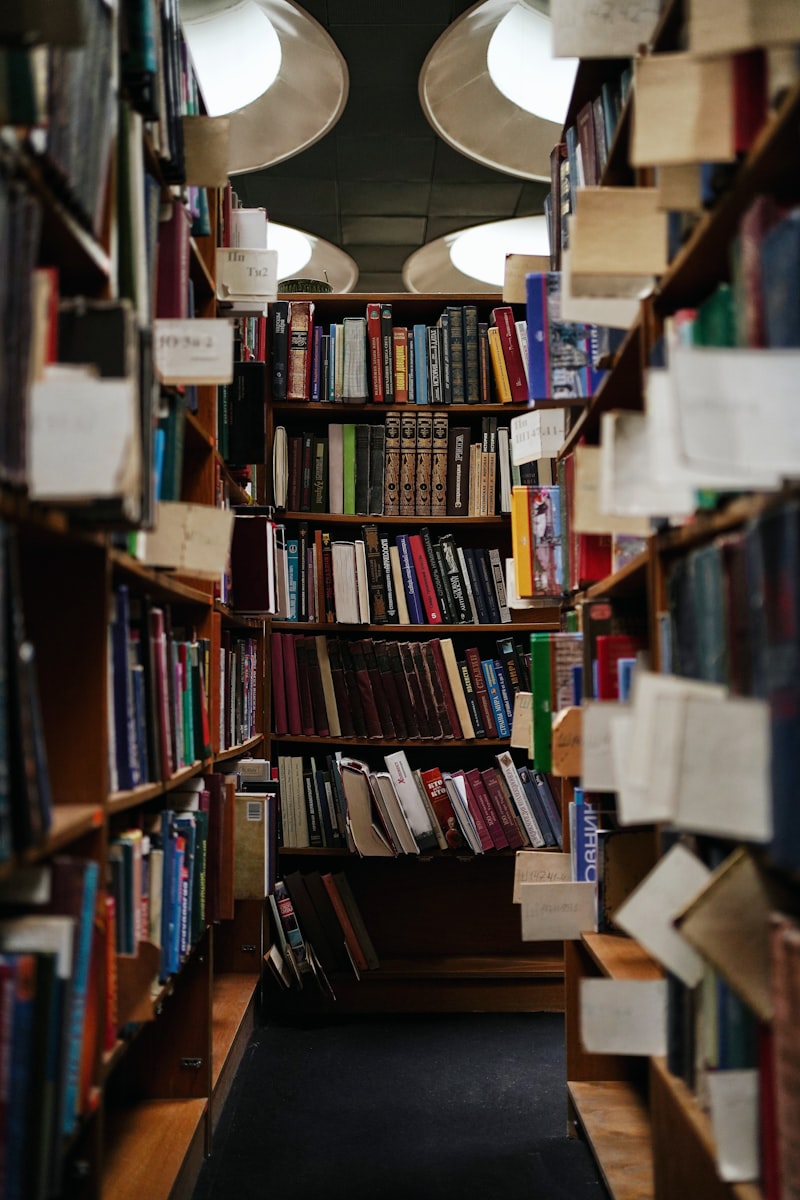
Books are unusual consumer goods in that they serve as powerful identity markers. Your bookshelf is, in a very real sense, a portrait of who you are — or who you want to be seen as. The books you display communicate your interests, values, intellectual aspirations, and aesthetic sensibilities to anyone who visits your home. This identity function means that books serve a purpose even when unread. A copy of Sapiens on your shelf signals intellectual curiosity. A well-worn copy of The Lord of the Rings declares membership in a beloved reading community.
Research in consumer psychology has shown that we form emotional attachments to objects that represent our identities, and these attachments make us reluctant to part with them even when they serve no practical function. This helps explain why many book lovers find it genuinely painful to get rid of books, even ones they know they'll never read. Discarding a book can feel like discarding a part of yourself — the part that was going to read it.
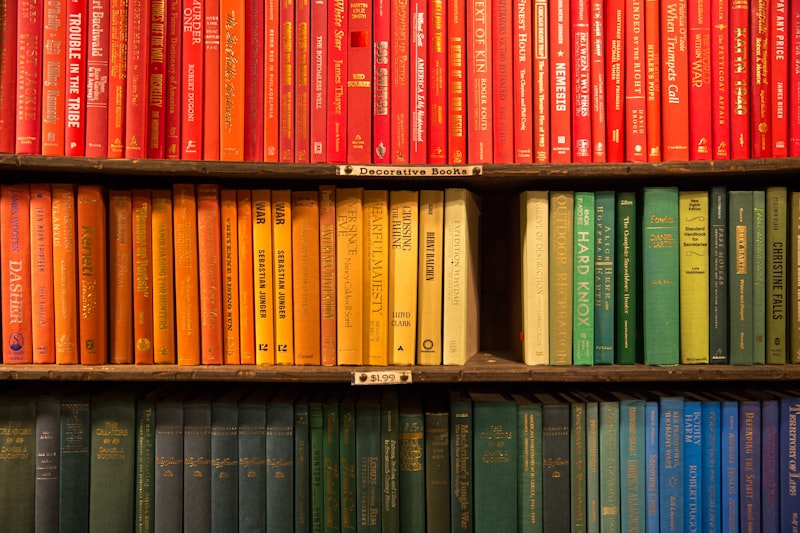
Social media has amplified the identity function of book ownership. Platforms like Instagram and TikTok have spawned entire subcultures devoted to displaying and discussing book collections. "Shelfies" — photographs of aesthetically arranged bookshelves — garner thousands of likes. The visual appeal of books as decorative objects has become an end in itself, separate from their function as things to be read.
The Collector's Impulse
For some people, book accumulation crosses from casual tsundoku into serious collecting. Bibliomania — the obsessive collecting of books — has been recognized as a behavioral condition since the early 19th century, when it was first described by Reverend Thomas Frognall Dibdin in his 1809 book The Bibliomania; or, Book-Madness.
Collecting engages the brain's reward system in powerful ways. The hunt for a desired book, the satisfaction of finding it, and the pleasure of adding it to a collection all trigger dopamine release. Collectors describe experiences remarkably similar to those reported by people addicted to shopping, gambling, or other compulsive behaviors — the anticipatory excitement, the momentary euphoria of acquisition, and the gradual return to baseline that drives the search for the next fix.
However, most book accumulation falls well short of bibliomania. For the vast majority of book buyers, acquiring more books than they can read is a harmless and even beneficial behavior. Research suggests that exposure to books — even unread ones — has positive cognitive effects. A study published in Social Science Research found that children who grew up in homes with large book collections performed better on literacy and numeracy tests, regardless of how many of those books they actually read.
The Anti-Library: Umberto Eco's Wisdom
The writer and philosopher Umberto Eco famously maintained a personal library of roughly 30,000 books. When visitors expressed amazement and asked whether he had read them all, Eco would explain that unread books are actually more valuable than read ones. A personal library, he argued, should not be a trophy case of completed reads but a research tool — a reminder of everything you don't yet know.
Nassim Nicholas Taleb expanded on this idea in The Black Swan, coining the term "antilibrary" for the collection of unread books. Taleb argued that the unread books are more important than the read ones because they represent the vast territory of your ignorance — and awareness of your ignorance is a more intellectually honest and productive stance than satisfaction with what you already know.
This reframing transforms tsundoku from a guilty indulgence into an intellectual virtue. Your pile of unread books is not evidence of failure; it is evidence of curiosity, ambition, and intellectual humility. Each unread book is an invitation, a possibility, a door you haven't yet opened. Seen in this light, the ideal personal library is one that always contains more unread books than read ones.
The Digital Paradox
One might expect that e-books would reduce book hoarding, since digital books take up no physical space. In practice, the opposite has occurred. The ease of one-click purchasing, combined with frequent sales and promotions, has made it easier than ever to accumulate unread books. Many Kindle users report digital "to be read" lists numbering in the hundreds or thousands. The lack of physical presence means digital books are also easier to forget, creating vast libraries of abandoned good intentions.
Physical books, paradoxically, may actually encourage reading more effectively than digital ones precisely because of their physical presence. An unread book sitting on your nightstand creates a visual reminder and a mild sense of obligation. An unread e-book buried in your Kindle library is out of sight and out of mind.
Making Peace with Your TBR Pile
If your unread book collection causes you anxiety, there are strategies for making peace with it. Accept that you will never read everything you want to — this is true for every reader who has ever lived. Curate your collection periodically, donating or passing along books that no longer interest you. And give yourself permission to enjoy the collecting itself as a separate pleasure from reading. Buying books and reading books are related but distinct activities, and both have value. Your towering TBR pile is not a monument to procrastination — it is a testament to the richness of your curiosity and the boundlessness of the literary world.