


Introduction
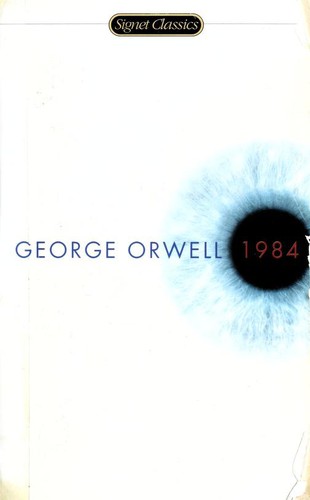
There are novels that reflect their times, and there are novels that transcend them entirely, becoming permanent fixtures in the human conversation about power, freedom, and truth. George Orwell's 1984, published in 1949, belongs to that second, rarer category. Written by a dying man in the aftermath of the Second World War and the dawn of the Cold War, this novel has become far more than a work of fiction. It has become a lens through which we understand the modern world — a vocabulary for describing the mechanisms of oppression, surveillance, and propaganda that threaten democratic society. Words and concepts invented by Orwell — Big Brother, thoughtcrime, doublethink, Newspeak, the memory hole — have entered everyday language, deployed by people who may never have read the book itself but who instinctively grasp the dangers it describes.
The novel depicts a totalitarian superstate called Oceania, ruled by the omnipresent Party and its quasi-divine leader Big Brother, where every aspect of human life is monitored, controlled, and manipulated. Its protagonist, Winston Smith, is a low-ranking Party member who works at the Ministry of Truth, where his job is to rewrite historical records to match the Party's ever-shifting version of reality. Winston commits the ultimate crime — he begins to think for himself — and the novel follows his doomed rebellion against the system that controls him, from his first tentative acts of defiance through his love affair with fellow rebel Julia to his inevitable capture, torture, and spiritual destruction at the hands of the Party.
What makes 1984 extraordinary is not merely its prescience — though its predictions about surveillance technology, propaganda techniques, and the manipulation of language have proved disturbingly accurate. What makes it extraordinary is its depth of understanding about the psychological mechanisms of totalitarianism. Orwell understood that tyranny does not merely seek to control behavior; it seeks to control thought itself. The Party's ultimate goal is not obedience but the annihilation of individual consciousness — the creation of a world in which it is impossible even to conceive of resistance because the very concepts and words necessary for independent thought have been eliminated. This vision is so thorough, so meticulously imagined, and so terrifyingly plausible that it continues to haunt readers more than seven decades after its publication.
Historical Context
To understand 1984, one must understand the world that produced it — and the man who wrote it. George Orwell, born Eric Arthur Blair in 1903 in British India, spent his life grappling with questions of power, inequality, and political deception. His experiences as a colonial policeman in Burma gave him a firsthand understanding of imperialism's brutality. His years of voluntary poverty in London and Paris — documented in Down and Out in Paris and London — gave him an intimate knowledge of how the other half lives. His participation in the Spanish Civil War, fighting alongside Republican forces against Franco's fascists, taught him the most formative lesson of his political life: that the left was as capable of lies, betrayal, and the abuse of power as the right.
It was in Spain that Orwell witnessed the Soviet Union's manipulation of the Republican cause — the suppression of rival leftist factions, the rewriting of history to suit Stalin's agenda, the persecution of genuine socialists by agents of a regime that claimed to represent socialism. This experience shattered any remaining illusions Orwell had about Soviet communism and set him on the path that would lead to Animal Farm and, ultimately, 1984. He did not become a conservative or an apologist for Western capitalism; he remained a committed democratic socialist until his death. But he understood, with a clarity that few of his contemporaries matched, that totalitarianism was not a disease unique to the political right. It could emerge from any ideology that placed the power of the state above the rights and dignity of the individual.
Orwell wrote 1984 between 1947 and 1948, while suffering from the tuberculosis that would kill him in January 1950. He composed much of the novel on the remote Scottish island of Jura, working in conditions of physical hardship and declining health that mirror the grim austerity of the world he was creating. The novel was shaped by the political landscape of the late 1940s: the consolidation of Soviet power in Eastern Europe, the beginning of the Cold War, the development of nuclear weapons, the revelations about the full extent of Nazi atrocities, and the growing awareness of Stalin's purges and gulags. But Orwell was not merely writing about the Soviet Union or Nazi Germany. He was writing about the tendencies toward totalitarianism that he saw in all modern societies — including his own.
The novel's title was originally The Last Man in Europe, a title that captures the novel's existential dimension: Winston Smith's struggle is not merely a political one but a deeply personal fight to preserve his humanity in a system designed to destroy it. Orwell changed the title to 1984, inverting the year of its completion (1948), to suggest that the world he described was not a distant future fantasy but an imminent possibility. The future, Orwell was saying, is almost here — and it looks like this.
The historical context also includes the rise of mass media and propaganda techniques in the early twentieth century. Orwell had worked for the BBC during World War II, producing propaganda broadcasts for the Indian section of the Eastern Service. This experience gave him an insider's understanding of how information could be shaped, distorted, and weaponized — an understanding that informs the novel's meticulous depiction of the Ministry of Truth and its operations. The telescreens that monitor every citizen of Oceania, the constant stream of Party propaganda, the Two Minutes Hate — these are extrapolations of technologies and techniques that already existed in Orwell's time, pushed to their logical extremes.
Plot Summary
The novel opens in London — now called Airstrip One, a province of the superstate Oceania — on a cold April day in 1984. Winston Smith, a thirty-nine-year-old Party member with a varicose ulcer and a persistent cough, climbs the stairs to his apartment in Victory Mansions, where a telescreen on the wall broadcasts Party propaganda and simultaneously monitors his every move. The city around him is a landscape of decay: crumbling buildings, potholed roads, the perpetual smell of boiled cabbage, and the looming presence of enormous posters bearing the face of Big Brother and the caption "BIG BROTHER IS WATCHING YOU."
Winston works at the Ministry of Truth (Minitrue in Newspeak), where his job is to alter historical records — newspaper articles, books, photographs — to ensure that the past always conforms to the Party's current version of reality. If the Party says that Oceania has always been at war with Eastasia, then every record that mentions a war with Eurasia must be destroyed and replaced with one that says Eastasia. If a person is "vaporized" — arrested by the Thought Police and erased from existence — then every document that ever mentioned that person must be altered to remove any trace of their existence. Winston performs this work with mechanical efficiency, but he harbors a secret that could cost him his life: he knows that the Party's version of reality is a lie.
In the novel's first act of rebellion, Winston begins keeping a diary — an almost unimaginably dangerous act in a society where private thought is a crime. He writes "DOWN WITH BIG BROTHER" over and over, knowing that this simple act of defiance, if discovered, will lead to his arrest, torture, and death. The diary represents Winston's desperate attempt to preserve some fragment of truth and individuality in a world designed to annihilate both.
Winston becomes increasingly fascinated by two people: O'Brien, a member of the Inner Party whom Winston suspects of being a secret rebel, and Julia, a young woman who works in the Fiction Department. After a clandestine courtship — passing notes, meeting in crowded streets where they cannot be overheard — Winston and Julia begin a love affair. They rent a room above a junk shop in the prole (proletarian) quarter, a room without a telescreen where they can be alone together. Their relationship is simultaneously romantic and political: in a society where the Party seeks to control every aspect of human life, including sexual desire, the simple act of loving another person becomes a form of resistance.
O'Brien makes contact with Winston and Julia, confirming that he is a member of the Brotherhood — an underground resistance organization led by the mysterious Emmanuel Goldstein, the Party's designated enemy. O'Brien gives Winston a copy of Goldstein's book, The Theory and Practice of Oligarchical Collectivism, which explains the true nature of the Party's power structure. The book reveals that the three superstates — Oceania, Eurasia, and Eastasia — are engaged in perpetual warfare not to win but to consume surplus production and keep their populations in a state of permanent scarcity and fear. The Party's ideology, Ingsoc (English Socialism), is not a genuine political philosophy but a mechanism for maintaining power for its own sake.
The betrayal, when it comes, is devastating in its inevitability. The room above the junk shop has contained a hidden telescreen all along. The shopkeeper, Mr. Charrington, is a member of the Thought Police. Winston and Julia are arrested, separated, and taken to the Ministry of Love (Miniluv), the regime's center of interrogation and torture. Here, Winston discovers that O'Brien is not a rebel but a loyal Party operative who has been monitoring Winston for years, waiting for the right moment to spring the trap.
The novel's final section describes Winston's systematic destruction at O'Brien's hands. The torture is not merely physical — though it is brutally, graphically physical — but psychological and philosophical. O'Brien does not simply want Winston to confess or to obey. He wants Winston to genuinely believe that the Party is right — that two plus two equals five if the Party says so, that the past does not exist except as the Party defines it, that reality itself is whatever the Party declares it to be. In the novel's most harrowing sequence, Winston is taken to Room 101, where he faces his worst fear — rats — and in his terror, he commits the ultimate betrayal: he begs for Julia to be tortured in his place. "Do it to Julia! Not me! Julia!"
The novel ends with Winston sitting in the Chestnut Tree Cafe, a broken man. He has been released back into society, his rebellion crushed, his love for Julia destroyed, his capacity for independent thought annihilated. A news bulletin announces a military victory, and Winston looks up at the enormous face of Big Brother on the telescreen. "He loved Big Brother." The final sentence is the most chilling in the English language — a four-word epitaph for human freedom.
Character Analysis
Winston Smith: The Last Individual
Winston Smith is not a hero in any conventional sense. He is not brave, not strong, not particularly intelligent or resourceful. He is an ordinary man — middle-aged, physically unimpressive, prone to doubt and self-deception — who commits the extraordinary act of thinking for himself in a society where independent thought is a capital crime. His ordinariness is essential to the novel's meaning. Orwell is not telling the story of an exceptional individual who rises above his circumstances through superhuman courage or ability. He is telling the story of an average person crushed by an inhuman system, and the horror of the story lies precisely in the fact that Winston is no different from anyone else. If it can happen to him, it can happen to anyone.
Winston's rebellion is motivated not by ideology but by a deep, instinctive attachment to truth and to his own memories. He remembers — or thinks he remembers — a time before the Party, a time when life was different. He clings to fragments of the past: a coral paperweight, a nursery rhyme, the memory of his mother's protective embrace. These fragments represent everything the Party seeks to destroy — personal memory, individual experience, the continuity of human life across generations. Winston's tragedy is that he cannot preserve these things. The system is too powerful, too pervasive, too thorough in its destruction of everything that makes life meaningful.
What makes Winston a compelling character is his awareness of his own doom. From the novel's opening pages, he knows that his rebellion will end in his destruction. "Thoughtcrime does not entail death," he writes in his diary. "Thoughtcrime IS death." And yet he rebels anyway, driven by a need that goes deeper than self-preservation — the need to assert that truth exists, that the past is real, that two plus two equals four regardless of what the Party says. This makes Winston not a hero but something perhaps more valuable: a witness. He testifies, through his suffering, to the reality that the Party seeks to deny.
Julia: Rebellion Through Pleasure
Julia represents a different kind of rebellion than Winston's. Where Winston is driven by abstract principles — truth, justice, the integrity of the past — Julia is driven by concrete desires: pleasure, freedom, the right to enjoy her own body and her own life. She is not interested in Goldstein's book or the theory of oligarchical collectivism. She falls asleep when Winston reads it aloud to her. Her rebellion is not intellectual but sensual and practical: she wants to eat real chocolate, drink real coffee, wear makeup, make love, and live her life without the Party's interference.
Some readers have seen Julia as a less serious or less admirable rebel than Winston, but this interpretation misses the novel's point. Julia's rebellion is just as genuine and just as dangerous as Winston's. In a society that seeks to control every aspect of human experience — including sexuality, which the Party channels into hatred and political fanaticism — the simple assertion of physical pleasure is a profoundly subversive act. Julia understands something that Winston only grasps intellectually: that the Party's power depends on the suppression of individual desire, and that refusing to suppress one's desires is itself a form of resistance.
Julia is also more realistic than Winston about the nature of the system they are fighting. She does not believe in the Brotherhood or in the possibility of overthrowing the Party. She simply wants to carve out a private space — a room, a relationship, a few hours of freedom — within the system's interstices. Her pragmatism serves as a counterpoint to Winston's idealism, and the novel suggests that both approaches are ultimately futile in the face of total power. But Julia's approach has the advantage of providing real, if temporary, happiness — something that Winston's abstract quest for truth cannot offer.
O'Brien: The Face of Power
O'Brien is one of the most terrifying characters in literature — not because he is cruel (though he is) but because he is intelligent, articulate, and utterly convinced of the righteousness of his cause. As an Inner Party member and agent of the Thought Police, O'Brien represents the system at its most sophisticated. He does not merely enforce the Party's rules; he embodies its philosophy. He believes — genuinely, deeply, without reservation — that power is an end in itself, that the Party's control is absolute and permanent, and that the destruction of individual consciousness is not a regrettable necessity but a positive good.
O'Brien's interrogation of Winston in the Ministry of Love is the novel's intellectual and emotional climax. In a series of conversations that are part Socratic dialogue, part theological disputation, and part torture session, O'Brien systematically dismantles Winston's beliefs. He demonstrates that the Party can make Winston believe anything — that two plus two equals five, that he never existed, that the past is whatever the Party says it is. And he does so not through brute force alone (though force is applied abundantly) but through a relentless, almost seductive logic that leaves Winston — and the reader — with no ground to stand on.
The most chilling aspect of O'Brien's character is his honesty. Unlike the tyrants of the real world, who typically disguise their lust for power behind ideological justifications — the good of the people, historical necessity, divine mandate — O'Brien dispenses with all pretense. "The Party seeks power entirely for its own sake," he tells Winston. "We are not interested in the good of others; we are interested solely in power... Power is not a means; it is an end." This naked admission is more terrifying than any lie because it removes the last hope of rational persuasion. You cannot argue with someone who openly admits that they do not care about truth, justice, or human welfare — someone for whom power itself is the only value.
Big Brother: The Omnipresent Symbol
Big Brother may or may not exist as an actual person. Orwell deliberately leaves this question ambiguous, and the ambiguity is the point. Big Brother is not a character but a symbol — the face of power itself, simultaneously human and inhuman, familiar and terrifying. His enormous face gazes down from posters on every wall, his voice issues from every telescreen, his name is invoked in every Party slogan. He is the object of the Party's mandatory love, the target of its mandatory hatred of enemies, and the guarantor of its claim to absolute authority.
The genius of the Big Brother concept is that it provides a human face for an inhuman system. People need someone to love, to fear, to worship — and the Party exploits this need by creating a figure who embodies all the attributes of divine authority: omniscience, omnipotence, infallibility. Whether Big Brother is a real person, a committee, or a pure invention is irrelevant. What matters is the function he serves: to focus the population's emotions and to personify the Party's power in a way that makes it feel natural and inevitable.
Major Themes
Totalitarianism and the Nature of Power
The central theme of 1984 is the nature of totalitarian power — not merely how it operates but what it ultimately wants. Orwell's great insight is that totalitarianism is not a means to an end but an end in itself. The Party does not seek power in order to implement a social program, achieve economic prosperity, or defend the nation against external threats. It seeks power for its own sake — the pure, unalloyed pleasure of domination. O'Brien's metaphor of the future — "a boot stamping on a human face — forever" — captures this vision with terrifying clarity. There is no utopia at the end of the road, no promised land of equality and abundance. There is only power, exercised forever, for its own sake.
This understanding of power sets 1984 apart from other dystopian novels. In Aldous Huxley's Brave New World, the ruling class at least believes it is creating happiness. In Yevgeny Zamyatin's We, the One State claims to be pursuing mathematical perfection. But Orwell strips away all justifications and reveals the naked truth: power is about power. This insight has proved disturbingly applicable to real-world totalitarian regimes, which consistently claim to be pursuing noble goals while in practice serving the interests of a ruling elite that will sacrifice any principle to maintain its grip on power.
Surveillance and Privacy
The surveillance apparatus of Oceania — telescreens that watch and listen in every room, hidden microphones, the Thought Police, the vast network of informers that includes children who report their own parents — anticipates the modern surveillance state with uncanny accuracy. Orwell imagined a world in which privacy is impossible, in which every word and every facial expression is monitored for signs of disloyalty, and in which the knowledge that one is being watched produces a state of permanent self-censorship that is even more effective than external control.
The relevance of this theme to the twenty-first century is almost too obvious to state. Edward Snowden's revelations about the extent of government surveillance programs, the proliferation of CCTV cameras in public spaces, the data-harvesting practices of social media companies, the development of facial recognition technology and predictive policing algorithms — all of these developments bring us closer to the world Orwell imagined. The difference, as many commentators have noted, is that much of our surveillance is voluntary: we carry tracking devices in our pockets, share our intimate thoughts on social media, and consent to terms of service that grant corporations access to our most personal data. Orwell could not have predicted that Big Brother would not need to force the telescreen into our homes — we would buy it ourselves and carry it everywhere.
"What Orwell feared were those who would ban books. What Huxley feared was that there would be no reason to ban a book, for there would be no one who wanted to read one. Orwell feared those who would deprive us of information. Huxley feared those who would give us so much that we would be reduced to passivity and egoism." — Christopher Hitchens, paraphrasing Neil Postman's insight about the complementary visions of Orwell and Huxley
The Manipulation of Truth and History
Perhaps no theme in 1984 resonates more powerfully in the current moment than the manipulation of truth. Winston's job at the Ministry of Truth — rewriting historical records to match the Party's current narrative — is a literalization of the propaganda techniques that Orwell observed in the Soviet Union, Nazi Germany, and, to a lesser extent, in his own country during wartime. The Party's slogan "Who controls the past controls the future; who controls the present controls the past" captures the essential insight: that power over narrative is power over reality itself.
The concept of "doublethink" — the ability to hold two contradictory beliefs simultaneously and believe both of them — is Orwell's most brilliant and disturbing invention. Doublethink is not mere hypocrisy; it is something far more radical. It is the trained capacity to believe whatever the Party tells you to believe, even when it contradicts what you believed yesterday, even when it contradicts the evidence of your own senses. "The Party told you to reject the evidence of your eyes and ears. It was their final, most essential command." In a world of doublethink, truth is not merely suppressed — it ceases to exist as a meaningful concept.
The relevance of these ideas to contemporary politics is striking. The proliferation of "fake news," the erosion of shared factual reality, the use of social media to spread disinformation, the brazen denial of documented facts by political leaders — all of these phenomena echo the mechanisms of truth manipulation that Orwell described. The term "Orwellian" has itself become a weapon in political discourse, invoked by all sides to accuse their opponents of the very distortions that Orwell warned against.
"In our time, political speech and writing are largely the defense of the indefensible... Political language is designed to make lies sound truthful and murder respectable, and to give an appearance of solidity to pure wind. One cannot change this all in a moment, but one can at least change one's own habits." — George Orwell, "Politics and the English Language"
Language as a Tool of Control
One of the most innovative aspects of 1984 is its exploration of language as an instrument of political control. Newspeak, the official language of Oceania, is designed not to expand human expression but to limit it — to make it literally impossible to think certain thoughts because the words necessary to formulate them have been eliminated. The word "free," for example, can be used only in the sense of "this field is free of weeds"; the concept of political or intellectual freedom has been erased from the language along with the word that expressed it.
The appendix on the principles of Newspeak, which closes the novel, is one of the most chilling pieces of expository prose Orwell ever wrote. It describes a systematic project to reduce the English language to a minimal vocabulary of simple, concrete words, eliminating all ambiguity, nuance, and the capacity for abstract thought. The goal is to make heretical thought — "thoughtcrime" — literally unthinkable. "A person growing up with Newspeak as his sole language would no more know that 'equal' had once had the secondary meaning of 'politically equal,' or that 'free' had once meant 'intellectually free,' than a person who had never heard of chess would be aware of the secondary meanings attaching to 'queen' and 'rook.'"
This theme has particular resonance in an age of social media, where the compression of language into tweets, memes, and soundbites arguably reduces the capacity for nuanced thought. The simplification of political discourse into slogans and hashtags, the replacement of argument with assertion, the use of loaded language to short-circuit critical thinking — all of these tendencies reflect, in milder form, the principles that Orwell identified in his creation of Newspeak.
"Orwell understood something crucial about language that most of us still fail to grasp: the limits of our language are the limits of our world. Control the words people can use, and you control the thoughts they can think. That is the real message of Newspeak, and it is more relevant today than ever." — Margaret Atwood
The Destruction of Personal Relationships
The Party's control extends to the most intimate areas of human life: love, sexuality, family, and friendship. The Junior Anti-Sex League promotes celibacy and the reduction of sexual intercourse to a joyless duty performed solely for reproduction. Children are encouraged to spy on their parents and report any signs of unorthodoxy. Marriage requires Party approval and is designed to prevent emotional attachment between spouses. The goal is to channel all human emotion — all capacity for love, loyalty, and passion — away from personal relationships and toward the Party and Big Brother.
Winston and Julia's love affair is therefore not merely a personal indulgence but an act of political rebellion. By loving each other — by experiencing pleasure, tenderness, and genuine human connection — they are asserting their humanity against a system designed to reduce them to obedient automatons. The tragedy of their story is that the system ultimately prevails. In Room 101, Winston betrays Julia, screaming for her to be tortured in his place. And when they meet again after their release, they discover that they feel nothing for each other. The Party has not merely separated them; it has destroyed their capacity for love. This is the Party's ultimate victory — not the control of behavior but the annihilation of the inner life that gives behavior its meaning.
Perpetual War and the Manufacturing of Fear
Oceania is perpetually at war with one of the other two superstates — either Eurasia or Eastasia, depending on the current political alignment. But as Goldstein's book explains, the war is not fought to achieve victory. It is fought to maintain a state of permanent emergency that justifies the Party's total control over society. War consumes surplus production, keeping the population in a state of scarcity that prevents the accumulation of wealth and leisure that might lead to independent thought. War provides an external enemy against whom the population's fear and hatred can be directed, distracting them from the real source of their misery. And war justifies the apparatus of surveillance and repression that keeps the Party in power.
This analysis of the political function of war has proved disturbingly applicable to the real world. The concept of perpetual war as a tool of domestic control resonates with the "war on terror" declared after September 11, 2001, and with the broader pattern of governments using external threats — real or manufactured — to justify the expansion of state power and the curtailment of civil liberties. Orwell's insight is not that war is always manufactured or that external threats are always imaginary, but that governments have a structural incentive to maintain a state of fear, and that citizens must be vigilant against the exploitation of that fear.
Writing Style and Literary Craft
Orwell's prose in 1984 is a masterpiece of controlled clarity. His style is deliberately spare, stripped of ornament and flourish, each sentence designed to convey maximum meaning with minimum fuss. This stylistic austerity mirrors the world it describes — a world from which beauty, pleasure, and superfluity have been systematically eliminated. The gray, functional prose of the novel's opening chapters creates an atmosphere of oppressive monotony that is as effective as any Gothic horror in generating a sense of dread.
But Orwell is also capable of passages of extraordinary lyrical beauty, and these moments stand out all the more powerfully against the novel's prevailing bleakness. Winston's memories of his mother — her protective embrace, her quiet dignity in the face of deprivation — are rendered with a tenderness that is almost unbearable in context. The descriptions of the English countryside, where Winston and Julia conduct their early love affair, glow with a Romantic intensity that contrasts sharply with the urban decay of Airstrip One. And the coral paperweight that Winston buys from Mr. Charrington's shop — a fragment of beauty preserved in glass, a relic of a vanished world — becomes a symbol of everything the Party seeks to destroy, described with a precision and care that convey its almost sacred significance to Winston.
The novel's structure is carefully designed to maximize its emotional and intellectual impact. The first part establishes the world and Winston's growing dissatisfaction with it. The second part depicts his rebellion — his love affair with Julia, his contact with O'Brien, his reading of Goldstein's book — creating a sense of hope and possibility that the reader knows, on some level, is doomed. The third part, set almost entirely in the Ministry of Love, is a sustained nightmare of interrogation, torture, and psychological destruction that ranks among the most harrowing sequences in all of literature. The reader is carried from oppression through hope to despair, and the final sentence — "He loved Big Brother" — lands with the force of a physical blow.
Orwell's use of appendices and embedded documents is particularly innovative. Goldstein's book, which occupies a substantial portion of Part Two, provides the theoretical framework for understanding the Party's operations — information that could not be conveyed through Winston's limited perspective alone. The appendix on Newspeak, written in the past tense (suggesting that the regime eventually fell), provides a glimmer of hope that the novel's narrative otherwise denies. These supplementary materials give the novel a documentary quality, making its fictional world feel less like an invention and more like a report from an actual society.
Critical Reception
Upon its publication in June 1949, 1984 received immediate critical acclaim and commercial success. The first printing sold out within days, and the novel quickly became a bestseller on both sides of the Atlantic. Critics recognized it as a major work — not merely a compelling novel but a significant contribution to political thought. V.S. Pritchett, writing in the New Statesman, called it "a book that goes through the reader like an east wind, cracking the skin, drying up the tears, and leaving its mark on the mind." Bertrand Russell praised it as a "profound, terrifying, and wholly fascinating book" that "ought to be read by every thinking person."
The novel quickly became a weapon in the Cold War, embraced by anti-communists as a definitive indictment of Soviet totalitarianism. This appropriation troubled Orwell, who insisted that the novel was not an attack on socialism but a warning against totalitarianism in all its forms — including the forms it might take in Western democracies. In a letter written shortly before his death, Orwell stated: "My novel Nineteen Eighty-Four is NOT intended as an attack on Socialism or on the British Labour Party (of which I am a supporter) but as a show-up of the perversions to which a centralized economy is liable and which have already been partly realized in Communism and Fascism."
Over the decades, the novel's critical reputation has only grown. It consistently ranks among the greatest novels of the twentieth century in surveys and lists, and its influence on subsequent literature, film, television, and popular culture has been enormous. Every dystopian novel written since 1984 exists in its shadow, from Margaret Atwood's The Handmaid's Tale to Kazuo Ishiguro's Never Let Me Go to Dave Eggers' The Circle. The novel has been adapted into films, television productions, stage plays, and operas. Its concepts have entered the language so thoroughly that "Orwellian" is now a standard adjective used to describe any situation involving surveillance, propaganda, or the manipulation of truth.
"Orwell's 1984 is not merely a novel — it is a survival manual for the age of information warfare. Every generation rediscovers it and finds it more relevant than the last, because the technologies of control that Orwell imagined have been realized in ways even he could not have foreseen." — Thomas Pynchon
Famous Quotes About This Book
"George Orwell's 1984 is the book that keeps on giving — to every generation a new warning, tailored to its particular form of unfreedom. In the age of surveillance capitalism and algorithmic manipulation, it speaks with a clarity and urgency that would have astonished even Orwell himself." — Margaret Atwood
"What makes 1984 endure is not its specific predictions about technology or politics, but its understanding of the psychology of power — the way it maps the inner landscape of domination and submission with a precision that no other novel has matched. Orwell understood that tyranny begins not in the surveillance camera or the propaganda broadcast but in the human mind." — Thomas Pynchon
"Orwell's genius was to understand that the real target of totalitarianism is not the body but the mind — not what you do but what you think, and ultimately what you are capable of thinking. 1984 is the definitive exploration of that insight, and it remains the most important political novel ever written." — Christopher Hitchens
Legacy and Cultural Impact
The cultural impact of 1984 extends far beyond the literary world. The novel has become a permanent part of the political lexicon, providing a vocabulary for discussing threats to freedom that would otherwise be difficult to articulate. When governments expand surveillance programs, critics invoke Big Brother. When politicians deny documented facts, commentators reach for "doublethink" and "memory hole." When language is used to obscure rather than illuminate — when war is called "peacekeeping," when torture is called "enhanced interrogation" — people recognize Newspeak. These concepts have become tools of democratic resistance, helping citizens identify and name the mechanisms of oppression that might otherwise go unrecognized.
The novel's influence on popular culture has been immense. The reality television show Big Brother, which first aired in the Netherlands in 1999 and has since spawned versions in dozens of countries, takes its name and its central concept — constant surveillance of a group of people living in an enclosed space — directly from Orwell's novel. Apple's famous "1984" Super Bowl commercial, directed by Ridley Scott, used Orwellian imagery to position the Macintosh computer as a tool of individual liberation against corporate conformity. David Bowie's album Diamond Dogs was inspired by the novel. Radiohead's album OK Computer draws heavily on its themes. The list of cultural works influenced by 1984 is essentially endless.
In the political sphere, 1984 has been invoked by movements across the political spectrum. Civil libertarians cite it in arguments against government surveillance. Free speech advocates cite it in arguments against censorship. Opponents of political correctness cite it in arguments against the policing of language. Opponents of authoritarian governments from the Soviet Union to modern China cite it as a blueprint for understanding how those governments maintain control. The novel's universality — its applicability to left-wing and right-wing tyranny alike — is both its greatest strength and a source of occasional irony, as partisans on all sides claim Orwell as their own.
Sales of 1984 spike regularly in response to political events. The novel surged to the top of bestseller lists after the Snowden revelations in 2013, and again in January 2017, when a senior political adviser used the phrase "alternative facts" in a television interview. Each spike in sales represents a moment when large numbers of people recognize a parallel between their own reality and the world Orwell described — a recognition that is both alarming and, in its way, encouraging. As long as people can recognize Orwellian tendencies in their own societies, the warning has not gone unheeded.
The novel has also had a significant impact on legal and philosophical thought. Concepts from 1984 are regularly invoked in discussions of privacy law, surveillance policy, freedom of expression, and the limits of state power. The novel has influenced thinkers as diverse as Michel Foucault, whose concept of the "panopticon" echoes Orwell's vision of a surveillance society, and Hannah Arendt, whose analysis of totalitarianism shares many of Orwell's insights about the relationship between truth and power.
Why You Should Read It Today
If you have not read 1984, or if you read it years ago and have not returned to it, now is the time. The novel's relevance to the contemporary moment is not merely academic or historical — it is urgent and immediate. We live in an age of unprecedented surveillance capability, of sophisticated propaganda and disinformation, of political polarization that makes it increasingly difficult to agree on basic facts. The technologies of control that Orwell imagined — telescreens, thought police, the manipulation of historical records — have been realized in forms that are in some ways more insidious than anything he described, because they are often voluntary and invisible.
But 1984 is not merely a warning. It is also a testament to the resilience of the human spirit — to the stubborn, irrational, inextinguishable desire for truth, freedom, and genuine human connection that persists even in the most oppressive circumstances. Winston Smith is defeated, but his defeat is not the novel's final word. The very existence of the novel — the fact that Orwell wrote it, that it has been read by millions, that it continues to inspire resistance and vigilance — is proof that the Party's vision of total control has not been achieved. The novel is itself a form of thoughtcrime, a forbidden thought preserved in print and passed from reader to reader across generations and borders. As long as 1984 is read, the spirit of resistance that it embodies remains alive.
Reading 1984 today is also an act of intellectual self-defense. The novel trains readers to recognize the techniques of manipulation — the appeals to fear, the distortions of language, the rewriting of history, the demands for unquestioning loyalty — that are used by authoritarians everywhere. It teaches the vital skill of critical thinking: the ability to question official narratives, to demand evidence for extraordinary claims, and to resist the pressure to conform that is exerted by all communities and all political movements. In a world where information is abundant but truth is scarce, these skills are more valuable than ever.
Finally, 1984 deserves to be read — and reread — because it is a great work of literature. Beneath its political themes, it is a deeply human story about love, loss, memory, and the struggle to remain fully human in a world that demands we become something less. Winston Smith's journey may end in defeat, but his refusal to go quietly — his insistence on recording his thoughts, on loving another person, on remembering what the Party wants him to forget — is a testament to the irreducible dignity of the individual. That is a message worth hearing in any age, and it is delivered here with an artistry and a passion that make 1984 not merely important but unforgettable.
Conclusion
George Orwell died on January 21, 1950, just seven months after the publication of 1984. He was forty-six years old. He left behind a body of work that includes some of the finest essays, journalism, and fiction in the English language, but 1984 is his masterpiece — the book for which he will be remembered as long as people read and think and care about the difference between truth and lies, freedom and slavery, the individual and the state.
The novel is not easy to read. It is bleak, harrowing, and ultimately devastating in its depiction of human cruelty and the fragility of human freedom. It offers no easy consolation, no redemptive ending, no assurance that good will triumph over evil. But its difficulty is inseparable from its power. By showing us the worst that can happen — by forcing us to confront the full horror of a world in which truth, love, and individual consciousness have been systematically destroyed — Orwell makes us more determined to prevent that world from coming into being. The novel is a warning, and warnings are only effective if they are frightening.
In the end, 1984 is a love letter to truth — a passionate, anguished declaration that objective reality exists, that the past is real, that two plus two equals four, and that these simple facts matter more than all the power of all the tyrants who have ever lived or ever will live. In a world where truth is under constant assault, that declaration is not merely literary; it is a moral imperative. Read this book. Remember what it tells you. And refuse, with every fiber of your being, to love Big Brother.