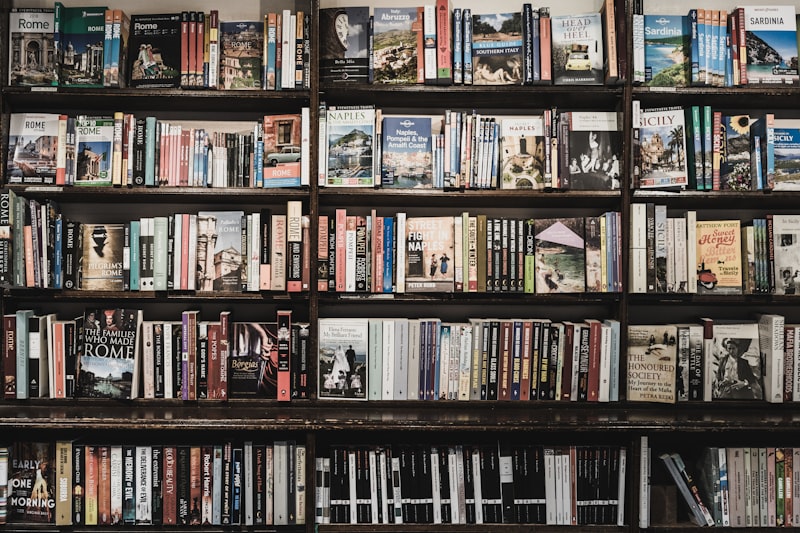


Cathedrals of the Written Word
Libraries are more than repositories of books. Throughout history, they have served as symbols of human aspiration — monuments to the belief that knowledge should be preserved, organized, and shared. The most beautiful libraries in the world transcend mere function to become works of art in their own right, spaces where architecture, design, and the written word converge to create something genuinely awe-inspiring. From medieval monasteries to contemporary architectural marvels, these libraries remind us of the profound reverence that cultures around the world have held for books and learning.
The Admont Abbey Library, Austria
Nestled in the Austrian Alps, the Admont Abbey Library is the largest monastery library in the world and one of the most spectacular interior spaces ever created. Completed in 1776, the library stretches over seventy meters in length and soars to a ceiling adorned with seven cupola frescoes by Bartolomeo Altomonte, depicting stages of human knowledge from natural science to divine revelation.
The library houses approximately 70,000 volumes, including 1,400 manuscripts and 530 early printed books. The white-and-gold rococo design creates an atmosphere of luminous elegance, with natural light streaming through tall windows to illuminate the carved wooden bookcases. Sculptures by Josef Stammel representing the "Last Four Things" — Death, Judgment, Heaven, and Hell — stand as silent sentinels among the shelves. Visiting Admont feels less like entering a library and more like stepping into a living work of art.
The Library of Congress, United States
The Library of Congress in Washington, D.C., is the largest library in the world, holding more than 170 million items in its collections. But it is also one of the most beautiful. The Thomas Jefferson Building, completed in 1897, was designed to be a "temple of the arts" and features marble floors, grand staircases, stained glass, and elaborate murals by more than fifty American artists.
The Main Reading Room, with its soaring 160-foot dome, is the crown jewel. Eight massive marble columns support the dome, and sixteen bronze statues representing pivotal figures in the development of civilization line the balustrade. The reading room desks, arranged in concentric circles beneath the dome, provide workspace for researchers who come from around the world to access the library's unparalleled collections.
Beyond its beauty, the Library of Congress serves a vital democratic function. As the research library of the United States Congress, it houses copies of every book published in America, preserving the nation's intellectual heritage. Its digital initiatives have made millions of items freely accessible online, democratizing access to knowledge in a way that would have astonished its founders.
The Bodleian Library, England
Oxford University's Bodleian Library is one of the oldest libraries in Europe, with a continuous history stretching back to 1602. But its roots go deeper — the building that houses the Duke Humfrey's Library dates to 1488. Walking into this medieval reading room, with its original timber ceiling and ancient wooden lecterns, is to step back five centuries in time.
The Bodleian is famous beyond the academic world for its appearance in the Harry Potter films, where it doubled as Hogwarts' library. Fans of Harry Potter will recognize the Duke Humfrey's Library's vaulted ceiling and chained bookshelves. But the Bodleian's significance extends far beyond cinema. It is a legal deposit library, entitled to a copy of every book published in the United Kingdom, and holds over 13 million items including rare manuscripts, maps, and music.
The Radcliffe Camera, the Bodleian's iconic circular reading room designed by James Gibbs in 1749, is one of the most photographed buildings in Oxford. Its neoclassical dome rises above Radcliffe Square, creating one of the most recognizable library silhouettes in the world.
The Royal Portuguese Cabinet of Reading, Brazil
Hidden in downtown Rio de Janeiro, the Real Gabinete Portugues de Leitura is a literary jewel that takes most visitors completely by surprise. Founded by Portuguese immigrants in 1837, the library was designed in the ornate Manueline style — the uniquely Portuguese architectural movement characterized by elaborate maritime motifs and intricate stone carving.
The main reading hall rises four stories, with floor-to-ceiling shelves holding over 350,000 volumes, many of them rare Portuguese-language works found nowhere else outside Portugal. A massive wrought-iron chandelier hangs from the center of the skylight dome, casting warm light across the carved wooden shelves and Gothic arches. The library has been called the most beautiful in the world by multiple publications, and photographs, however stunning, cannot fully capture the overwhelming sense of literary grandeur that the space evokes.
The Stuttgart City Library, Germany
In dramatic contrast to the ornate historical libraries, the Stuttgart City Library, designed by Yi Architects and completed in 2011, represents the beauty of modern minimalism. The exterior is an austere white cube, but the interior is breathtaking: a central atrium rises nine stories, surrounded by open galleries with clean white surfaces and geometric precision. The effect is monastic in its simplicity, creating a space of pure focus and contemplation.
The library's design philosophy treats books as the primary decoration. Against the white walls, the colorful spines of books create organic patterns that shift as volumes are borrowed and returned. The building includes rooftop reading terraces with panoramic views of Stuttgart, and the glass block exterior glows blue at night, creating an ethereal beacon of knowledge visible across the city.
The Tianjin Binhai Library, China
Opened in 2017 and quickly dubbed "The Eye" for its dramatic central oculus, the Tianjin Binhai Library in China has become one of the most photographed libraries in the world. Designed by the Dutch firm MVRDV, the library features undulating white shelves that cascade from floor to ceiling in flowing curves, creating a dramatic canyon of books.
The central sphere, which houses an auditorium, sits like the pupil of an enormous eye, surrounded by terraced bookshelves that double as seating. The library holds 1.2 million books and covers 33,700 square meters. Its futuristic design has made it a symbol of China's ambitions in architecture and culture, and it regularly draws crowds who come as much for the architecture as for the books.
Trinity College Library, Ireland
The Long Room at Trinity College Dublin is perhaps the most iconic library image in the world. Built between 1712 and 1732, the Long Room stretches nearly 65 meters and holds approximately 200,000 of the library's oldest books. The barrel-vaulted ceiling, added in the 19th century to accommodate more books, creates a cathedral-like atmosphere.
Marble busts of great writers and thinkers line the gallery, and at the far end stands one of the few remaining copies of the 1916 Proclamation of the Irish Republic. But Trinity's greatest treasure is the Book of Kells, a lavishly illuminated manuscript of the four Gospels created by Celtic monks around 800 CE. This masterpiece of medieval art draws over a million visitors per year. The Long Room reportedly inspired the design of the Jedi Archives in the Star Wars films — a fitting tribute to a space that genuinely feels like a temple of universal knowledge.
Libraries as Cultural Statements
What these libraries share, despite their vastly different styles and eras, is a belief that the spaces we create for books reveal our deepest values. A society that builds beautiful libraries is declaring that knowledge matters, that reading is worthy of reverence, and that books deserve not just storage but celebration. In an age when much of the world's information lives in invisible digital clouds, these physical temples of knowledge remind us that the book — and the spaces we build around it — remains one of humanity's most powerful symbols of aspiration and hope.