


Introduction
There are books that entertain, books that inform, and then there are books that permanently alter the moral landscape of a culture. To Kill a Mockingbird by Harper Lee belongs firmly in that last category. Published in 1960, at the height of the American civil rights movement, this novel did something extraordinary: it took the most painful, divisive issue in American life — racial injustice — and rendered it through the eyes of a six-year-old girl in a small Alabama town. In doing so, Harper Lee created a work of art that is at once deeply personal and universally resonant, a novel that speaks to the best and worst of human nature with equal clarity and compassion.
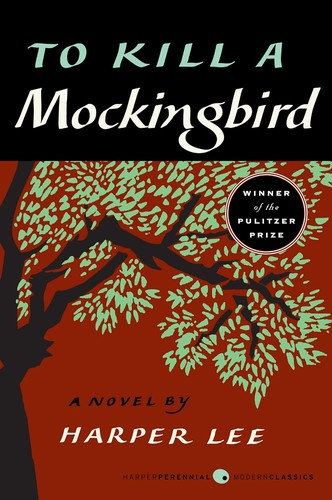
More than six decades after its publication, To Kill a Mockingbird remains one of the most widely read and beloved novels in the English language. It has sold over forty million copies worldwide, been translated into more than forty languages, and consistently ranks as one of the most influential books of the twentieth century in reader surveys. It won the Pulitzer Prize for Fiction in 1961 and was adapted into an Academy Award-winning film starring Gregory Peck in 1962. But statistics alone cannot capture what makes this book so enduring. Its power lies in something more fundamental: it teaches empathy. It asks readers to step inside someone else's skin and walk around in it, and in doing so, it has changed the way millions of people think about justice, courage, and what it means to be a decent human being.
In this comprehensive review, we will explore every facet of this remarkable novel — its historical context, its unforgettable characters, its major themes, its literary craft, and its lasting cultural impact. Whether you are encountering To Kill a Mockingbird for the first time or returning to it after many years, this review aims to deepen your appreciation for a book that, as Oprah Winfrey once said, "changed how people think about race in America."
Historical Context
To fully appreciate the power of To Kill a Mockingbird, one must understand the world into which it was born. The novel is set in the fictional town of Maycomb, Alabama, during the mid-1930s — the heart of the Great Depression. But it was written and published in the late 1950s and early 1960s, a period of seismic upheaval in American race relations. The Montgomery Bus Boycott had taken place in 1955-56, the Little Rock Nine had integrated Central High School in 1957, and sit-ins at segregated lunch counters were spreading across the South. The civil rights movement was gathering unstoppable momentum, and the nation was being forced to confront the deep contradictions between its founding ideals of liberty and equality and the brutal reality of Jim Crow segregation.
Harper Lee grew up in Monroeville, Alabama, a small town that bears a striking resemblance to the fictional Maycomb. Her father, Amasa Coleman Lee, was a lawyer who, like Atticus Finch, once defended Black clients in a racially charged case. Her childhood friend and neighbor was Truman Capote, who would become one of the most celebrated writers of the twentieth century and who served as the partial inspiration for the character of Dill Harris in the novel. Lee's intimate knowledge of small-town Southern life — its rhythms, its language, its social hierarchies, its unspoken codes — gives the novel an authenticity that no amount of research could replicate.
The 1930s setting is crucial to the novel's architecture. By placing the story in the Depression era rather than in the contemporary present of 1960, Lee achieved several things simultaneously. First, she created a degree of temporal distance that allowed readers — particularly white Southern readers — to engage with the story's uncomfortable truths without feeling directly accused. The injustices depicted could be viewed as belonging to a previous generation, even as the parallels to contemporary events were unmistakable. Second, the Depression-era setting amplified the economic and social pressures that drive the novel's central conflict. In a town where nearly everyone is poor, the rigid racial hierarchy serves as a psychological compensation for white residents who have little else to cling to. The Ewells, the poorest white family in Maycomb, derive their entire sense of worth from their position above Black citizens in the social order — a dynamic that Lee exposes with devastating precision.
The historical context also includes the Scottsboro Boys case of 1931, in which nine young Black men were falsely accused of assaulting two white women on a train in Alabama. The case became a national sensation and a symbol of the injustice of the Southern legal system. The parallels to Tom Robinson's trial in the novel are unmistakable, and Lee drew heavily on the Scottsboro case and similar real-world injustices in crafting her narrative. The fact that these injustices were not merely fictional inventions but reflections of actual events gives the novel a moral weight that purely imagined stories sometimes lack.
Understanding this historical context helps explain why the novel had such an immediate and powerful impact upon its publication. It arrived at precisely the moment when Americans were most ready to hear its message — and most in need of hearing it. The novel gave readers a moral framework for understanding the civil rights struggle, not as an abstract political debate but as a deeply human story about right and wrong, courage and cowardice, innocence and experience.
Plot Summary
The novel is narrated by Jean Louise "Scout" Finch, looking back on events from her childhood in Maycomb, Alabama. The story unfolds over approximately three years, beginning when Scout is nearly six years old and concluding when she is nearly nine. The narrative is divided into two major parts, each building toward a climactic confrontation that tests the moral fiber of the community and its inhabitants.
The first part of the novel establishes the world of Maycomb and its eccentric inhabitants through the eyes of Scout, her older brother Jem, and their summer friend Dill Harris. The children are fascinated by their reclusive neighbor Arthur "Boo" Radley, who has not been seen outside his house in years. Local legend has transformed Boo into a figure of gothic terror — a phantom who eats squirrels and peeps in windows. The children's attempts to lure Boo out of his house provide the novel's early comic momentum and serve as an introduction to one of its central themes: the danger of judging others based on rumor and prejudice rather than personal knowledge.
Meanwhile, Lee meticulously builds the social world of Maycomb, introducing readers to its various families and their places in the town's rigid hierarchy. There are the respectable Finches and their neighbors; the impoverished but proud Cunninghams; the despised Ewells, who live by the dump and send their children to school only on the first day; and the Black community, led by figures like Calpurnia, the Finch family's cook, and Tom Robinson, a young man of impeccable character. Scout's first-grade teacher, Miss Caroline Fisher, serves as a foil — an outsider who doesn't understand Maycomb's unwritten rules and whose well-meaning but misguided interventions highlight the complexity of the town's social dynamics.
The second part of the novel centers on the trial of Tom Robinson, a Black man accused of raping Mayella Ewell, the eldest daughter of Bob Ewell. Atticus Finch has been appointed to defend Tom, and he takes the case seriously — a decision that brings scorn, hostility, and even physical threats upon him and his children. The trial sequence is the novel's dramatic and moral centerpiece. Through careful cross-examination, Atticus demonstrates beyond any reasonable doubt that Tom is innocent — that Mayella was beaten by her own father after he caught her making advances toward Tom, and that the accusation of rape is a fabrication designed to cover the Ewells' shame.
The evidence is overwhelming, but the all-white jury convicts Tom anyway. This verdict is the novel's moral fulcrum — the moment when Scout and Jem lose their innocence and confront the reality that justice and truth do not always prevail. Tom Robinson is later killed while allegedly trying to escape from prison, and the manner of his death — shot seventeen times — suggests something far more sinister than a simple escape attempt. The excessive violence of his death mirrors the excessive cruelty of the system that condemned him.
The novel's final act brings the two plot lines together in an unexpected and deeply moving way. Bob Ewell, humiliated by Atticus's exposure of his lies during the trial, seeks revenge by attacking Scout and Jem as they walk home from a Halloween pageant. In the darkness, a mysterious figure intervenes, carrying the injured Jem home and killing Ewell in the struggle. That figure, of course, is Boo Radley — the phantom, the monster, the object of the children's fears and fascination. In saving the children's lives, Boo is revealed not as a figure of terror but as a guardian angel, a deeply damaged but fundamentally good person who has been watching over Scout and Jem all along.
The novel's final scene, in which Scout stands on the Radley porch and sees the neighborhood from Boo's perspective, is one of the most quietly powerful moments in American literature. It completes the novel's central argument about empathy — that true understanding requires standing in another person's shoes and seeing the world through their eyes. Scout has learned, through painful experience, the lesson that Atticus has been teaching her throughout the book: "You never really understand a person until you consider things from his point of view... until you climb into his skin and walk around in it."
Character Analysis
Atticus Finch: The Moral Compass
Atticus Finch is one of the most iconic characters in American literature — a figure who has come to represent moral courage, intellectual integrity, and quiet heroism. A widowed lawyer raising two children in Depression-era Alabama, Atticus is distinguished not by dramatic gestures or fiery rhetoric but by his unwavering commitment to doing what is right, even when the cost is enormous. He defends Tom Robinson not because he expects to win but because his conscience demands it. "Before I can live with other folks I've got to live with myself," he tells Scout. "The one thing that doesn't abide by majority rule is a person's conscience."
What makes Atticus remarkable is not that he is without fear — it is that he acts in spite of it. He knows that defending Tom Robinson will bring hostility upon his family. He knows that the jury will almost certainly convict regardless of the evidence. He knows that his children will suffer for his principles. And he does it anyway, because the alternative — compromising his integrity to avoid social disapproval — is something he simply cannot do. This is moral courage in its purest form, and it is why Atticus Finch consistently tops polls of the greatest literary heroes.
Yet Atticus is not a saint, and reducing him to one does the character a disservice. He is a complex figure who operates within the constraints of his time and place. He does not seek to overturn the entire system of segregation single-handedly. He works within the legal system, trusting in its capacity for justice even as that system repeatedly fails the people it is supposed to protect. Some modern critics have pointed out that Atticus's approach — working within the system rather than challenging it from the outside — reflects a fundamentally moderate stance that may be insufficient in the face of systemic injustice. This critique gained additional force with the publication of Go Set a Watchman in 2015, which presented an older Atticus who holds racially prejudiced views.
But within the world of To Kill a Mockingbird, Atticus serves a vital narrative function. He is the moral center around which the other characters orbit. His quiet strength provides a model of integrity that resonates not because it is perfect but because it is achievable. Atticus does not ask people to be heroes. He asks them to be decent — to treat others with respect, to seek the truth, to stand up for what is right even when it is unpopular. In a world that often seems to reward cynicism and self-interest, that message remains as powerful and necessary as ever.
Barack Obama once reflected on the impact of Atticus Finch, noting that the character embodied the kind of quiet moral leadership that can change communities not through grand gestures but through the daily practice of integrity and fairness. For Obama, Atticus represented the idea that "you can be a patriot and still challenge your country to live up to its highest ideals." This interpretation captures something essential about the character — his ability to love his community while simultaneously demanding that it be better than it is.
Scout Finch: The Innocent Eye
Jean Louise "Scout" Finch is one of the great child narrators in literature. Tomboyish, precocious, and fiercely independent, Scout provides the reader with a perspective that is simultaneously innocent and devastatingly perceptive. She doesn't fully understand the racial dynamics of Maycomb, and this incomprehension serves as the novel's most powerful rhetorical device. When Scout cannot understand why Tom Robinson was convicted despite the evidence of his innocence, or why Mrs. Dubose calls Atticus a "nigger-lover," her confusion forces the reader to confront the irrationality of racism through fresh eyes.
Scout's voice is one of the novel's greatest achievements. Lee captures the cadence and logic of a child's mind with remarkable precision — the way children take things literally, the way they construct their own explanations for the adult world's inexplicable behavior, the way they move seamlessly between profound observation and comic misunderstanding. Scout's narration is simultaneously the voice of the child experiencing events in real time and the voice of the adult looking back on them with deeper understanding, and Lee manages this dual perspective with extraordinary skill.
Over the course of the novel, Scout undergoes a profound moral education. She begins as a child who settles disputes with her fists and judges people by the standards of Maycomb's social hierarchy. She ends as a young person who has begun to understand that courage is not physical but moral, that people are more complex than the roles society assigns them, and that true understanding requires empathy. Her final moment on the Radley porch — seeing the world from Boo's perspective — represents the completion of this education. Scout has learned to practice what Atticus has been preaching throughout the novel.
Boo Radley: The Mockingbird in the Shadows
Arthur "Boo" Radley is the novel's most enigmatic and symbolically rich character. A recluse who has not left his house in years, Boo has been transformed by neighborhood gossip into a figure of gothic horror. The children imagine him as a monstrous figure who dines on raw squirrels and drools on his chin. But as the novel progresses, subtle clues reveal a different Boo — a gentle, damaged person who watches the children from behind his shuttered windows and leaves small gifts for them in the knothole of an oak tree. He mends Jem's pants after they get caught on the Radley fence. He drapes a blanket over Scout's shoulders during a house fire. And ultimately, he saves both children's lives from Bob Ewell's murderous attack.
Boo is one of the novel's two "mockingbirds" — innocent beings who are destroyed or damaged by the cruelty of others. His backstory, revealed in fragments throughout the novel, suggests that he was once a normal young man whose life was ruined by an abusive father who essentially imprisoned him in the family home. Like Tom Robinson, Boo is a victim of prejudice and misunderstanding. Unlike Tom, Boo survives — but at the cost of a life lived entirely in the shadows.
The decision by Sheriff Heck Tate to cover up Boo's killing of Bob Ewell — to attribute Ewell's death to falling on his own knife — is one of the novel's most morally complex moments. It represents a choice to protect an innocent person from the destructive glare of public attention, even at the cost of strict legal truthfulness. Atticus initially resists this decision, insisting that Jem (whom he initially believes killed Ewell) must face the legal consequences of his actions. But when he understands that it was Boo who killed Ewell, he acquiesces. Scout captures the essence of this decision with one of the novel's most memorable lines: "Well, it'd be sort of like shootin' a mockingbird, wouldn't it?" To drag Boo Radley into the public eye would be to destroy him as surely as killing a mockingbird destroys a creature whose only purpose is to sing.
Tom Robinson: The Innocent Condemned
Tom Robinson is the novel's other mockingbird — a decent, hardworking man whose only crime is being Black in a society that cannot tolerate the possibility of a white woman's attraction to a Black man. Tom's testimony at the trial reveals him as a person of genuine compassion: he helped Mayella Ewell with household chores not because he was paid or coerced but because he "felt right sorry for her." This simple expression of human sympathy proves to be his undoing. In the eyes of the white jury, a Black man pitying a white woman is an intolerable inversion of the racial hierarchy, and it seals his fate more surely than any evidence.
Tom's conviction and subsequent death represent the novel's bleakest indictment of racial injustice. He is innocent, and everyone in the courtroom knows it. Atticus has demonstrated this beyond any reasonable doubt. But the machinery of injustice grinds on regardless, because it serves purposes that have nothing to do with truth or justice. Tom's conviction preserves the racial hierarchy that gives even the poorest and most despised white citizens — like the Ewells — a sense of superiority over their Black neighbors. His death — shot seventeen times while allegedly trying to escape — is an act of extrajudicial murder that the white community accepts without question.
Maya Angelou once spoke of how Tom Robinson's story in To Kill a Mockingbird captured something essential about the Black American experience — the way that innocence and goodness offered no protection against a system designed to dehumanize and destroy. For Angelou, the novel's power lay not in its depiction of white heroism but in its unflinching portrayal of the cost of racism to its victims, a cost measured not in abstract statistics but in individual human lives destroyed by hatred and indifference.
Major Themes
Racial Injustice and the Failure of Legal Systems
The most prominent theme of To Kill a Mockingbird is racial injustice, and the novel's treatment of this theme remains one of the most powerful in American literature. Lee does not present racism as an aberration or a failing of individual characters. Instead, she reveals it as a systemic force that pervades every aspect of life in Maycomb — from the physical layout of the town (the Black community lives in a separate section called "the Quarters") to the social conventions that govern daily interactions to the legal system that is supposed to provide equal justice under the law.
The trial of Tom Robinson serves as the novel's central dramatization of this theme. Atticus presents a flawless defense, demonstrating through physical evidence and logical reasoning that Tom could not have committed the crime. But the jury convicts him anyway, because the unwritten law of racial hierarchy trumps the written law of the courtroom. This is perhaps the novel's most devastating insight: that legal systems, no matter how carefully constructed, are only as just as the people who operate them. When those people are blinded by prejudice, the system becomes an instrument of oppression rather than a bulwark against it.
The novel also explores the ways in which racism damages not only its direct victims but the entire community. The Ewells are degraded by their reliance on racial superiority as a source of self-worth. The white citizens of Maycomb are diminished by their complicity in Tom's conviction. Even Atticus, the novel's moral hero, is constrained by the system in which he operates. He can present the truth, but he cannot force the jury to accept it. He can model integrity, but he cannot single-handedly transform a culture built on inequality.
Moral Courage and Conscience
If racial injustice is the novel's subject, moral courage is its antidote. To Kill a Mockingbird presents a vision of courage that is not physical but moral — the willingness to do what is right in the face of social disapproval, personal risk, and even certain failure. Atticus embodies this form of courage most fully, but he is not the only character who demonstrates it. Mrs. Dubose, the cranky neighbor who hurls racial slurs at the Finch children, turns out to be fighting a private battle against morphine addiction, determined to die free of the drug even though her death is inevitable regardless. Atticus calls her "the bravest person I ever knew," and her story serves as a parable about the nature of true courage: it is not the absence of fear but the determination to act rightly in spite of it.
The novel suggests that moral courage is rooted in conscience — an inner sense of right and wrong that transcends social convention and public opinion. Atticus's famous statement that "the one thing that doesn't abide by majority rule is a person's conscience" encapsulates this idea. In a society where the majority is wrong — where prejudice masquerades as common sense and injustice is accepted as the natural order — individual conscience is the only reliable moral compass. The novel does not claim that following one's conscience is easy or without cost. It simply insists that it is necessary.
The Loss of Innocence
The journey from innocence to experience is one of the oldest themes in literature, and To Kill a Mockingbird handles it with particular subtlety and power. Scout and Jem begin the novel in a state of relative innocence, their understanding of the world shaped by the protected environment of their home and the moral certainty of their father's example. The trial of Tom Robinson shatters that innocence, forcing them to confront the reality that the world is not as fair or just as they had believed.
For Scout, the loss of innocence is gradual and ultimately leads to a deeper form of understanding. She does not become cynical or disillusioned; instead, she develops a more nuanced and compassionate view of human nature. Her final recognition of Boo Radley as a real person — not a phantom or a monster but a frightened, damaged human being — represents the completion of her moral education. She has lost her innocence but gained something more valuable: wisdom.
For Jem, the loss is more traumatic. Older than Scout and more aware of the implications of the trial, Jem takes the verdict harder. He weeps with anger and confusion, struggling to reconcile his faith in justice with the reality of Tom's conviction. His broken arm — sustained in Bob Ewell's attack — serves as a physical symbol of the emotional wounds that the loss of innocence inflicts. The novel does not suggest that these wounds are easily healed, but it does suggest that they can be survived, particularly with the support of a loving and principled family.
Empathy and Understanding
Perhaps the most enduring lesson of To Kill a Mockingbird is the importance of empathy — the ability to see the world from another person's perspective. Atticus articulates this lesson early in the novel when he tells Scout, "You never really understand a person until you consider things from his point of view... until you climb into his skin and walk around in it." This principle guides the novel's entire moral architecture. The characters who are capable of empathy — Atticus, Scout, Miss Maudie, Calpurnia — are the novel's moral exemplars. The characters who lack empathy — Bob Ewell, the jury members, the gossiping townspeople — are its villains.
The novel demonstrates empathy not as an abstract principle but as a concrete practice. Scout learns to understand her teacher Miss Caroline by considering the challenges of being a newcomer in Maycomb. She learns to see Mrs. Dubose not as a mean old woman but as a person fighting a courageous battle. And ultimately, she learns to see Boo Radley not as a monster but as a neighbor. Each of these acts of empathy requires Scout to move beyond her initial assumptions and prejudices, and each one deepens her understanding of the world.
The novel's title itself is a metaphor for empathy and the protection of innocence. A mockingbird is a creature that does nothing but sing — it causes no harm and serves no purpose other than to bring beauty into the world. To kill a mockingbird is to destroy innocence for no reason, and the novel asks readers to recognize the mockingbirds in their own lives and communities — the innocent, the vulnerable, the misunderstood — and to protect them.
Social Class and Community
While racial injustice is the novel's most prominent theme, Lee also provides a nuanced portrait of social class in the American South. Maycomb's social hierarchy is as rigid and precisely calibrated as any feudal system. The Finches occupy a comfortable middle position — educated, respectable, but not wealthy. The Cunninghams are poor but proud, paying their debts in kind when they cannot pay in cash. The Ewells are at the bottom of the white social ladder, despised by everyone but protected by the unwritten rule that even the lowest white person ranks above the highest Black person.
Lee explores how this class system shapes people's behavior and self-understanding. Aunt Alexandra is obsessed with "gentle breeding" and family heritage, using these concepts to maintain social boundaries that are fundamentally arbitrary. Scout's classmate Walter Cunningham is judged not for his character but for his family's poverty. The Black community, regardless of individual merit or accomplishment, is confined to the bottom of the social order simply by virtue of race.
The novel suggests that these class distinctions are both deeply entrenched and fundamentally irrational. They cause genuine suffering — Walter Cunningham goes hungry, Tom Robinson is convicted, the Ewells are trapped in a cycle of poverty and ignorance — but they are sustained not by any natural law but by the collective agreement of the community to maintain them. The novel's implicit challenge is for readers to examine the social hierarchies in their own communities and to ask whether those hierarchies serve justice or merely perpetuate privilege.
Writing Style and Literary Craft
Harper Lee's prose style in To Kill a Mockingbird is one of the novel's most distinctive and celebrated features. It is warm, conversational, and deceptively simple — a style that conceals considerable artistry beneath its accessible surface. The narrative voice perfectly captures the cadence of Southern speech while avoiding the pitfalls of dialect writing. Lee's sentences flow with a natural rhythm that makes the novel a pleasure to read aloud, and her ear for dialogue is impeccable.
One of Lee's greatest technical achievements is the management of the novel's dual perspective. The story is narrated by the adult Scout looking back on her childhood, which means that every observation carries a double charge — the child's immediate experience and the adult's retrospective understanding. Lee handles this duality with extraordinary grace, moving seamlessly between the child's limited comprehension and the adult's broader perspective without ever breaking the illusion. When Scout describes the courtroom scene, for example, we experience it through the child's eyes — the heat, the crowd, the unfamiliar formality of the proceedings — while simultaneously understanding its significance in ways that the child cannot yet grasp.
Lee's use of setting is equally masterful. Maycomb is one of the most vividly realized fictional towns in American literature. Lee describes it in terms that are at once specific and universal: "Maycomb was an old town, but it was a tired old town when I first knew it. In rainy weather the streets turned to red slop; grass grew on the sidewalks, the courthouse sagged in the square." This description establishes not just the physical appearance of the town but its mood — the weariness, the decay, the sense of a place that has been left behind by progress. Every detail contributes to the reader's immersion in Maycomb's world, from the heat that makes people move slowly to the social rituals that govern every interaction.
The novel's structure is carefully crafted to build toward its major revelations. The first part, focused on the children's games and neighborhood adventures, establishes the world and its rules before the trial introduces the novel's central moral crisis. The parallel between the Boo Radley plot and the Tom Robinson plot — both involving innocent people who are prejudged and misunderstood — creates a structural resonance that deepens the novel's themes. And the final convergence of the two plots, when Boo saves the children from Bob Ewell, provides a satisfying narrative resolution while leaving the larger questions of justice and prejudice unresolved.
Lee's use of symbolism is subtle but effective. The mockingbird of the title appears throughout the novel as a symbol of innocence and harmlessness. The snowman that Scout and Jem build during a rare snowfall — a figure with a mud interior and a white exterior — serves as a quiet commentary on race and appearances. The oak tree with its knothole, through which Boo leaves gifts for the children, symbolizes the possibility of communication and connection across the barriers that society erects. These symbols enrich the novel without overwhelming it, adding layers of meaning that reward careful rereading.
Critical Reception
The critical reception of To Kill a Mockingbird has been complex and evolving, reflecting changing attitudes toward race, literature, and representation in American culture. Upon its publication in July 1960, the novel received overwhelmingly positive reviews. Critics praised its warmth, its humor, its vivid characters, and its moral clarity. The New York Times called it "a novel of great sweetness" and compared Lee favorably to Carson McCullers and Flannery O'Connor. The Chicago Tribune described it as "a first novel of such rare excellence that it will no doubt be compared favorably to the classics." Within a year of its publication, the novel had won the Pulitzer Prize for Fiction and established Harper Lee as one of the most important new voices in American literature.
The 1962 film adaptation, directed by Robert Mulligan and starring Gregory Peck as Atticus Finch, amplified the novel's cultural impact enormously. Peck's performance became so identified with the character that many readers find it impossible to imagine Atticus without seeing Peck's face. The film won three Academy Awards, including Best Actor for Peck, and introduced the novel to millions of viewers who might never have read it otherwise.
Over the decades, however, the novel has also attracted significant criticism. Some critics have argued that the novel is essentially a story of white heroism in the face of Black suffering — that it centers Atticus Finch's moral journey at the expense of the Black characters, who are largely passive recipients of his benevolence rather than agents of their own liberation. Tom Robinson, the most prominent Black character, is defined almost entirely by his victimhood; we learn relatively little about his inner life, his thoughts, or his feelings. Calpurnia, the Finch family's cook, is a more fully developed character, but her role is primarily to serve the white family's needs.
These critiques have merit, and they reflect the broader evolution in how American culture thinks about race and representation. A novel written by a white Southern woman in the 1950s inevitably reflects the perspectives and limitations of that position, no matter how progressive its intentions. But these limitations do not negate the novel's genuine achievements. To Kill a Mockingbird remains a powerful indictment of racial injustice, and its influence on how Americans think about race has been enormous — even if it is not the last word on the subject.
The publication of Go Set a Watchman in 2015 complicated the novel's legacy further. Presented as a sequel but actually an earlier draft that Lee had written before To Kill a Mockingbird, the book depicts an older Atticus Finch who holds segregationist views. The revelation shocked many readers who had idealized Atticus as a moral paragon, and it sparked a vigorous debate about the nature of literary characters and the relationship between an author's intentions and a reader's interpretation. Some critics argued that the flawed Atticus of Go Set a Watchman was actually more realistic and more interesting than the saintly Atticus of Mockingbird. Others insisted that the two books should be treated as separate works, each valid on its own terms.
Famous Quotes About This Book
"To Kill a Mockingbird changed how people think about race in America. It made readers see through the eyes of a child what adults had become blind to — the fundamental injustice of treating people differently because of the color of their skin." — Oprah Winfrey
"Atticus Finch represents something aspirational in all of us — the idea that you can be a patriot and still challenge your country to live up to its highest ideals. This novel taught me that courage is not the absence of fear, but the determination to do right in spite of it." — Barack Obama
"Harper Lee captured something essential about the Black experience in America — the way that innocence offers no protection against a system designed to dehumanize. Tom Robinson's story is not just fiction; it is the distilled truth of countless real lives destroyed by hatred." — Maya Angelou
These reflections from some of the most influential figures of our time underscore the novel's extraordinary reach and resonance. To Kill a Mockingbird is not merely a book that people have read; it is a book that has shaped how people think, feel, and act. Its influence extends far beyond the literary world into law, education, politics, and the broader culture.
Legacy and Cultural Impact
The cultural impact of To Kill a Mockingbird is almost impossible to overstate. It is one of the most widely assigned books in American schools, read by millions of students every year as part of their education in literature, history, and ethics. A 2006 survey by the British public library system asked readers to name a book that everyone should read before they die, and To Kill a Mockingbird finished first — ahead of the Bible, the Lord of the Rings, and every other book in the English language. In 2018, a stage adaptation by Aaron Sorkin opened on Broadway to critical acclaim and commercial success, introducing the story to yet another generation of audiences.
The novel's influence on the legal profession has been particularly notable. Surveys consistently show that To Kill a Mockingbird is the single most frequently cited reason that people decided to become lawyers. Atticus Finch's example — his commitment to defending the defenseless, his faith in the power of reason and evidence, his willingness to stand alone against an unjust system — has inspired countless real-world lawyers to pursue careers in public defense and civil rights law. The American Bar Association has honored the novel multiple times, and Atticus Finch has been named the greatest fictional hero in American cinema by the American Film Institute.
In education, the novel has served as a gateway to discussions about race, justice, and empathy for decades. Teachers have used it to help students understand the history of segregation, the mechanics of prejudice, and the importance of moral courage. While some school districts have challenged or banned the book — usually citing its use of racial slurs and its depiction of racial violence — these challenges have generally been met with strong resistance from educators, parents, and students who recognize the novel's educational value.
The novel's influence can also be seen in the many works of literature, film, and television that have followed in its wake. Every courtroom drama that features a lone lawyer fighting for justice against an unjust system owes a debt to To Kill a Mockingbird. Every coming-of-age story that uses a child's perspective to illuminate adult hypocrisy follows in the path that Lee blazed. The novel did not invent these narrative forms, but it perfected them, creating a template that continues to shape American storytelling.
Perhaps most importantly, To Kill a Mockingbird changed the way Americans talk about race. By presenting racial injustice not as a political abstraction but as a human tragedy — by showing its effects on individual people with names and faces and stories — the novel made it harder for readers to remain indifferent. It did not solve the problem of racism, of course. No single book can do that. But it equipped millions of readers with a moral vocabulary for understanding and opposing injustice, and that is no small achievement.
The novel's impact on popular culture extends to everyday language and reference. Phrases like "it's a sin to kill a mockingbird" and "you never really understand a person until you climb into his skin and walk around in it" have entered the common lexicon. Atticus Finch has become a shorthand for principled courage, and Boo Radley has become a symbol for the misunderstood outsider. These cultural references testify to the novel's deep penetration into the American consciousness — it is not merely a book but a shared cultural touchstone, a common point of reference that bridges generations, regions, and backgrounds.
Why You Should Read It Today
In an era of polarized politics, social media outrage, and seemingly intractable divisions, To Kill a Mockingbird offers something rare and valuable: a call for empathy that is neither naive nor sentimental. The novel does not pretend that empathy alone can solve the world's problems. It shows, through the conviction of Tom Robinson and the death that follows, that good intentions and moral clarity are sometimes insufficient in the face of entrenched injustice. But it also shows that empathy is the necessary starting point — that without the ability to see the world from another person's perspective, justice is impossible.
The novel is also remarkably relevant to contemporary debates about the role of literature in education and the importance of diverse perspectives. As some communities seek to remove books dealing with race and racism from school curricula, To Kill a Mockingbird serves as a powerful argument for the value of difficult conversations. The novel does not shy away from ugly realities — racial slurs, sexual violence, mob mentality, extrajudicial killing — but it presents these realities in a context that encourages understanding rather than despair. It shows readers that confronting injustice is painful but necessary, and that the alternative — willful ignorance — is far worse.
For young readers encountering the novel for the first time, To Kill a Mockingbird offers a compelling introduction to some of the most important questions in human life: What does it mean to be good? How should we treat people who are different from us? What do we owe to our communities, and what do we owe to our own consciences when those obligations conflict? These are questions that every generation must grapple with anew, and Harper Lee's novel provides a framework for doing so that is as relevant today as it was in 1960.
For adult readers returning to the novel after many years, the experience is often one of deepened appreciation. The humor that might have gone over your head as a teenager — Scout's deadpan observations about adult behavior, Atticus's dry wit, Miss Maudie's sharp tongue — becomes more apparent and more enjoyable. The complexity of the moral questions becomes more visible. And the emotional impact of the trial and its aftermath hits harder when you have more life experience to bring to the reading. To Kill a Mockingbird is one of those rare books that grows with you, revealing new dimensions with each rereading.
Conclusion
To Kill a Mockingbird is not a perfect novel. Its treatment of Black characters reflects the limitations of its time and its author's perspective. Its moral vision, while powerful, may strike some readers as too neatly resolved or too dependent on the heroism of a single white man. These are valid criticisms, and they should be part of any honest assessment of the book's strengths and weaknesses.
But perfection is not what makes a novel great. What makes To Kill a Mockingbird great is its ability to move readers — to make them feel the injustice of Tom Robinson's conviction in their bones, to make them see the humanity in Boo Radley, to make them want to be more like Atticus Finch. It is a novel that appeals simultaneously to the head and the heart, combining rigorous moral reasoning with deep emotional resonance. It teaches the most important lesson any book can teach: that the people around us — even those we fear or misunderstand — are fully human, deserving of compassion and respect.
Harper Lee published only one other book in her lifetime, and she largely retreated from public life after the extraordinary success of To Kill a Mockingbird. In a culture that prizes productivity and public visibility, her decision to let one book speak for her seems almost countercultural. But perhaps it was the wisest decision of all. She had said what she needed to say, and she had said it so well that no further elaboration was necessary. To Kill a Mockingbird stands on its own — a complete and self-sufficient work of art that will continue to challenge, comfort, and inspire readers for as long as people care about justice, compassion, and the mysterious workings of the human heart.
If you have never read To Kill a Mockingbird, begin today. If you read it years ago, read it again. You will find that it is not the same book you remember — not because it has changed, but because you have. And that, perhaps, is the highest compliment one can pay any work of literature: it meets you where you are, speaks to who you are now, and sends you away a little wiser, a little kinder, and a little more determined to do what is right.