


Introduction
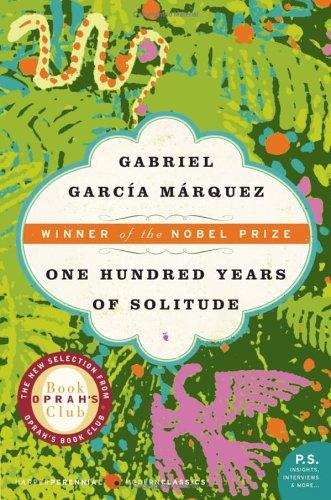
There are moments in literary history when a single book changes everything — when a novel arrives that is so original, so powerful, and so complete in its vision that it redraws the map of what literature can do. One Hundred Years of Solitude by Gabriel Garcia Marquez is such a book. Published in 1967 in Buenos Aires, it sold out its initial print run of eight thousand copies within a week. Within months, it had swept across Latin America like a literary earthquake. Within years, it had been translated into dozens of languages and recognized as one of the supreme achievements of twentieth-century fiction. When Garcia Marquez received the Nobel Prize in Literature in 1982, the Swedish Academy cited One Hundred Years of Solitude as the centerpiece of a body of work "in which the fantastic and the realistic are combined in a richly composed world of imagination, reflecting a continent's life and conflicts."
The novel tells the story of the Buendia family across seven generations in the fictional Colombian town of Macondo — from its founding in a remote wilderness to its ultimate destruction in a biblical windstorm. It is a family saga, a history of a nation, a creation myth, a cautionary tale, and a love letter to storytelling itself, all woven together in a prose of hypnotic beauty and irrepressible energy. Garcia Marquez blends the mundane and the miraculous with such seamless confidence that the reader accepts levitating priests, rains of yellow flowers, insomnia plagues, and women ascending to heaven on bedsheets as naturally as births, deaths, marriages, and wars. This is the literary technique known as magical realism, and while Garcia Marquez did not invent it, he perfected it so thoroughly that the term has become virtually synonymous with his name.
But to call One Hundred Years of Solitude a work of magical realism, while accurate, is reductive. It is also a political novel that chronicles the brutal history of Colombia and Latin America — the civil wars, the foreign exploitation, the massacres and coverups, the cycles of revolution and repression that have shaped the continent's destiny. It is a philosophical novel that explores the nature of time, memory, fate, and the human need to create meaning in a universe that may be indifferent to our existence. It is a comic novel of extraordinary wit and inventiveness, filled with characters whose absurdities and obsessions are at once hilarious and heartbreaking. And it is, above all, a novel about solitude — about the essential isolation of every human being, the impossibility of truly knowing another person, and the way that loneliness echoes down through the generations of a family, each member repeating the mistakes and the sorrows of those who came before.
Historical Context
Gabriel Garcia Marquez was born in 1927 in Aracataca, a small town in the Caribbean coastal region of Colombia. Like Macondo, Aracataca was a town that had experienced a brief boom — in this case, a banana boom in the early twentieth century, fueled by the United Fruit Company — followed by a long decline into obscurity and poverty. Garcia Marquez was raised largely by his maternal grandparents, and the stories his grandmother told him — in which the supernatural and the everyday existed side by side, in which ghosts were as real as neighbors and miracles were as common as rainstorms — would become the foundation of his literary imagination.
The political context of the novel is rooted in the violent history of Colombia, which experienced a devastating civil conflict known as La Violencia (The Violence) from 1948 to 1958, during which an estimated 200,000 to 300,000 people were killed. This period was itself the continuation of a long series of civil wars between the Liberal and Conservative parties that had torn the country apart since independence from Spain in the early nineteenth century. The novel's Colonel Aureliano Buendia, who fights thirty-two civil wars and loses them all, is a fictionalized composite of the real-world Liberal military commanders who led insurrections against Conservative governments throughout the late nineteenth and early twentieth centuries.
The banana company massacre depicted in the novel — in which the army opens fire on striking workers and the government subsequently denies that the massacre ever took place — is based on an actual event: the Banana Massacre of 1928, in which Colombian soldiers killed an unknown number of striking workers at the United Fruit Company's plantations near Santa Marta. The Colombian government denied the massacre for decades, and the exact number of victims remains disputed. Garcia Marquez's fictionalization of this event — in which Jose Arcadio Segundo witnesses the massacre and is told by everyone afterward that nothing happened — is both a historical indictment and a meditation on the power of official narratives to erase reality.
The literary context of the novel is equally important. Garcia Marquez was part of the Latin American "Boom" — a literary explosion of the 1960s and 1970s that brought writers like Julio Cortazar, Carlos Fuentes, Mario Vargas Llosa, and Jose Donoso to international prominence. These writers were united not by a common style but by a shared ambition: to create a distinctively Latin American literature that was the equal of the best European and North American writing while remaining rooted in the particular realities — historical, cultural, linguistic, political — of the Latin American experience. One Hundred Years of Solitude was the Boom's crowning achievement, the novel that proved beyond any doubt that Latin American literature could compete on the world stage with the greatest works of any tradition.
Garcia Marquez's literary influences were eclectic and wide-ranging. He absorbed the narrative techniques of Faulkner (the multi-generational Southern sagas, the circular sense of time, the creation of a fictional region as a microcosm of a larger reality), the transformative vision of Kafka (the matter-of-fact narration of impossible events), and the encyclopedic ambition of Rabelais and Cervantes (the desire to contain an entire world within a single book). But his most important influence was his grandmother, whose storytelling style — calm, detailed, utterly convincing, treating the fantastic as ordinary and the ordinary as worthy of wonder — became the novel's distinctive narrative voice.
Plot Summary
Any attempt to summarize the plot of One Hundred Years of Solitude is, by necessity, an act of radical simplification. The novel encompasses seven generations of the Buendia family, spanning roughly a century, and its narrative encompasses dozens of major characters, multiple wars, plagues, natural disasters, love affairs, feuds, miracles, and catastrophes. But the broad arc of the story can be sketched in outline.
The novel begins with its most famous opening sentence: "Many years later, as he faced the firing squad, Colonel Aureliano Buendia was to remember that distant afternoon when his father took him to discover ice." This single sentence — with its telescoping of time, its blend of the momentous (a firing squad) and the mundane (the discovery of ice), its establishment of a narrative voice that moves effortlessly between past and future — contains the DNA of the entire novel. Everything that follows is an elaboration and a complication of the themes, techniques, and emotional textures announced in this extraordinary first line.
Jose Arcadio Buendia and his wife Ursula Iguaran found the village of Macondo in a remote, fertile region of the Colombian wilderness. They have left their original village after Jose Arcadio killed a man in a dispute and was haunted by his ghost. Macondo begins as a kind of Eden — an isolated settlement where no one has yet died, where the world is so new that "many things lacked names, and in order to indicate them it was necessary to point." Jose Arcadio Buendia is a visionary and dreamer, obsessed with scientific inquiry and the wonders brought by a band of traveling gypsies led by the mysterious Melquiades. His attempts to harness the power of magnets, daguerreotype photography, and other technologies represent the Buendia family's characteristic mixture of ambition, obsession, and futility.
The second generation introduces the novel's central contrasts and conflicts. Jose Arcadio, the eldest son, is enormous, impulsive, and sexually voracious; he runs away with the gypsies and returns years later, covered in tattoos and married to Rebeca, a foundling who arrived in Macondo eating earth and lime. Colonel Aureliano Buendia, the second son, is reserved, cold, and ultimately consumed by the passion for war. He fights thirty-two civil wars on the Liberal side, fathers seventeen sons by seventeen different women, survives fourteen assassination attempts, one firing squad, one suicide attempt, and a dose of strychnine strong enough to kill a horse, and ends his life making little gold fishes in his workshop, melting them down and remaking them in an endless cycle that mirrors the novel's larger patterns of repetition and circularity.
Ursula Iguaran, the family's matriarch, is the novel's most enduring and resilient character. She lives to be well over a hundred years old, maintaining the family home through generations of chaos, warfare, and decay. She is the practical counterweight to the Buendia men's visionary madness — the one who keeps the household running, the one who remembers what the men forget, the one who sees through the pretensions and self-deceptions that the men cannot see through. Her gradual blindness in old age — which she conceals from the family by navigating the house through memorized routines — is a poignant symbol of the family's decline and of the way that habit and memory can substitute for genuine understanding.
The middle generations of the family repeat and elaborate the patterns established by the first. The names Jose Arcadio and Aureliano recur obsessively, each generation producing new versions of these archetypal figures — the sensual, impulsive Jose Arcadios and the cold, driven Aurelianos — as if the family is trapped in a cycle of repetition from which it cannot escape. The women of the family — Amaranta, who waits her whole life for death; Remedios the Beauty, who is so beautiful that men literally die in her presence and who eventually ascends to heaven; Meme, whose forbidden love affair leads to the birth of the family's penultimate generation — are drawn with equal vividness and complexity.
Macondo itself undergoes a parallel trajectory of rise and fall. From its idyllic beginnings as an isolated village, it grows into a bustling town connected to the outside world by railroad. The arrival of the banana company brings temporary prosperity but also exploitation, violence, and the massacre of the workers. Civil wars rage through the town repeatedly, each one erasing the memory of the last. A rain that lasts four years, eleven months, and two days reduces Macondo to a swamp and its inhabitants to torpor. The novel's final pages describe the last of the Buendias — Aureliano Babilonia, who has spent his life deciphering the parchments left by the gypsy Melquiades — as he finally reads the manuscript that turns out to be the history of his own family, written a hundred years in advance. As he reads, a biblical windstorm destroys Macondo forever, erasing the town and the family from existence as if they had never been. The last line of the novel — "because races condemned to one hundred years of solitude did not have a second opportunity on earth" — closes the circle with a finality that is both devastating and strangely satisfying.
Character Analysis
Jose Arcadio Buendia: The Patriarch and Visionary
Jose Arcadio Buendia, the founder of Macondo, is one of Garcia Marquez's most memorable creations — a man of boundless curiosity, irrepressible energy, and ultimately tragic limitations. His response to every new discovery brought by the gypsies — magnets, telescopes, magnifying glasses, ice — is to imagine some grand, transformative application that invariably fails. He tries to use magnets to find gold, to weaponize magnifying glasses, to build an ice factory in the tropics. His ambitions are noble in their aspiration and absurd in their execution, and this combination of grandeur and futility is the Buendia family's defining characteristic.
Jose Arcadio Buendia's intellectual passions eventually drive him mad. He becomes obsessed with the idea that every day is Monday — that time has stopped, that the world is stuck in an eternal present — and he is tied to a chestnut tree in the courtyard, where he lives for the rest of his life, babbling in a language that only a single visiting priest recognizes as Latin. His madness is not merely personal but symbolic: it represents the human mind overwhelmed by its own ambitions, unable to reconcile its desire for understanding with the overwhelming complexity of reality. Jose Arcadio Buendia's chestnut tree becomes a recurring image in the novel — a reminder that the family's founder died mad, and that the seeds of madness are present in every generation.
Ursula Iguaran: The Indestructible Matriarch
If Jose Arcadio Buendia represents the family's visionary, impractical male line, Ursula represents its pragmatic, enduring female counterpart. She is the novel's true heroine — the one who holds the family and the household together through a century of wars, plagues, and disasters. Her strength is not the dramatic strength of the warriors and revolutionaries but the quiet, persistent strength of survival: she cooks, she cleans, she manages, she adapts, she endures. When the family's fortunes decline, she starts a candy-making business. When the men destroy what she has built, she rebuilds it. When she goes blind, she keeps functioning through sheer force of memory and habit.
Ursula is also the family's moral conscience — the one who recognizes the patterns of repetition and self-destruction that the others cannot see. "The history of the family was a machine of unavoidable repetitions, a turning wheel that would have gone on spinning into eternity were it not for the progressive and irremediable wearing of the axle," she reflects near the end of her life. This insight — that the family is trapped in a cycle from which it cannot escape — is the novel's central tragic perception, and it is appropriate that it comes from the character who has watched the most generations come and go.
Colonel Aureliano Buendia: The Revolutionary Disillusioned
Colonel Aureliano Buendia is perhaps the novel's most complex character — a man who begins as a sensitive, introverted youth and is transformed by war into a cold, ruthless military commander who has forgotten why he is fighting. His thirty-two civil wars, all lost, represent the futility of political violence in Latin America — the way that revolutions devour their own ideals, that leaders become indistinguishable from the tyrants they set out to overthrow, and that the cycles of warfare leave nothing behind but destruction and disillusionment.
The Colonel's most significant moment comes not in battle but in his decision to sign a peace treaty — a decision that haunts him for the rest of his life because it represents the ultimate admission that his entire career of warfare was meaningless. In his old age, he retreats to his workshop, where he makes little gold fishes, melts them down, and remakes them — an activity that embodies the novel's theme of circularity and repetition. He has become a man who does the same thing over and over, not because it achieves anything but because the repetition itself is a way of filling the void left by the loss of purpose and meaning.
Remedios the Beauty and Other Memorable Figures
One of the novel's great pleasures is its gallery of extraordinary supporting characters. Remedios the Beauty, the most beautiful woman who has ever lived, moves through the novel like a force of nature — unconscious of her beauty, indifferent to social convention, and so purely innocent that she is eventually lifted up to heaven on a set of bedsheets while hanging laundry. Her ascension is presented with the same matter-of-fact narrative tone that Garcia Marquez uses for everything else — births, deaths, wars, meals — and this tonal consistency is the secret of the novel's magical realism. The narrator does not flag the miraculous; he simply reports it, trusting the reader to accept it as part of the world he has created.
Other unforgettable characters include Amaranta, whose lifelong rivalry with Rebeca and whose refusal to consummate her love affairs make her one of the novel's most tormented figures; Pilar Ternera, the fortune-telling matriarch who sleeps with both Jose Arcadio and Aureliano and whose card readings link the family's destiny to the larger patterns of fate; Petra Cotes, whose passionate affair with Aureliano Segundo is so intense that it causes their livestock to reproduce at supernatural rates; and Melquiades, the gypsy sage whose parchments contain the family's entire history, written in advance in Sanskrit and encoded in an elaborate cipher that only the last of the Buendias can decipher.
Major Themes
Magical Realism: The Fusion of the Mundane and the Miraculous
The term "magical realism" has been applied to a wide range of literary works, but it finds its purest and most powerful expression in One Hundred Years of Solitude. Garcia Marquez does not use the fantastic as an escape from reality; he uses it as a means of illuminating reality — of revealing truths about human experience that conventional realism cannot capture. When a rain of yellow flowers falls on Macondo at the death of Jose Arcadio Buendia, Garcia Marquez is not merely being fanciful; he is expressing, in a language that transcends the limitations of literal description, the enormity of loss and the way that nature itself seems to mourn the passing of a great soul. When Remedios the Beauty ascends to heaven, Garcia Marquez is capturing something real about the way that extraordinary beauty can seem otherworldly, can seem to belong to a realm beyond the ordinary — a truth that cannot be expressed in strictly realistic terms.
The key to Garcia Marquez's magical realism is his narrative tone. He describes the miraculous with the same calm, detailed, matter-of-fact precision that he uses to describe the mundane. There is no shift in register when a character levitates, when the dead return as ghosts, or when a plague of insomnia erases an entire town's memory. This consistency of tone is what makes the magical elements feel not like intrusions from another genre but like natural features of the world Garcia Marquez has created — a world in which the boundary between the possible and the impossible is more porous than we ordinarily assume.
"Garcia Marquez showed us that the line between the real and the magical is drawn by convention, not by nature. In his hands, the miraculous becomes ordinary and the ordinary becomes miraculous, and we suddenly see that this is how life actually works — that the world is far stranger and more wonderful than our habitual perceptions allow us to recognize." — Salman Rushdie
Solitude: The Human Condition
The novel's title announces its central theme, and solitude pervades every level of the narrative — from the individual characters, each of whom is fundamentally alone despite their entanglements with others, to the Buendia family as a whole, which is isolated from the broader currents of history by its remote location and its self-absorbed obsessions, to Macondo itself, which exists in a kind of geographical and temporal isolation from the outside world.
Each Buendia is solitary in a distinctive way. Jose Arcadio Buendia is isolated by his intellectual obsessions, which make him incomprehensible to those around him. Colonel Aureliano Buendia is isolated by the emotional armor he builds around himself to survive the horrors of war. Amaranta is isolated by her pride and her fear of intimacy. Rebeca is isolated by the secret of her parentage and the stigma of her earth-eating habit. Even the characters who seem most connected to others — Ursula, with her fierce family loyalty; Pilar Ternera, with her many lovers — are fundamentally alone, unable to bridge the gap between their inner lives and the world around them.
Garcia Marquez suggests that solitude is not merely a personal failing but an inescapable feature of the human condition — perhaps even a curse. The Buendias' solitude is portrayed as a kind of genetic destiny, a trait passed down through the generations like their names and their obsessions. The novel's final revelation — that the family's entire history was written in advance by Melquiades, and that the family was "condemned to one hundred years of solitude" — implies that their isolation was not chosen but imposed, part of a fate they could not escape. This deterministic vision is both tragic and oddly liberating: if solitude is inevitable, then there is no point in blaming oneself for it. The best one can do is to live within it with as much dignity and passion as possible.
"What Garcia Marquez understood, and what he made the world understand, is that solitude is not the opposite of connection but its precondition. We are all alone, fundamentally and irreducibly alone, and the great achievement of human civilization is not to eliminate that solitude but to create forms of beauty and meaning that make it bearable." — Toni Morrison
The Circularity of Time and the Repetition of History
One of the novel's most striking features is its treatment of time, which is not linear but circular. Events repeat themselves across generations — the same names, the same passions, the same mistakes, the same tragedies — as if the family is caught in a loop from which it cannot break free. The Jose Arcadios are always impulsive and sensual; the Aurelianos are always cold and driven. The same patterns of love, war, obsession, and decline recur with variations but without fundamental change. Ursula recognizes this pattern late in her life: "it was as if the world were repeating itself," she reflects. "It's as if time had turned around and we were back at the beginning."
This circular conception of time reflects both the specific historical experience of Latin America — where cycles of revolution and repression, boom and bust, hope and disillusionment have recurred with numbing regularity — and a more universal truth about the human tendency to repeat the mistakes of the past. Garcia Marquez is not merely making a philosophical point; he is dramatizing something that anyone who has observed their own family across generations will recognize: the uncanny way that patterns of behavior, emotional styles, and characteristic weaknesses seem to reappear in new forms, as if the past were not dead but merely dormant, waiting to reassert itself in the next generation.
The novel's structure reinforces this theme of circularity. The famous opening sentence points forward in time (to the firing squad) and backward (to the discovery of ice) simultaneously, establishing a narrative that will move freely between past and future, cause and effect. The novel's ending — in which Aureliano Babilonia reads the manuscript of the family's history at the very moment that history is coming to an end — closes the circle with a finality that is both devastating and aesthetically satisfying. The story of the Buendias is a closed loop, a circle that begins and ends in the same place, and this circularity is both the source of the novel's tragic power and the key to its formal elegance.
Latin American History and Political Violence
Beneath the novel's magical surface lies a detailed and often harrowing chronicle of Latin American political history. The civil wars that consume Colonel Aureliano Buendia's life mirror the actual civil wars that plagued Colombia throughout the nineteenth and early twentieth centuries — conflicts between Liberal and Conservative factions that killed hundreds of thousands of people and left deep scars on the national psyche. The arrival of the banana company and the subsequent massacre of its workers directly references the United Fruit Company and the Banana Massacre of 1928. The government's denial that the massacre ever took place — Jose Arcadio Segundo is told that "nothing has happened in Macondo, nothing has ever happened, and nothing ever will happen" — captures the infuriating reality of official erasure that has characterized Latin American politics for centuries.
Garcia Marquez uses magical realism not to escape from this political reality but to represent it more truthfully than conventional realism could. The insomnia plague that erases the townspeople's memories, forcing them to label everything with its name ("This is the cow. It must be milked every morning so that it will produce milk, and the milk must be boiled in order to be mixed with coffee to make coffee and milk"), is a metaphor for the political amnesia that allows atrocities to be forgotten and repeated. The rain that lasts four years, eleven months, and two days is a metaphor for the stagnation and despair that follow periods of exploitation and violence. The wind that destroys Macondo at the novel's end is a metaphor for the forces of history that sweep away entire communities without leaving a trace.
Love, Desire, and the Impossibility of Connection
The novel is filled with love affairs — passionate, destructive, obsessive, tender, comic, tragic — and yet genuine connection between lovers remains elusive throughout. The Buendias love intensely but they love badly: they fall in love with people they cannot have, they destroy the people they love, they confuse desire with possession, and they are unable to sustain the intimacy that love requires. The family's recurring fear of incest — the prophecy that a Buendia born of incest will have a pig's tail — is both a literal plot device and a symbol of the family's insularity, its inability to open itself to the outside world and form connections beyond its own bloodline.
The novel's treatment of love is neither romantic nor cynical but something more complex and more honest than either. Garcia Marquez shows that love is simultaneously the most powerful force in human life and the most unreliable — that it can inspire extraordinary acts of devotion and sacrifice while also causing unbearable suffering and destruction. The love stories in the novel run the gamut from the passionate but doomed affair between Meme and Mauricio Babilonia (whose love is punished by the family with imprisonment and permanent surveillance) to the grotesque coupling of the last two Buendias, whose consummation of their desire produces the child with a pig's tail that fulfills the prophecy and seals the family's doom.
"Before One Hundred Years of Solitude, Latin American literature existed in the shadow of European models. After it, Latin American literature cast its own shadow over the world. Garcia Marquez did not merely write a great novel; he founded a tradition. He showed that the Latin American experience — with all its violence, its magic, its solitude, and its extravagant beauty — was not a footnote to Western civilization but a civilization in its own right, with its own stories to tell and its own ways of telling them." — Pablo Neruda
Writing Style and Literary Craft
Garcia Marquez's prose style in One Hundred Years of Solitude is one of the wonders of modern literature. It is characterized by long, sinuous sentences that accumulate detail and momentum as they unfold, creating a narrative flow that is simultaneously leisurely and irresistible. The characteristic Garcia Marquez sentence begins with a specific, concrete detail, expands to encompass a wider scene or a longer span of time, and ends with a revelation or a twist that recontextualizes everything that came before. The effect is of a camera that begins in close-up and gradually pulls back to reveal an entire landscape — a technique that mirrors the novel's movement between individual lives and the sweeping panorama of history.
The novel's narrative voice is one of its most distinctive features. Garcia Marquez adopted a tone that he described as his grandmother's storytelling voice — calm, authoritative, and utterly unflappable, treating the miraculous and the mundane with identical seriousness and identical precision. This tone is the secret of the novel's magical realism: because the narrator does not register surprise at impossible events, the reader accepts them as part of the world's natural order. A man levitates? The narrator describes it as calmly as he would describe a man sitting down to breakfast. A woman ascends to heaven? The narrator notes the time of day and the weather conditions with the same attention to detail he would give to any other departure.
The novel's structure is ambitious and complex — seven generations of a family, spanning roughly a century, with dozens of major characters and hundreds of incidents — yet Garcia Marquez manages this complexity with extraordinary assurance. He uses the recurring names as structural markers, creating a kind of genealogical rhythm that helps the reader track the passage of generations. He uses the town of Macondo as a unifying setting, anchoring the sprawling narrative in a single, vividly realized place. And he uses the parchments of Melquiades — the gypsy manuscript that contains the family's history, written in advance — as a framing device that gives the narrative a sense of inevitability and closure.
The novel's use of humor is another of its great strengths. Garcia Marquez is one of the funniest serious writers in literary history, and One Hundred Years of Solitude is filled with moments of inspired absurdity: the insomnia plague and its increasingly desperate remedies, the general who orders his men to paint the trees to create the impression of a forest, Colonel Aureliano Buendia's seventeen sons who all arrive in Macondo on the same day, the pet rooster that Colonel Gerineldo Marquez takes to war. This humor is not merely decorative; it is integral to the novel's vision of life as simultaneously tragic and comic, devastating and absurd. Garcia Marquez understood that laughter and tears are not opposites but companions — that the deepest truths about human existence are often best expressed through the juxtaposition of the sublime and the ridiculous.
Gregory Rabassa's English translation of the novel, published in 1970, is widely considered one of the finest literary translations ever produced. Garcia Marquez himself reportedly said that Rabassa's translation was better than the original — a generous but not entirely implausible claim, given the extraordinary skill with which Rabassa captures the rhythm, the humor, and the emotional resonance of Garcia Marquez's Spanish prose in English. For English-language readers, Rabassa's translation is the definitive text, and its quality has played a significant role in the novel's worldwide reputation.
Critical Reception
The critical reception of One Hundred Years of Solitude was immediate and overwhelmingly positive. From its publication in 1967, the novel was recognized as a masterpiece — not merely a good book but a transformative one, a novel that changed the possibilities of fiction. Pablo Neruda called it "the greatest revelation in the Spanish language since Don Quixote." Julio Cortazar declared it "the best novel written in Spanish in a hundred years." Carlos Fuentes compared its impact to that of Cervantes and Rabelais. The consensus was unanimous: Garcia Marquez had written a book of world-historical significance.
The novel's commercial success matched its critical acclaim. It has sold more than fifty million copies worldwide and has been translated into forty-six languages. It is one of the bestselling novels ever written in any language, and it remains Garcia Marquez's most widely read and most celebrated work. Its popularity has never waned — each new generation of readers discovers it and is enchanted by it, and its influence on subsequent literature has been incalculable.
The novel played a central role in Garcia Marquez's receipt of the Nobel Prize in Literature in 1982. The Swedish Academy's citation praised his novels and short stories, "in which the fantastic and the realistic are combined in a richly composed world of imagination, reflecting a continent's life and conflicts." Garcia Marquez's Nobel lecture, "The Solitude of Latin America," was itself a masterpiece of prose, arguing that the apparently magical elements of his fiction were actually realistic representations of a Latin American reality that was stranger and more wonderful than any European reader could imagine.
Some critics have raised questions about the novel over the years. Feminist critics have noted that the female characters, while vividly drawn, are often defined primarily by their relationships to men and their domestic roles. Postcolonial critics have debated whether magical realism, despite its origins in Latin American culture, has been co-opted by the global literary market as an exotic commodity — a way of packaging Latin American experience for Western consumption. And some readers have found the novel's profusion of characters and events overwhelming, particularly on a first reading. But these criticisms, while worth considering, have done nothing to diminish the novel's reputation or its hold on the literary imagination.
Famous Quotes About This Book
"One Hundred Years of Solitude is the greatest revelation in the Spanish language since Don Quixote. Garcia Marquez has created a complete world — with its own geography, its own history, its own mythology — and populated it with characters so vivid and so human that they seem to step off the page and take up residence in the reader's memory." — Pablo Neruda
"Garcia Marquez is the most important writer of fiction in any language since William Faulkner. One Hundred Years of Solitude is not merely a great novel; it is a kind of scripture for the modern age — a creation myth, a family saga, and a love letter to the human capacity for wonder, all compressed into a single magnificent book." — Salman Rushdie
"Reading One Hundred Years of Solitude for the first time, I felt that I was encountering a kind of writing that made all other writing seem timid by comparison. Garcia Marquez had the courage to imagine the world as it truly is — not as realism depicts it, with its careful boundaries between the possible and the impossible, but as we actually experience it, where love and death and miracles and ordinary Tuesday afternoons are all part of the same fabric." — Toni Morrison
Legacy and Cultural Impact
The legacy of One Hundred Years of Solitude is difficult to overstate. It is one of those rare books that not only changed literature but changed the way people think about what literature can do. Before its publication, magical realism was a marginal literary technique, associated primarily with a small number of Latin American and European writers. After its publication, it became a global literary movement, adopted by writers on every continent — from Salman Rushdie in India to Ben Okri in Nigeria, from Toni Morrison in the United States to Haruki Murakami in Japan. Garcia Marquez did not merely use magical realism; he demonstrated its power so convincingly that it became a permanent part of the literary toolkit.
The novel's influence on Latin American literature and culture is particularly profound. It gave Latin America a literary masterpiece of unquestionable world-class stature, affirming that the continent's literary tradition was not a derivative of European models but an original and vital tradition in its own right. It inspired a generation of Latin American writers — from Isabel Allende to Laura Esquivel to Roberto Bolano — to explore the possibilities of magical realism and to draw on the particular realities of their own cultures and histories. And it gave Latin American readers a mirror in which they could see their own experience reflected with a depth, a beauty, and a honesty that no previous work of literature had achieved.
The novel has also had a significant impact on other art forms. It has influenced filmmakers (from Guillermo del Toro to Alejandro Gonzalez Inarritu), visual artists, musicians, and even architects. Its creation of Macondo — a fictional town that feels more real than many actual places — has inspired the naming of real neighborhoods, cultural centers, and literary festivals across Latin America and beyond. Macondo has become a symbol of the Latin American experience — a place that is simultaneously specific and universal, rooted in Colombian geography and history yet recognizable to readers from any culture who have experienced the cycles of hope and despair, creation and destruction, that define the human condition.
In November 2019, Netflix announced a long-awaited television adaptation of the novel, to be filmed in Colombia and produced in Spanish — a decision that Garcia Marquez's sons made after years of declining offers, insisting that any adaptation must be in the original language and must do justice to the novel's scope and ambition. The announcement generated enormous excitement and underscored the novel's continued cultural relevance more than half a century after its publication.
Perhaps the novel's most lasting legacy is the way it expanded the possibilities of fiction itself. Before One Hundred Years of Solitude, the dominant mode of serious literary fiction was realism — the careful, detailed, psychologically precise representation of everyday life. Garcia Marquez showed that fiction could be simultaneously realistic and fantastic, that the boundaries between the possible and the impossible were conventions rather than laws, and that the greatest truths about human experience might be best expressed not through literal representation but through metaphor, symbol, and the free play of the imagination. This lesson has been absorbed so thoroughly by contemporary fiction that it is easy to forget how revolutionary it was when Garcia Marquez first demonstrated it.
Why You Should Read It Today
If you have never read One Hundred Years of Solitude, you are about to have one of the great reading experiences of your life. The novel is challenging — its profusion of characters, its nonlinear chronology, and its blending of the real and the fantastic require a degree of attentiveness that not all readers are accustomed to giving. But the rewards are extraordinary. No other novel offers such a complete and immersive experience of an imagined world. No other novel blends comedy and tragedy, the intimate and the epic, the historical and the mythical with such seamless mastery. And no other novel achieves such a perfect fusion of form and content — the circular structure mirroring the circular themes, the magical prose embodying the magical worldview, the encyclopedic scope reflecting the encyclopedic ambition.
The novel is particularly relevant to our current moment, when questions of collective memory, historical truth, and the erasure of uncomfortable pasts are at the forefront of public discourse. Garcia Marquez's depiction of the banana company massacre — an event that actually happened, was actually denied by the government, and was actually erased from collective memory — resonates powerfully in an age of "alternative facts" and contested historical narratives. His exploration of the cycles of political violence — revolution followed by repression followed by revolution — speaks to contemporary debates about the nature of political change and the question of whether genuine progress is possible or whether societies are doomed to repeat the mistakes of the past.
For readers who have read the novel before, a rereading is almost always a revelation. The first reading is often a somewhat bewildering experience, as the reader struggles to keep track of the many characters and their complicated relationships. On a second reading, freed from the need to follow the plot, the reader can appreciate the novel's extraordinary craftsmanship — the way every detail contributes to the whole, the way every episode echoes and illuminates every other episode, the way the novel's themes of solitude, repetition, and fate are woven into every level of the narrative. Third and fourth readings reveal still more: subtle ironies, buried allusions, structural symmetries that were invisible on earlier encounters. One Hundred Years of Solitude is one of those rare novels that is genuinely inexhaustible — a book that yields new discoveries and new pleasures no matter how many times it is read.
A practical tip for first-time readers: do not try to keep track of every character and every plot thread. Allow yourself to be carried along by the narrative current, trusting that the important patterns will emerge on their own. Keep a family tree handy if you like (many editions include one), but do not let the complexity of the genealogy distract you from the pleasure of the prose. Garcia Marquez did not write this novel to be decoded; he wrote it to be experienced. The experience of reading One Hundred Years of Solitude — the sensation of being immersed in a world that is simultaneously familiar and utterly strange, tragic and comic, real and magical — is one of the great gifts that literature has to offer.
Conclusion
Gabriel Garcia Marquez died on April 17, 2014, at the age of eighty-seven, in Mexico City. He had published many books after One Hundred Years of Solitude — including The Autumn of the Patriarch, Chronicle of a Death Foretold, and Love in the Time of Cholera, each a masterpiece in its own right — but it was always One Hundred Years of Solitude that defined him, that secured his place in literary history, and that continued to captivate readers around the world long after its first publication. He accepted this with characteristic grace and humor, recognizing that to have written one book that changed the world was more than most writers could dream of.
The novel endures because it speaks to something fundamental in the human experience — the longing for connection in the face of solitude, the desire for meaning in the face of chaos, the hope for progress in the face of relentless repetition. It endures because Garcia Marquez told the truth about the world — not the literal truth of journalism or the selective truth of conventional realism, but the deeper truth of myth and imagination, the truth that can only be captured by a prose that is willing to embrace the impossible, the absurd, and the miraculous alongside the mundane. It endures because it is, quite simply, one of the most beautiful, most inventive, and most profoundly human books ever written.
Macondo may have been destroyed by the wind at the novel's end, but it lives on in the imagination of every reader who has walked its dusty streets, met its extraordinary inhabitants, and felt the solitude that is their birthright and their curse. Garcia Marquez created a world so complete, so vivid, and so true that it has become a permanent part of our collective memory — a place we can return to whenever we need to be reminded of the strangeness and beauty of being alive. That is the ultimate achievement of One Hundred Years of Solitude, and it is an achievement that will endure as long as people read and dream and tell stories about the wonderful, terrible, magical, heartbreaking experience of being human.