


Introduction: The Novel America Needed
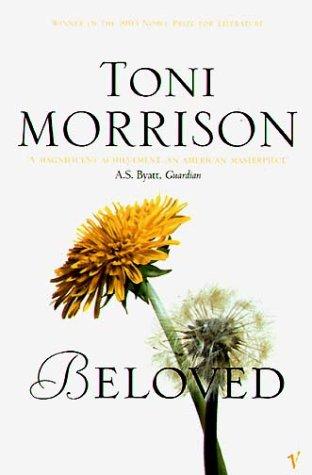
There are novels that entertain, novels that educate, and then there are novels that haunt. Toni Morrison's Beloved, published in 1987, does all three, but it is the haunting that stays with you — that follows you out of the book and into your waking life, reshaping the way you think about history, memory, love, and what it means to be free. Winner of the Pulitzer Prize for Fiction in 1988, named the best American novel of the past twenty-five years in a 2006 New York Times survey of prominent writers and critics, Beloved is not merely a great novel. It is, as the British novelist A.S. Byatt declared, America's novel — the book that most fully reckons with the original sin of American civilization.
Set in Cincinnati, Ohio, in 1873, eight years after the end of the Civil War, Beloved tells the story of Sethe, a formerly enslaved woman who escaped from a Kentucky plantation called Sweet Home. Sethe lives at 124 Bluestone Road with her daughter Denver and the ghost of a baby — a baby whose throat Sethe cut rather than allow her to be taken back into slavery. This act — an act of love so extreme it becomes indistinguishable from violence — is the moral center of the novel, the event around which everything else orbits and from which everything else radiates.
Morrison based the novel on the true story of Margaret Garner, an enslaved woman who in 1856 killed her own daughter rather than see her returned to bondage. But Beloved is not a historical novel in the conventional sense. It does not reconstruct the past with documentary precision. Instead, it inhabits the past — enters its consciousness, speaks in its voice, and refuses to let the reader maintain the safe distance that historical fiction typically provides. Reading Beloved is not like reading about slavery. It is like being inside it, feeling its weight on your bones and its echoes in your mind.
"Beloved is a masterwork. It is the closest thing I know to a sacred text in American literature." — A.S. Byatt, author of Possession
About the Author: Toni Morrison
Toni Morrison, born Chloe Ardelia Wofford on February 18, 1931, in Lorain, Ohio, is widely regarded as one of the greatest American writers of the twentieth century. She won the Pulitzer Prize for Beloved in 1988 and the Nobel Prize in Literature in 1993, becoming the first African American woman to receive the Nobel. Over a career spanning five decades, she published eleven novels, numerous essays, children's books, and works of literary criticism, all devoted to exploring the inner lives of African Americans with a depth, complexity, and beauty that had no precedent in American literature.
Morrison grew up in a working-class family that valued storytelling, music, and African American folklore. Her parents had migrated from the South to escape racism, and the stories of their experiences — and the experiences of their parents and grandparents — formed the rich oral tradition from which Morrison would draw throughout her career. She studied English at Howard University and Cornell, then worked as an editor at Random House, where she was instrumental in bringing African American literature to mainstream publishing. She edited works by Muhammad Ali, Angela Davis, and Gayl Jones, among others, while quietly writing her own novels in the early morning hours before work.
Morrison's first novel, The Bluest Eye (1970), established her central concerns: the inner lives of Black women, the psychological damage of racism, and the complex dynamics of love within communities shaped by oppression. These concerns deepened and expanded through Sula (1973), Song of Solomon (1977), and Tar Baby (1981), each novel more ambitious in scope and more assured in voice than the last. But it was Beloved that represented Morrison's fullest achievement — the novel in which all of her gifts came together in a work of overwhelming power.
Morrison died on August 5, 2019, at the age of eighty-eight. In the years since her death, her reputation has only grown. Her novels are taught in universities worldwide, studied by scholars across dozens of disciplines, and read by millions of people who find in her work a truthfulness about the American experience that few other writers have achieved. Beloved remains the cornerstone of her legacy — the novel that, more than any other, demonstrated what literature can do when it refuses to look away from the hardest truths.
Plot Summary
124 Bluestone Road
The novel opens with one of the most famous first lines in American literature: "124 was spiteful." The house at 124 Bluestone Road is haunted by the ghost of Sethe's dead baby, a malevolent presence that has driven away Sethe's two sons and that torments Sethe and her remaining daughter, Denver, with its rage. The ghost is not a metaphor. It is real — it shakes the house, leaves handprints in cake frosting, and shatters mirrors. Morrison presents the supernatural as matter-of-fact, a natural part of the world her characters inhabit. In a community where the boundaries between the living and the dead are porous, a haunted house is disturbing but not especially surprising.
Into this haunted house comes Paul D, one of the "Sweet Home men" — the enslaved men who worked alongside Sethe on the Kentucky plantation. Paul D's arrival disrupts the ghost's dominion. He confronts the spirit, driving it out of the house through sheer force of will, and begins to build a tentative domestic life with Sethe. For the first time in years, Sethe allows herself to imagine a future — a life beyond mere survival, a life that includes love, companionship, and the possibility of happiness.
But the past is not so easily banished. Shortly after Paul D's arrival, a young woman appears at 124, emerging from a nearby stream fully dressed and seemingly unable to account for herself. She gives her name as Beloved — the single word inscribed on the headstone of Sethe's murdered baby. Beloved is ravenous, needy, and fixated on Sethe with an intensity that is both childlike and predatory. She craves Sethe's stories, Sethe's attention, Sethe's love, as if trying to consume the eighteen years of maternal presence that were denied to her.
Rememory: The Past That Won't Stay Past
Through a series of flashbacks — or "rememories," as Sethe calls them — the novel gradually reveals the horrors of Sweet Home and the circumstances of Sethe's escape. Sweet Home was run by a relatively benign owner named Mr. Garner, who allowed his enslaved people an unusual degree of autonomy and dignity. But when Garner dies and is replaced by a man known only as "schoolteacher," the plantation becomes a place of systematic cruelty. Schoolteacher treats the enslaved people as specimens, measuring their bodies and categorizing their "animal" and "human" characteristics in notebooks. His nephews assault Sethe, holding her down and stealing her breast milk while schoolteacher watches and takes notes.
This violation — which Morrison presents not as a single dramatic event but as a wound that Sethe revisits again and again throughout the novel — is the catalyst for Sethe's escape. Pregnant with her fourth child, beaten so severely that her back is permanently scarred in a pattern that resembles a tree, Sethe sends her three children ahead to Cincinnati and then escapes alone, giving birth to her daughter Denver on the banks of the Ohio River with the help of a white girl named Amy.
For twenty-eight days, Sethe lives in freedom at 124 with her mother-in-law Baby Suggs and her four children. Then schoolteacher comes. He has tracked Sethe across the river, armed with the Fugitive Slave Act that gives him the legal right to reclaim her and her children as property. Rather than allow her children to be taken back to Sweet Home, Sethe takes them into the woodshed and attempts to kill them all. She succeeds in killing only the oldest girl, cutting her throat with a handsaw. It is this act — the act that the community calls monstrous and that Sethe calls love — that defines the novel and that haunts 124 Bluestone Road.
Beloved's Occupation
As the novel progresses, Beloved's presence at 124 becomes increasingly destructive. She seduces Paul D, driving him out of Sethe's bed and eventually out of the house. She demands more and more of Sethe's attention, growing physically larger and more dominant as Sethe shrinks and weakens. The relationship between Sethe and Beloved becomes a consuming, parasitic bond — Sethe pouring everything she has into the daughter she killed, Beloved drinking it up without ever being satisfied.
Denver, who has been isolated and fearful for most of her life, recognizes that Beloved is destroying her mother and takes action. She leaves 124 for the first time in years, seeking help from the community. The women of the neighborhood, led by Ella, a woman who understands something about doing terrible things to survive, gather at 124 and perform a collective exorcism. Their singing and praying drives Beloved away — or, more precisely, unmakes her, dissolving her back into the past from which she emerged.
The novel ends with Paul D returning to Sethe, who lies in Baby Suggs' bed, diminished and despairing. Paul D tells her, "You your best thing, Sethe. You are." The novel's final pages repeat, like an incantation, the words "This is not a story to pass on" — a phrase that means both "this story should not be forgotten" and "this story should not be transmitted," capturing the impossible double bind of traumatic memory: the need to remember and the need to forget.
Character Analysis
Sethe: The Mother Who Loved Too Thick
Sethe is one of the most complex and challenging protagonists in American literature. She is a woman who killed her own child, and the novel asks us not to forgive her or condemn her but to understand her — to enter so fully into her experience that the act, while never acceptable, becomes comprehensible. Morrison does not make this easy. She does not soften Sethe or sentimentalize her. She presents a woman whose love is so fierce, so absolute, so all-consuming that it becomes indistinguishable from violence.
"Thin love ain't love at all," Sethe says, and her love is anything but thin. It is thick — thick as the milk that was stolen from her breasts, thick as the scar tissue on her back, thick as the blood that pooled in the woodshed. Paul D tells her that her love is "too thick," and Sethe responds with one of the most devastating lines in the novel: "Love is or it ain't. Thin love ain't no love at all." This is not a justification of what she did. It is an explanation, and the distinction matters. Sethe does not claim that killing her daughter was right. She claims that it was love — a love so fierce that death was preferable to the degradation of slavery.
What makes Sethe's character so powerful is Morrison's refusal to reduce her to a single dimension. Sethe is not merely a victim of slavery, though she has suffered terribly. She is not merely a killer, though she has killed. She is a mother, a lover, a worker, a woman of intelligence and dignity and humor, who happens to carry within her a wound so deep that it has reshaped her entire existence. She is simultaneously one of the strongest and one of the most broken characters in all of literature, and the tension between her strength and her brokenness is what gives the novel its unbearable emotional power.
Beloved: The Ghost of History
Who is Beloved? The novel deliberately leaves this question open. On one level, she is the ghost of Sethe's murdered daughter, returned in the flesh to claim the life and love that were denied her. On another level, she is a survivor of the Middle Passage — one of the millions of Africans who died during the transatlantic slave trade, whose stories were never told and whose names were never recorded. On yet another level, she is the embodiment of the repressed past itself — the return of everything that Sethe and her community have tried to forget.
Morrison uses Beloved's ambiguity to stunning effect. Her interior monologue in Part Two of the novel — a fragmented, almost incomprehensible stream of consciousness — evokes both the consciousness of a dead child and the experience of the Middle Passage, with its crowded ships, its darkness, its indiscriminate death. Beloved is simultaneously individual and collective, personal and historical, a specific dead girl and all the unnamed dead of the slave trade. This multiplicity of meaning is one of the novel's greatest achievements, and it is what transforms Beloved from a powerful family drama into a work of national and even universal significance.
Denver: The Future
If Sethe represents the traumatic past and Beloved represents the return of the repressed, Denver represents the possibility of a future. She is the daughter who survived — born during Sethe's escape, raised in a haunted house, isolated from the community but not destroyed by it. Throughout most of the novel, Denver is passive and fearful, clinging to Beloved's presence as the first companionship she has known in years. But when Beloved begins to consume Sethe, Denver finds the courage to act.
Denver's decision to leave 124 and seek help from the community is the novel's turning point. It represents the moment when the next generation refuses to be consumed by the past, when the future asserts itself against the gravitational pull of history. Denver's emergence into the world — her willingness to ask for help, to accept work, to begin building a life outside the shadow of 124 — is one of the novel's few moments of genuine hope. She is the proof that survival is possible, that the past can be acknowledged without being surrendered to, and that love, even thick love, need not always end in destruction.
Paul D: The Man With a Tobacco Tin Heart
Paul D is the novel's other great character study. Like Sethe, he is a survivor of Sweet Home, but his experience of slavery was different from hers. He was sold, chained in a coffle, imprisoned in a chain gang where the men were kept in underground boxes, and forced to perform sexual acts on their guards. These experiences have left him unable to feel — or, as Morrison puts it, he has replaced his heart with a tobacco tin, rusted shut, into which he has packed all the memories and emotions that would destroy him if he let them out.
Paul D's journey in the novel is toward feeling again — toward opening the tobacco tin and letting the contents spill out. His relationship with Sethe is the catalyst for this process, but it is complicated by Beloved, who seduces him and drives him away from Sethe. Paul D's return at the end of the novel, when he tells Sethe that she is her own "best thing," represents his own recovery from the numbing effects of trauma. He has opened the tin. He has felt what is inside. And he has survived the feeling.
Major Themes
The Weight of Memory
Memory in Beloved is not a passive faculty — something that records events and stores them for later retrieval. It is an active, even aggressive force that shapes the present as powerfully as any material reality. Sethe's concept of "rememory" captures this perfectly. A rememory is not just a recollection but a kind of spiritual imprint — an experience so intense that it becomes embedded in the landscape, available to anyone who passes through the place where it occurred. Sethe tells Denver that even after she dies, her memories will persist in the world, waiting for someone to stumble into them.
This concept has profound implications for the novel's treatment of slavery. Morrison suggests that the trauma of slavery is not confined to the past. It persists in the present — in the landscape, in the community, in the bodies and minds of survivors and their descendants. You cannot simply choose to forget slavery any more than you can choose to forget a scar on your back. The past is physically present, inscribed in the world, and it will reassert itself whether you want it to or not. Beloved's arrival at 124 is the ultimate expression of this idea: the past literally shows up at the door, embodied and demanding.
The Paradox of Freedom
One of the most devastating insights in Beloved is that freedom does not automatically heal the wounds of slavery. Sethe has been free for eighteen years when the novel begins, but she is not free of Sweet Home. The scars on her back, the memories in her mind, the ghost in her house — all of these are reminders that legal emancipation is only the beginning of freedom, not its completion. Morrison shows that the psychological damage of slavery — the dehumanization, the loss of autonomy, the destruction of family bonds — persists long after the chains have been removed.
This theme gives Beloved a political urgency that extends far beyond its historical setting. Morrison is not writing only about the aftermath of slavery in the 1870s. She is writing about the ongoing effects of slavery on American society — the ways in which the nation's original sin continues to shape its present. The question the novel poses is not "How terrible was slavery?" — a question whose answer is obvious. The question is "What does slavery do to the people who survive it, and how do they — how do we — live with what was done?"
Motherhood Under Impossible Conditions
At its heart, Beloved is a novel about motherhood — specifically, about what it means to be a mother when the institution of slavery denies you the right to keep, protect, or raise your own children. Sethe's mother-in-law Baby Suggs had eight children by six different men; all but one were sold away from her. Sethe's own mother, hanged for attempting to escape, had thrown away the children conceived through rape and kept only Sethe, the child conceived in something like love. The systematic destruction of the mother-child bond is, Morrison suggests, one of the deepest crimes of slavery — a crime that reverberates through generations.
Sethe's killing of Beloved must be understood in this context. She does not kill her daughter out of madness or desperation alone. She kills her out of a mother's determination to protect her child — a determination so absolute that it encompasses even death. "If I hadn't killed her she would have died," Sethe says, meaning that the girl who would have grown up on Sweet Home — measured, catalogued, used, degraded — would not have been her daughter in any meaningful sense. Sethe chose to end her daughter's life rather than see her daughter's self destroyed. It is an impossible choice, and Morrison refuses to resolve its impossibility.
"I think it is the most extraordinary work of literary fiction that has been produced in the Western Hemisphere." — Gabriel Garcia Marquez, Nobel laureate and author of One Hundred Years of Solitude
The Community as Character
One of the most overlooked aspects of Beloved is its treatment of community. The novel is not merely the story of one family. It is the story of a community of formerly enslaved people who are trying, collectively, to build lives in a world that has not yet decided whether to welcome them. The neighborhood around 124 Bluestone Road is a community in the truest sense — bound together by shared experience, mutual dependence, and the complicated web of affections and resentments that characterize any human group.
The community's relationship with Sethe is one of the novel's most complex dynamics. Before the killing, Sethe was part of the community. Baby Suggs, her mother-in-law, was a beloved figure whose Saturday gatherings in the Clearing — where she preached a gospel of self-love and bodily joy — drew people from miles around. But after the killing, the community withdraws from Sethe. They are horrified by what she has done, and their horror is compounded by guilt — guilt because they failed to warn Sethe that schoolteacher was coming, and because they may have failed to warn her partly out of jealousy over Baby Suggs' lavish party the night before.
This dynamic — in which the community's failure contributes to Sethe's tragedy, and the community then blames Sethe for the tragedy — is one of Morrison's most incisive psychological observations. It mirrors the dynamics of communities dealing with collective trauma: the displacement of guilt, the scapegoating of the most visible victim, the retreat into judgment as a defense against empathy. When the community finally rallies to save Sethe from Beloved, it is not only an act of compassion but an act of atonement — a recognition that they too played a role in what happened, and that their recovery requires them to reclaim the connection they severed.
The communal exorcism scene is one of the novel's most powerful passages. Thirty women gather outside 124, and their singing — which begins as prayer and builds into something more elemental, a sound that reaches back through generations to the Middle Passage and beyond — creates a force powerful enough to undo Beloved's hold on Sethe. Morrison is suggesting that individual healing is not possible without communal healing, that the traumas of slavery cannot be processed alone but must be confronted collectively. This idea has profound implications for contemporary discussions about racial justice and the legacy of slavery in America.
Baby Suggs: The Preacher of Self-Love
Baby Suggs, Sethe's mother-in-law, is one of the most remarkable characters in the novel, though she is dead by the time the main action begins. A woman who spent most of her life in slavery, Baby Suggs was freed by her son Halle (who paid for her freedom with five years of Sunday labor) and came to Cincinnati, where she became an unofficial preacher. Her sermons in the Clearing are among the most beautiful passages in the novel — not sermons about sin and redemption but about love, specifically about loving one's own body in a world that has treated that body as property.
"Here," she tells her congregation, "in this here place, we flesh; flesh that weeps, laughs; flesh that dances on bare feet in grass. Love it. Love it hard. Yonder they do not love your flesh. They despise it... No more do they love the skin on your back... And O my people they do not love your hands. Those they only use, tie, bind, chop off and leave empty. Love your hands! Love them." This passage is one of the most frequently quoted in all of Morrison's work, and for good reason. It represents a radical act of spiritual resistance — a refusal to internalize the dehumanization of slavery, a insistence on the sacredness of Black bodies in a society that treated them as disposable.
Baby Suggs' collapse after Sethe's killing — her retreat to bed, where she lies contemplating colors (the only things left that cannot hurt her) — is one of the novel's most devastating moments. The woman who preached self-love has been undone by an act of love so extreme that it defies comprehension. She cannot reconcile Sethe's love for her children with the violence of her act, and the impossibility of that reconciliation breaks her. Baby Suggs dies not of old age or illness but of moral exhaustion — the inability to go on believing in a world that produces such impossible choices.
The Three Interior Monologues
Near the center of the novel, Morrison includes three extraordinary interior monologues — one from Sethe, one from Denver, and one from Beloved — that represent some of the most formally innovative and emotionally devastating writing in all of American literature. Each monologue reveals the character's deepest truths, the things they cannot say aloud but that define who they are.
Sethe's monologue is a justification and a confession. "She is mine," she declares, speaking of Beloved. The repetition of this possessive claim — "She is mine" — echoes the language of slavery itself, but inverted. Under slavery, Sethe was not her own; she belonged to schoolteacher. Now, in her monologue, she claims ownership of her daughter — not as property but as an act of love so fierce it uses the language of possession. The irony is deliberate and devastating: Sethe has internalized the grammar of ownership even as she defies the system that imposed it.
Denver's monologue reveals the depth of her isolation and her fear. She knows that her mother killed her sister. She knows that she herself was saved only because a woman named Mrs. Bodwin arrived before Sethe could turn the handsaw on her. Denver has spent her entire life knowing that the person who loves her most is also the person most capable of destroying her. This knowledge has made her hypervigilant, terrified of the outside world, and utterly dependent on Sethe — the very person from whom she has the most to fear. Her monologue is a portrait of a child trapped between love and terror, unable to leave and unable to stay.
Beloved's monologue is the most remarkable of the three. It is fragmented, almost incoherent, a stream of consciousness that seems to come from multiple sources simultaneously. It evokes the experience of the Middle Passage — the crowded ships, the darkness, the death — but it also evokes the consciousness of a dead child returning to the world of the living, hungry for the mother's love she was denied. The monologue uses no punctuation, no paragraph breaks, and minimal syntax, creating a reading experience that is disorienting and overwhelming — a literary approximation of trauma itself, which overwhelms the mind's capacity to organize experience into coherent narrative.
Together, the three monologues create a polyphonic portrait of a family — and, by extension, a people — defined by the most extreme forms of love and suffering. They are the heart of the novel, the point where Morrison's formal innovation and emotional power converge most completely. Reading them is an experience unlike anything else in literature — challenging, exhausting, and ultimately transformative.
Historical Context: Margaret Garner and the Fugitive Slave Act
Morrison based Beloved on the historical case of Margaret Garner, an enslaved woman who in January 1856 escaped from a plantation in Boone County, Kentucky, with her husband, their four children, and her husband's parents. They crossed the frozen Ohio River to Cincinnati, where they were discovered by their owner and a group of U.S. marshals acting under the authority of the Fugitive Slave Act of 1850. Rather than allow her children to be returned to slavery, Garner killed her two-year-old daughter by cutting her throat with a butcher knife and attempted to kill her other children before she was restrained.
The case became a national sensation. Abolitionists cited it as proof of the moral horror of slavery — that a mother would choose to kill her own child rather than see that child returned to bondage. Pro-slavery advocates argued that Garner's act proved that enslaved people were incapable of civilized behavior. The legal proceedings were complex: Ohio wanted to try Garner for murder (which would have established her status as a person under Ohio law), while her owner wanted her returned as property under federal law. The owner won. Garner was sent back to the South, and she died of typhoid fever in 1858.
Morrison encountered the Garner story in a newspaper clipping from 1856 while editing The Black Book, a collection of African American historical documents, at Random House. The story stayed with her for years before she began to write Beloved. But Morrison deliberately chose not to research the historical Margaret Garner in detail. She did not want to write a historical novel. She wanted to imagine what it would be like to be Margaret Garner — to enter the consciousness of a woman who made the most terrible choice a mother can make and to understand, from the inside, why she made it.
The Fugitive Slave Act, which gave slaveholders the legal right to pursue and reclaim escaped slaves even in free states, is the legal framework that makes Sethe's act comprehensible. Without the Fugitive Slave Act, Sethe would have been safe in Ohio. She would not have needed to choose between her children's lives and their freedom. The Act collapsed the distinction between free states and slave states, making it clear that there was no safe place for enslaved people in America — that the reach of slavery extended everywhere, and that freedom was, at best, a legal technicality that could be revoked at any moment. Morrison presents this not as a historical detail but as an ongoing reality — a reminder that the promise of freedom in America has always been conditional, provisional, and subject to the interests of those who hold power.
Writing Style and Narrative Structure
Morrison's prose in Beloved is among the most remarkable in all of American literature. It is lyrical without being decorative, precise without being clinical, and emotionally overwhelming without being manipulative. She writes in a style that draws on multiple traditions — the rhythms of African American speech, the imagery of the King James Bible, the techniques of modernist fiction, and the cadences of jazz music. The result is a voice that is entirely her own, immediately recognizable and impossible to imitate.
The novel's narrative structure is non-linear, moving between past and present, between different characters' perspectives, and between different levels of consciousness. Events are revealed gradually, in fragments, as characters remember — and resist remembering — what happened to them. This structure mirrors the psychology of trauma, in which memories do not present themselves in orderly sequence but erupt unpredictably, triggered by sensory details, associations, and the pressure of the repressed. Reading Beloved is itself an experience of rememory — you piece together the story the way the characters piece together their lives, gradually and painfully, never quite seeing the whole picture at once.
Morrison's use of repetition is particularly effective. Certain phrases — "This is not a story to pass on," "124 was spiteful," "She is mine" — recur throughout the novel like musical motifs, gathering meaning and emotional weight with each repetition. The effect is cumulative and almost hypnotic, creating a reading experience that is more like listening to music than following a conventional narrative. Morrison herself has spoken of the influence of jazz on her writing, and in Beloved, that influence is unmistakable: the novel improvises on its themes the way a jazz musician improvises on a melody, returning to familiar phrases and transforming them through repetition and variation.
The Supernatural and the Real
One of the most distinctive features of Beloved is its seamless integration of the supernatural into a realistic narrative. The ghost that haunts 124 is not a metaphor. It is real within the world of the novel — as real as the house, the trees, and the characters who live there. Morrison does not ask us to suspend disbelief. She asks us to accept that the world is larger than our usual assumptions about it, that the boundaries between the living and the dead are more permeable than Western rationalism admits, and that the past can manifest itself in the present with the force and substance of a physical body.
This approach draws on the tradition of magical realism, associated primarily with Latin American writers like Gabriel Garcia Marquez and Isabel Allende. But Morrison's use of the supernatural is distinct from magical realism in important ways. Where Marquez uses the supernatural to create a sense of wonder and enchantment, Morrison uses it to create a sense of dread. The ghost in Beloved is not whimsical or charming. It is terrifying — a manifestation of unprocessed trauma that will not rest until it is acknowledged and confronted.
Morrison's supernatural elements also draw on African American folk traditions, in which communication with the dead is a normal part of communal life, not a violation of natural law. In these traditions, ancestors are present among the living, offering guidance, protection, and sometimes punishment. Baby Suggs' gatherings in the Clearing, where she leads the community in rituals of mourning and celebration, are rooted in this tradition. The ghost of Beloved is, in this context, not an anomaly but an intensification of a relationship between the living and the dead that the community already accepts as real.
The choice to present the supernatural as real has important implications for the novel's politics. If the ghost is merely a metaphor for psychological trauma, then the novel's horrors can be contained within the framework of individual psychology. But if the ghost is real — if the dead actually return, if the past actually manifests in the present — then the novel is making a much more radical claim: that the crimes of slavery have created a spiritual as well as a material debt, a haunting that cannot be resolved through psychology alone but that requires a collective, communal reckoning.
Morrison's Language of the Body
Throughout Beloved, Morrison uses the body as a primary site of meaning. The novel is populated with bodies that have been marked, broken, and reclaimed — Sethe's scarred back, Paul D's rusted-shut heart, Baby Suggs' damaged hip, Beloved's neck scar. These physical marks are more than injuries. They are texts — stories written on the body that tell truths the mouth cannot speak.
Sethe's back, with its scar tissue that Amy Denver describes as a "chokecherry tree," is the novel's most powerful body-text. The image of the tree — a thing of beauty, a source of fruit, a living organism — imposed on a surface of pain and violence creates an unbearable tension between beauty and brutality that pervades the entire novel. The tree is simultaneously a record of what was done to Sethe and a testament to her survival. It is ugly and beautiful at the same time, and Morrison refuses to let us resolve the contradiction.
Paul D's tobacco tin heart is another form of body-text. He has literally enclosed his emotional life in a container — rusted shut, impervious to feeling — as a survival strategy. The tin is not a metaphor. It is a description of what trauma does to the body: it shuts things down, seals things off, creates zones of numbness that protect the organism from pain it cannot bear. Paul D's journey toward Sethe is a journey toward reopening the tin, toward allowing feeling back in, toward accepting the vulnerability that comes with genuine emotional connection.
Morrison's attention to the body is political as well as aesthetic. Under slavery, the Black body was not one's own — it was property, to be used, abused, sold, and discarded at the owner's will. Baby Suggs' sermons in the Clearing are fundamentally about reclaiming the body from this history of dispossession. "Love your flesh," she tells her congregation, because the world will not love it for you. This act of self-love — of reclaiming the body as one's own and loving it not despite its wounds but with full knowledge of them — is, Morrison suggests, the first and most essential act of freedom.
The Novel's Epigraph and Dedication
The novel is dedicated to "Sixty Million and more" — a reference to the estimated number of Africans who died during the Middle Passage, the transatlantic slave trade that brought millions of Africans to the Americas between the sixteenth and nineteenth centuries. This dedication frames the novel as an act of memorial — a literary monument to the unnamed, uncounted millions whose stories were never told and whose deaths were never mourned.
The epigraph, drawn from Romans 9:25, reads: "I will call them my people, which were not my people; and her beloved, which was not beloved." This biblical passage, in its original context, refers to God's promise to redeem those who have been rejected. Morrison repurposes it as a promise to the enslaved — a declaration that those who were denied the status of human beings, who were treated as property rather than people, will be remembered and honored. The word "beloved" in the epigraph is, of course, also the name of the ghost-child who haunts 124, suggesting that the novel itself is an act of calling back — an attempt to give voice and presence to those who were silenced.
Together, the dedication and epigraph establish the novel's double scope: it is simultaneously a personal story about one family and a collective memorial for an entire people. This duality is one of Beloved's most remarkable achievements. Morrison never loses sight of her individual characters — Sethe, Denver, Paul D, Beloved — but she also never lets us forget that these individuals represent millions of others whose stories will never be told. The particular and the universal are fused in a way that few novels have achieved, and the result is a work of art that functions as both literature and monument.
Critical Reception and Legacy
When Beloved was published in 1987, it received rapturous reviews from many critics. Margaret Atwood, writing in the New York Times Book Review, called it "a triumph." Stanley Crouch and other critics were more skeptical, arguing that Morrison's use of the supernatural diminished the novel's realism. The book won the Pulitzer Prize for Fiction in 1988, though not without controversy — forty-eight prominent Black writers and critics had published an open letter in the New York Times protesting that Morrison had been overlooked for the National Book Award for Beloved and had never received either the National Book Award or the Pulitzer despite her extraordinary body of work.
In the decades since its publication, Beloved has been canonized as one of the greatest American novels ever written. The 2006 New York Times survey, in which a panel of prominent writers, critics, and editors selected it as the best work of American fiction published between 1981 and 2006, cemented its status. It is taught in universities around the world, has been the subject of hundreds of academic studies, and has been adapted into a 1998 film starring Oprah Winfrey, who has called it the most important book she has ever read.
"I have said many times that Beloved is the greatest work of fiction by an American writer. It changed my life, and I believe it can change yours." — Oprah Winfrey
The novel has also been controversial. It has been banned or challenged in numerous schools and libraries, usually because of its graphic depictions of violence, sexuality, and the brutality of slavery. These challenges miss the point of the novel entirely. Morrison's graphic content is not gratuitous; it is necessary. To sanitize the depiction of slavery would be to participate in the very forgetting that the novel argues against. Beloved insists on confronting the full horror of what was done, because only by confronting it can we begin to reckon with its consequences.
Beloved in the American Literary Canon
The place of Beloved in the American literary canon is now firmly established, but its canonization was not inevitable. When the novel was published, the American literary canon was still overwhelmingly white and male. The great American novels, as most critics defined them, were written by Hawthorne, Melville, Twain, Fitzgerald, Hemingway, and Faulkner. African American literature was treated as a separate tradition — important, perhaps, but not central to the story of American literature. Morrison's work, including Beloved, helped to change this, demonstrating that the African American experience was not a footnote to the American story but its very heart.
Beloved enters the canon not as a representative of African American literature but as a work of art that is essential to understanding America itself. The novel's subject — the legacy of slavery — is not a marginal topic but the central issue of American history, the issue around which everything else revolves. Morrison's genius was to recognize that this subject, which had been treated by historians, sociologists, and political scientists, had never been fully explored from the inside — that no one had yet imagined what it felt like to be Margaret Garner, to hold your daughter's life in your hands and make the most terrible choice a human being can make.
By filling this gap, Morrison did not merely add another great novel to the canon. She expanded the canon itself, demonstrating that the interior lives of enslaved people were as complex, as rich, and as deserving of literary attention as the interior lives of anyone else. This was a revolutionary act, and its effects have been felt throughout American literature. After Beloved, it became impossible to tell the story of American literature without centering the African American experience. The canon was not just expanded; it was redefined.
Morrison herself was characteristically modest about this achievement. She did not set out to change the canon. She set out to write the novel that she wanted to read — a novel that took the interior lives of enslaved people seriously, that honored their suffering without reducing them to suffering, and that demonstrated the full range of human experience, from the most brutal to the most tender, within the context of American slavery. That this novel also happened to reshape American literature was, from Morrison's perspective, simply a natural consequence of telling the truth.
The Novel and Contemporary Racial Justice
Beloved has taken on renewed significance in the context of the contemporary racial justice movement. The novel's central argument — that the traumas of slavery persist in the present, shaping the lives of Black Americans in ways that are both visible and invisible — has found powerful echoes in the work of contemporary scholars and activists. Ta-Nehisi Coates' essay "The Case for Reparations," Bryan Stevenson's Just Mercy, and the broader discourse around systemic racism and institutional violence all build on the foundation that Morrison helped to lay in Beloved.
The concept of "rememory" — the idea that traumatic memories persist in the world, available to anyone who encounters the places where they occurred — has found unexpected validation in the emerging science of epigenetics, which suggests that traumatic experiences can alter gene expression in ways that are passed down through generations. While Morrison was speaking metaphorically (or mythologically), the science suggests that there may be a literal truth to her intuition: that the trauma of slavery is encoded not just in cultural memory but in the biological inheritance of the enslaved people's descendants.
The novel also speaks to the contemporary debate about monuments, memorials, and the public memory of slavery. Morrison's insistence that the stories of enslaved people must be told — that their suffering must be remembered, not sanitized or forgotten — is directly relevant to the ongoing struggle over how American public spaces represent the nation's history. The tension between remembering and forgetting, between the need to confront the past and the desire to move beyond it, is as central to contemporary racial politics as it is to the plot of Beloved.
Why You Should Read It Today
In a moment when the teaching of American history is being contested, when school boards are removing books about race from curricula, and when the legacy of slavery remains one of the most contentious issues in American public life, Beloved is more important than ever. It is not a comfortable book. It is not a book that makes you feel good about your country or yourself. But it is a book that tells the truth — about slavery, about its aftermath, about the price of freedom, and about the fierce, complicated, sometimes destructive love that enables survival in the face of the unendurable.
Read it slowly. Read it more than once. Read it aloud if you can, because Morrison's prose rewards the ear as much as the eye. And read it with the understanding that this is not a story about the past. It is a story about the present — about the memories that we carry, the traumas that we inherit, and the love that both sustains and consumes us. It is, as its epigraph declares, a story for the "Sixty Million and more" — the unnamed, uncounted millions who died in the Middle Passage and in slavery. But it is also a story for us, the living, who inherit their legacy and must decide what to do with it.
Morrison's Influence on Contemporary Literature
The influence of Beloved on contemporary literature is difficult to overstate. Morrison's achievement — demonstrating that the inner lives of marginalized people could be the subject of the highest literary art — opened doors for generations of writers who came after her. Jesmyn Ward, Colson Whitehead, Yaa Gyasi, and countless other contemporary writers have cited Morrison as a primary influence, and the marks of her influence are visible throughout their work: the lyrical prose, the non-linear structures, the insistence on taking Black interiority seriously, the refusal to write for a white gaze.
Colson Whitehead's The Underground Railroad (2016), which reimagines the historical Underground Railroad as a literal railroad running beneath the southern United States, is the most obvious descendant of Beloved. Like Morrison, Whitehead uses the supernatural to illuminate the reality of slavery, and like Morrison, he insists on the full humanity of his enslaved characters. The novel won the Pulitzer Prize and the National Book Award, and Whitehead has been explicit about his debt to Morrison.
Yaa Gyasi's Homegoing (2016), which traces two family lines from eighteenth-century Ghana to contemporary America, owes much to Morrison's multi-generational scope and her insistence on connecting the past to the present. Jesmyn Ward's Sing, Unburied, Sing (2017), which uses ghosts and the supernatural to explore the legacy of racial violence in the American South, is so clearly influenced by Beloved that the comparison has become a critical commonplace.
But Morrison's influence extends beyond the subject of race. Her formal innovations — her use of multiple perspectives, her non-linear chronology, her integration of the supernatural into realistic fiction, her lyrical prose style — have influenced writers across every genre and tradition. Her demonstration that formally ambitious literature could also be emotionally devastating, that experimental technique and deep feeling were not opposites but allies, changed the way writers think about the relationship between form and content. Before Beloved, there was a widespread assumption in American letters that formally innovative fiction was necessarily cold and cerebral — the province of postmodernists like Pynchon and DeLillo. Morrison proved that this assumption was wrong, and her proof has been liberating for writers who want to experiment with form without sacrificing emotional power.
Teaching Beloved
For teachers, Beloved presents both extraordinary opportunities and significant challenges. The opportunities are obvious: the novel is one of the greatest works of American literature, dealing with the most important topic in American history, written in some of the most beautiful and innovative prose the language has ever produced. The challenges are equally real: the novel's content is graphic and emotionally overwhelming, its narrative structure is demanding, and its themes touch on wounds that are still raw in American society.
Teachers who have successfully taught Beloved report that the key is preparation — not just preparing the students for what they will read but preparing oneself for what will happen in the classroom. The novel provokes intense emotional responses, and discussions can become heated, painful, and deeply personal. Students of color may feel the weight of the material in ways that white students do not, and this disparity must be acknowledged and navigated with care.
But the rewards of teaching Beloved are immense. Students who engage seriously with the novel report that it changed their understanding of American history, of race, and of the power of literature to illuminate experiences that they had never considered. For many students, it is the first time they have encountered the interior experience of slavery — not the facts and dates of slavery, which they may have learned in history class, but the psychological, emotional, and spiritual reality of living as someone else's property. This encounter is transformative, and it is one of the reasons that Beloved continues to be taught in classrooms around the world, despite the challenges it presents.
The novel is also a masterclass in narrative technique, offering students a chance to study non-linear storytelling, unreliable narration, stream-of-consciousness writing, and the integration of the supernatural into realistic fiction. Morrison's prose style rewards close reading, and her use of repetition, rhythm, and imagery provides ample material for formal analysis. For students of creative writing, Beloved is a textbook in how to use language not merely to convey information but to create an experience — to make the reader feel, in their bones, what the characters are feeling.
Conclusion
Beloved is a novel that demands everything from its reader — your attention, your empathy, your willingness to sit with pain. It gives back even more than it takes. It gives you a deeper understanding of American history, a more profound appreciation of the complexity of love, and a more honest reckoning with the ways in which the past lives on in the present. It is not the kind of book you enjoy, exactly. It is the kind of book you survive. And like the characters who survive within its pages, you emerge from the experience changed — haunted, yes, but also illuminated, and more fully alive to the beauty and the terror of the human condition.
Toni Morrison wrote Beloved because she believed that the interior lives of enslaved people had never been adequately represented in American literature. She wanted to give voice to the voiceless, to make visible the invisible, to force American culture to confront what it had spent centuries trying to forget. She succeeded beyond any reasonable expectation. Beloved is not just a novel about slavery. It is a novel about what it means to be human in a world that denies your humanity. And that makes it a novel about all of us.