

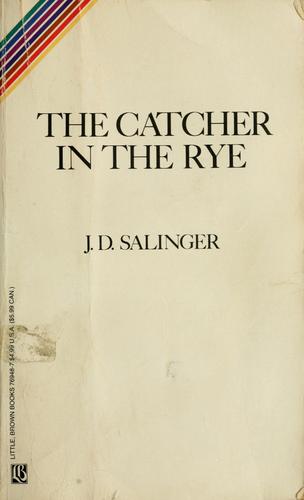

Introduction: The Most Divisive Novel in American Literature
No novel in the American canon inspires such wildly divergent reactions as J.D. Salinger's The Catcher in the Rye. Published on July 16, 1951, it has sold more than 65 million copies worldwide, continues to sell approximately 250,000 copies every year, and has been translated into virtually every major language. It is one of the most frequently taught novels in American high schools and universities, and simultaneously one of the most frequently banned. Readers either love Holden Caulfield or cannot stand him. There is very little middle ground.
The novel is deceptively simple: a sixteen-year-old boy, recently expelled from his prep school, wanders around New York City for three days, reflecting on his life, his dead brother, and his alienation from the adult world. Nothing much happens in terms of plot. There are no dramatic revelations, no climactic confrontations, no neat resolutions. And yet this slender, plotless novel has exerted an influence on American culture that few other books can match. It essentially invented the modern young adult voice. It gave adolescent alienation a literary vocabulary. And it raised questions about innocence, authenticity, and the transition to adulthood that remain as urgent today as they were in 1951.
In this comprehensive review, we will explore every dimension of The Catcher in the Rye: its autobiographical origins, its revolutionary narrative voice, its complex and often misunderstood protagonist, its major themes, its turbulent critical history, and its enduring relevance. Whether you read it as a teenager and loved it, read it as an adult and hated it, or have never read it at all, this analysis aims to illuminate why this novel matters — and why it will continue to matter for as long as young people struggle with the gap between the world as it is and the world as they wish it could be.
About the Author: The Recluse of Cornish
Jerome David Salinger was born on January 1, 1919, in New York City to a Jewish father and a Catholic mother of Irish descent. He grew up in Manhattan, attended several preparatory schools — flunking out of most of them, a detail that would find its way into The Catcher in the Rye — and briefly attended New York University and Columbia University, where he studied short story writing with Whit Burnett, the editor of Story magazine.
Salinger's early career was defined by short fiction. He published stories in The New Yorker, Collier's, and other magazines throughout the 1940s, developing the distinctive voice that would flower fully in The Catcher in the Rye. His experiences in World War II — he participated in the D-Day invasion at Utah Beach, fought in the Battle of the Bulge, and was among the first soldiers to enter a concentration camp — left deep psychological scars that informed his writing's preoccupation with innocence, trauma, and the difficulty of living in a world that has revealed its capacity for horror.
After the publication of The Catcher in the Rye, Salinger became one of the most famous writers in America and immediately began retreating from public life. He moved to Cornish, New Hampshire, in 1953 and gradually withdrew from the literary world. He published his last story in The New Yorker in 1965 and gave his last interview in 1980. For the remaining thirty years of his life, he lived as a near-total recluse, reportedly continuing to write but refusing to publish. He died on January 27, 2010, at the age of ninety-one, leaving behind a body of published work that consists of just one novel, one novella, and thirteen short stories — a bibliography so small it could fit on an index card, yet so influential it has shaped the course of American literature.
Salinger's reclusiveness has become as famous as his writing, and the two are closely connected. Holden Caulfield's disgust with "phoniness" — with the performative, inauthentic behavior that he sees everywhere in adult society — mirrors Salinger's own rejection of the literary establishment, the publishing industry, and public life in general. The author who created the most vivid portrait of adolescent alienation in American literature turned out to be, in his own life, the most alienated figure in American letters. Whether this irony is tragic, fitting, or simply inevitable is a question that biographers and critics continue to debate.
Plot Summary
Leaving Pencey Prep
The novel begins on a Saturday afternoon in December, with Holden Caulfield standing on a hill above the football field at Pencey Prep, a fictional boarding school in Agerstown, Pennsylvania. Pencey is the fourth school from which Holden has been expelled, this time for failing four of his five subjects. He tells us all of this in his distinctive voice — casual, digressive, alternately funny and heartbreaking — and from the first paragraph, we understand that we are in the presence of a narrator unlike any we have encountered before.
Holden does not leave Pencey right away. He visits his history teacher, Mr. Spencer, who lectures him about his academic failures. He returns to his dorm room and has a series of encounters with his roommate Stradlater and his neighbor Ackley — encounters that reveal Holden's capacity for observation, his quick wit, and his deep loneliness. When Stradlater returns from a date with Jane Gallagher, a girl Holden cares about deeply, Holden picks a fight with him and gets punched. Bloodied and frustrated, Holden decides to leave Pencey three days before the end of term and take a train to New York City, where he plans to check into a hotel and wait until his parents expect him home on Wednesday.
Three Days in New York
What follows is one of the great picaresque journeys in American literature, though it takes place not across a continent but within a few square miles of Manhattan. Holden checks into the Edmont Hotel, a seedy establishment whose windows overlook scenes of perversion and sadness that simultaneously fascinate and repulse him. He goes to a nightclub, dances with three tourists from Seattle, and reflects on his dead brother Allie, who died of leukemia at age eleven and whose death is the wound that drives everything Holden does and feels.
Over the next two days, Holden encounters a series of people who embody different aspects of the adult world he dreads entering. He hires a prostitute named Sunny but cannot go through with the sexual encounter, paying her five dollars to sit and talk instead. When her pimp, Maurice, returns demanding more money, Holden refuses and is punched in the stomach. He calls Sally Hayes, a girl he sometimes dates but does not really like, and takes her ice-skating at Radio City. In a moment of desperate vulnerability, he asks her to run away with him to a cabin in New England. When she dismisses the idea as crazy, he insults her and she leaves in tears.
He meets his former classmate Carl Luce for drinks and embarrasses himself by asking intrusive questions about Luce's sex life. He gets drunk at a bar and wanders through Central Park in the dark, looking for the ducks in the lagoon — a seemingly random obsession that becomes one of the novel's most resonant symbols. Where do the ducks go when the lagoon freezes? The question is really about Holden himself: where do you go when the world you know disappears?
Phoebe and the Decision
The emotional center of the novel is Holden's visit to his family's apartment, where he sneaks in to see his ten-year-old sister Phoebe, the person he loves most in the world. Phoebe is everything Holden values: genuine, intelligent, loving, and still innocent of the phoniness that Holden sees everywhere in the adult world. When Phoebe challenges him to name one thing he actually likes, Holden can only think of two dead people — his brother Allie and a boy named James Castle who jumped out a window to escape bullies — and Phoebe herself.
It is during this conversation that Holden reveals the fantasy that gives the novel its title. He imagines a field of rye on the edge of a cliff, with thousands of children playing in it. He wants to be the one who stands at the edge and catches any child who runs too close — the catcher in the rye. This image, which Holden misremembers from Robert Burns' poem "Comin' Thro' the Rye" (the original line is "if a body meet a body," not "if a body catch a body"), encapsulates his deepest desire: to protect innocence from the fall into adulthood, to preserve the purity of childhood against the corruptions of the adult world.
In the novel's climactic scene, Holden visits Phoebe's school and is distressed to find the words of an obscenity scrawled on the wall. He erases it, but then finds the same word scratched into another wall with a knife and realizes that you cannot protect children from the world. You cannot erase every obscenity. You cannot catch every child before they fall. This realization — gentle but devastating — is the closest thing the novel has to an epiphany.
The novel ends ambiguously. Holden tells us he is in some kind of rest home or sanatorium, being treated by a psychoanalyst. He says he is going to start school again in the fall. He says he misses everybody — even Stradlater, even Maurice, even the people he despised. "Don't ever tell anybody anything," he says in the novel's famous last line. "If you do, you start missing everybody." This ending refuses closure. We do not know if Holden will recover. We do not know if he will find his way in the adult world. We know only that he is still talking, still telling his story, still reaching out to us across the distance of his loneliness.
Character Analysis
Holden Caulfield: The Unreliable Narrator as American Icon
Holden Caulfield is arguably the most famous character in American literature after Huck Finn, and the comparison is instructive. Both are young, both are runaways, both use a vernacular voice to narrate their adventures, and both are fundamentally decent people trapped in a society that offends their moral sensibilities. But where Huck is resourceful and adaptable, Holden is fragile and overwhelmed. Where Huck learns to navigate the adult world through cunning and survival instinct, Holden is crushed by it. Huck runs toward adventure; Holden runs toward breakdown.
The key to understanding Holden is recognizing that he is an unreliable narrator — not because he lies to us (though he admits to being "the most terrific liar you ever saw") but because he does not fully understand himself. He tells us he is fine, but everything about his behavior suggests he is in crisis. He tells us he hates phonies, but he repeatedly engages in exactly the kind of performative behavior he claims to despise. He tells us he wants to protect innocence, but his own innocence is precisely what he is losing, and his frantic efforts to hold onto it are driving him toward collapse.
Holden's language is one of the great achievements of American prose. Salinger captures the rhythms of adolescent speech with uncanny precision — the repetitions, the qualifications, the sudden shifts from bravado to vulnerability, the constant checking in with the reader ("if you want to know the truth," "if you really want to hear about it"). The voice feels spontaneous and unedited, as if Holden is speaking directly to us from the room where he is recovering. This immediacy is what makes readers feel such a strong connection to Holden — or such a strong aversion. His voice is so vivid, so present, so inescapable that it is almost impossible to feel neutral about it.
The question of whether Holden is sympathetic or insufferable has divided readers for decades. Teenagers tend to identify with him immediately, recognizing in his alienation and anger a reflection of their own feelings about the adult world. Adults often find him self-pitying, privileged, and blind to his own hypocrisy. Both responses are valid, and both are anticipated by the text. Salinger wrote a character who is simultaneously perceptive and self-deluded, generous and selfish, hilarious and heartbreaking. The fact that different readers respond to different aspects of this complexity is not a flaw in the novel. It is a sign of its depth.
"Holden Caulfield is a character who gave voice to feelings I didn't even know I had. Reading The Catcher in the Rye at sixteen was like reading my own diary, written by someone far more articulate than I could ever be." — John Green, author of The Fault in Our Stars
Phoebe Caulfield: The Light in the Darkness
Phoebe is the novel's moral compass. She is ten years old, precocious, affectionate, and fiercely loyal to her brother. She is also the only person in the novel who can see through Holden's defenses and force him to be honest. When she accuses him of not liking anything, she is not being cruel; she is diagnosing his condition with a child's blunt accuracy. When she insists on going with him if he runs away, she forces him to recognize that his flight from responsibility is also a flight from the people who love him.
Phoebe represents the innocence that Holden wants to preserve, but she is not a passive symbol. She is a fully realized character with her own personality, her own opinions, and her own way of engaging with the world. She writes stories, she plays records, she argues with her brother, and she loves him with a fierceness that matches his own. In a novel full of people who disappoint Holden, Phoebe is the one person who never does — not because she is perfect, but because she is genuine. She is, in Holden's terms, the opposite of a phony, and her presence in the novel is what keeps it from tipping into despair.
Allie Caulfield: The Ghost Brother
Allie never appears in the novel — he died of leukemia two years before the story begins — but he is present on almost every page. Holden's grief for Allie is the engine that drives the narrative. It is the wound that will not heal, the loss that Holden cannot process, the reason he is falling apart. When Allie died, Holden slept in the garage and broke all the windows with his fist, a violent expression of grief that left his hand permanently damaged. He still carries Allie's baseball mitt — a left-handed fielder's mitt on which Allie had written poems in green ink so he would have something to read when the game got boring.
Allie represents everything Holden values — intelligence, creativity, gentleness, authenticity — and his death represents everything Holden fears: that the good and the innocent are not protected, that the world destroys what is most valuable, that nothing can be saved. Holden's desire to be "the catcher in the rye" is, at its deepest level, a desire to do for other children what he could not do for Allie: save them from falling, catch them before they are lost.
Major Themes
Phoniness and Authenticity
The word "phony" appears dozens of times in the novel and is Holden's all-purpose term for the inauthenticity he sees everywhere in the adult world. Teachers are phonies because they perform enthusiasm they do not feel. Actors are phonies because they pretend to be people they are not. Even ordinary adults are phonies because they follow social conventions that have no genuine meaning. Holden's obsession with phoniness is simultaneously his greatest insight and his greatest limitation. He is right that much of social life is performative and inauthentic. But he is wrong to think that authenticity is simply a matter of refusing to perform.
The irony, which Salinger develops with great subtlety, is that Holden himself is one of the biggest phonies in the novel. He lies constantly, tells people what they want to hear, and constructs elaborate false identities — telling one woman he has a brain tumor, telling another that his name is Rudolf Schmidt. His performance of authenticity is just that: a performance, no less artificial than the social rituals he condemns. This self-contradiction is not a flaw in Holden's character. It is the point. Salinger is showing us that the desire for authenticity can itself become a form of phoniness, and that the line between genuine feeling and performance is far less clear than Holden wants to believe.
The Loss of Innocence
Holden's central preoccupation is the transition from childhood to adulthood — a transition he equates with the loss of innocence. Children, in Holden's view, are genuine, spontaneous, and uncorrupted. Adults are phony, calculating, and compromised. The passage from one state to the other is not a growth but a fall, and Holden wants desperately to prevent it — both for himself and for the children he imagines catching in the rye field.
What Holden does not understand — what the novel understands but he does not — is that innocence cannot be preserved. The obscenity scratched on the school wall cannot be erased. Children will grow up, and some of what they encounter will be ugly and painful and unfair. Holden's fantasy of the catcher in the rye is beautiful but impossible, and the novel gently but firmly reveals its impossibility. Growing up is not falling. It is changing, and while change involves loss, it also involves gain — depth, understanding, the capacity for mature love and genuine connection. These are things Holden cannot yet see, but the novel invites us to see them on his behalf.
Grief and Mental Health
Reading The Catcher in the Rye through a contemporary lens, it becomes clear that Holden is not merely alienated; he is clinically depressed and possibly experiencing a form of post-traumatic stress related to Allie's death and the suicide of his schoolmate James Castle. His inability to concentrate, his pervasive sadness, his isolation, his impulsive behavior, and his occasional references to disappearing or dying are all consistent with a serious mental health crisis. The novel ends with Holden in a treatment facility, and there are hints throughout that the narrative itself is being told from that facility, as a form of therapeutic reflection.
Salinger, writing in 1951, did not have access to the language of modern psychology, and the novel does not present Holden's condition in clinical terms. But its portrait of a young man in psychological crisis is remarkably accurate and empathetic. Holden is not "crazy," as he sometimes describes himself. He is wounded — by his brother's death, by the callousness of the adult world, by his own inability to process grief and change. The novel's compassion for him, even at his most frustrating and self-defeating, is one of its greatest qualities.
"The Catcher in the Rye speaks to the pain of growing up. There is something in Holden Caulfield's voice that captures the essence of adolescent loneliness — that sense that nobody understands what you're going through, and that the world is rigged against the genuine and the vulnerable." — Philip Roth
Symbolism and Recurring Motifs
The Ducks in Central Park
One of the novel's most memorable recurring motifs is Holden's preoccupation with the ducks in the Central Park lagoon. He asks multiple people — a cab driver, another cab driver, anyone who will listen — where the ducks go when the lagoon freezes over in winter. On the surface, this seems like a random, even absurd concern. But within the context of the novel, it becomes a powerful symbol for Holden's deepest anxieties.
The ducks represent everything that Holden fears about change and disappearance. Where do things go when their environment can no longer support them? Where do people go when the world they know is no longer habitable? Holden is asking about the ducks, but he is really asking about himself. He has been expelled from school after school. His brother is dead. His childhood is ending. The lagoon of his life is freezing over, and he does not know where to go.
The cab driver's suggestion that the ducks simply fly south — that they go where they need to go, instinctively and without anxiety — is a truth that Holden cannot hear. He lacks the ducks' instinctive knowledge of where to go and what to do. He is stuck between childhood and adulthood, unable to move forward and unable to go back, standing at the edge of the frozen lagoon and wondering where everything has gone.
The motif also connects to the novel's themes of permanence and impermanence. The fish in the lagoon stay, frozen in the ice but alive. The ducks leave and come back. Holden wants the permanence of the fish — he wants things to stay as they are, frozen in place, safe from change. But he is a duck, not a fish. His nature requires him to move, to adapt, to leave and come back. The tragedy is that he does not yet know this about himself.
The Museum of Natural History
Another key symbol is the Museum of Natural History, which Holden visits during his wanderings through Manhattan. He loves the museum because, as he explains, it never changes. The Eskimo is always fishing through the same hole in the ice. The deer are always drinking from the same stream. The birds are always flying south in the same formation. Every time you visit, the exhibits are exactly the same; the only thing that changes is you.
This observation — that the museum stays the same while the visitor changes — captures Holden's fundamental problem. He wants a world of museum exhibits, where everything is frozen in its ideal state and nothing can be lost or corrupted. But life is not a museum. It is messy, unpredictable, and constantly changing. The people Holden loves will grow older, will change, will eventually die. The innocence he wants to preserve will inevitably be lost. The obscenity on the school wall will always be rewritten, no matter how many times he erases it.
The museum represents Holden's impossible desire for stasis — for a world in which nothing moves, nothing changes, and nothing is lost. It is a beautiful desire, and Holden's attachment to it makes him sympathetic even at his most frustrating. But it is also a dangerous desire, because it is a desire for death. Only dead things stay the same. Living things change, and accepting change — accepting the loss of innocence, the passage of time, the inevitability of growing up — is the task that Holden is not yet ready to face.
The Red Hunting Hat
Holden's red hunting hat, which he bought for a dollar in New York, is the novel's most visible symbol. He wears it when he wants to feel like himself — when he is alone, writing, or processing his emotions. He takes it off in social situations, aware that it makes him look odd. The hat represents Holden's desire for individuality and self-expression in a world that demands conformity. It is his armor against the phoniness of social performance, a declaration that he is different and does not care who knows it.
But the hat is also connected to Allie and Phoebe, both of whom share Holden's red hair. When Holden gives the hat to Phoebe near the end of the novel, and she gives it back to him, the exchange becomes a gesture of love and connection — a passing of the talisman between siblings who understand each other in a world that understands neither of them. The hat, like Allie's baseball mitt, is an object that carries emotional weight far beyond its physical significance. It is a link to the people Holden loves, and wearing it is, in a sense, an act of fidelity to them.
The Novel's Relationship to Salinger's Other Works
The Catcher in the Rye does not exist in isolation. It is part of a larger body of work that includes the Glass family stories — Franny and Zooey, Raise High the Roof Beam, Carpenters, and Seymour: An Introduction — as well as the earlier Nine Stories collection. While Holden Caulfield does not appear in the Glass family stories, his sensibility pervades them. The Glass children — brilliant, sensitive, spiritually precocious, and profoundly alienated from mainstream American culture — are, in many ways, grown-up versions of Holden, or at least explorations of the same psychological territory.
The short story "A Perfect Day for Bananafish," which introduces Seymour Glass, is particularly relevant. Seymour, a war veteran who cannot re-enter the world of normal adult life, takes his own life in a Florida hotel room. The story can be read as a dark answer to the question that The Catcher in the Rye leaves open: what happens to a Holden Caulfield who never finds his way? If Holden represents the possibility of recovery, Seymour represents the possibility of annihilation — the destruction that awaits those who cannot find a way to live in a world they find intolerable.
Salinger's later works also show an increasing engagement with Eastern philosophy, particularly Zen Buddhism and Vedanta Hinduism. This spiritual dimension is present in The Catcher in the Rye only in embryonic form — in Holden's yearning for something beyond the material world, in his sense that there must be more to life than phoniness and performance. But it flowers fully in the Glass family stories, where characters quote the Bhagavad Gita, practice meditation, and search for enlightenment with the same desperate intensity that Holden brings to his search for authenticity.
Minor Characters and Their Significance
One of Salinger's most underappreciated gifts is his ability to create vivid, memorable characters in just a few paragraphs. The minor characters in The Catcher in the Rye are not mere background figures; each one contributes to the novel's portrait of the world that Holden inhabits and the values he struggles to define.
Stradlater, Holden's roommate at Pencey, is the golden boy — handsome, athletic, popular with girls, and superficially charming. Holden describes him as a "secret slob" — a guy who looks great on the surface but is secretly dirty, whose razor is always rusty and whose hygiene is questionable beneath the polished exterior. Stradlater represents a specific type of phoniness: the performance of perfection that conceals inner carelessness. His date with Jane Gallagher — a girl Holden cares about deeply — precipitates the fight that drives Holden out of Pencey, because Holden cannot bear the thought of someone he considers superficial getting close to someone he considers genuine.
Ackley, the awkward, pimply neighbor who barges into Holden's room uninvited, is another important minor character. He is everything that Stradlater is not — physically unappealing, socially inept, and transparently needy. Holden finds him annoying but also feels a reluctant kinship with him, recognizing in Ackley's loneliness a mirror of his own. The way Holden treats Ackley — with a mixture of exasperation and pity — reveals something important about Holden's character: he is incapable of completely ignoring someone who is suffering, even when that person irritates him.
The nuns whom Holden meets at a restaurant are perhaps the most purely sympathetic figures in the novel. They are modest, kind, and genuinely interested in Holden's thoughts about literature. Their lack of pretension — their willingness to eat a cheap breakfast and talk about Romeo and Juliet with a stranger — makes them the opposite of everything Holden hates. He gives them ten dollars and then feels guilty about not giving more. The nuns represent the kind of authentic, unpretentious goodness that Holden is looking for in the world and rarely finds.
Sally Hayes, the girl Holden takes on a date, is another carefully drawn minor character. She is pretty, enthusiastic, and conventional — the kind of girl who says "grand" about things that are not grand and who wants the kind of respectable, upper-middle-class life that Holden finds suffocating. Holden's disastrous date with Sally — which culminates in his impulsive proposal to run away to Vermont — is one of the novel's most painfully funny episodes. Sally is not a bad person; she is simply not the person Holden needs, and his failure to recognize this until it is too late reveals the depth of his desperation and the poverty of his judgment.
Carl Luce, Holden's former student advisor, represents yet another mode of adult life that Holden finds unsatisfying. Luce is sophisticated, worldly, and condescending — a Columbia student who considers Holden immature and embarrassing. Their conversation over drinks, in which Holden asks invasive questions about Luce's sex life and Luce responds with icy disdain, is a portrait of a relationship that has been outgrown. Luce has moved on to an adult world that Holden cannot yet enter, and their encounter leaves Holden more isolated than before.
Even the most fleeting characters — the cab drivers who cannot answer Holden's question about the ducks, the prostitute Sunny who is younger than Holden expects, the piano player at the Wicker Bar who is talented but "phony" — contribute to the novel's comprehensive portrait of a world that Holden simultaneously despises and desperately wants to connect with. Salinger populates New York City with enough vivid characters to fill a Dickens novel, and each one adds another brushstroke to the portrait of Holden's consciousness.
The Novel and Adolescent Psychology
Modern psychology has vindicated many of Salinger's insights about adolescent consciousness. Research on adolescent brain development has shown that the prefrontal cortex — the part of the brain responsible for impulse control, long-term planning, and the assessment of consequences — does not fully mature until the mid-twenties. This means that teenagers like Holden are literally incapable of the kind of rational, forward-looking thinking that adults take for granted. They are, in neurological terms, all emotion and no brakes — which is exactly how Holden behaves throughout the novel.
Psychologists have also identified a developmental stage called "adolescent egocentrism," characterized by two related phenomena: the "imaginary audience" (the belief that everyone is watching and judging you) and the "personal fable" (the belief that your experiences are unique and that no one has ever felt what you are feeling). Both of these phenomena are on vivid display in The Catcher in the Rye. Holden constantly imagines how others perceive him and is convinced that his feelings of alienation and loneliness are unique — that no one else has ever experienced the world as he experiences it.
None of this was available to Salinger when he wrote the novel in the late 1940s. He had no access to brain imaging studies or developmental psychology research. He had only his own memory of adolescence, his observations of the young people around him, and his extraordinary gift for empathy. The fact that his portrait of Holden aligns so closely with what science would later discover about adolescent psychology is a testament to the accuracy of his intuition and the depth of his understanding. The Catcher in the Rye is, among many other things, one of the most psychologically accurate portraits of a teenager in all of literature.
Writing Style: The Voice That Changed Everything
The most revolutionary aspect of The Catcher in the Rye is its narrative voice. Before Holden Caulfield, first-person narration in American fiction was generally formal, literary, and adult. After Holden, the floodgates opened. Every subsequent novel written in the voice of a young person — from A Separate Peace to The Perks of Being a Wallflower to The Fault in Our Stars — owes a debt to Salinger's achievement. He proved that the speech patterns of a teenager could carry a novel, that adolescent consciousness was a legitimate subject for serious fiction, and that informality was not the enemy of depth.
Holden's voice is characterized by several distinctive features: constant qualification ("I'm the most terrific liar you ever saw in your life. It's awful."), direct address to the reader ("If you really want to hear about it"), hyperbolic generalizations ("People are always ruining things for you"), and abrupt shifts between humor and pathos. These features are not random. They are the precise linguistic markers of a particular kind of adolescent consciousness — self-aware but not self-knowing, articulate but not organized, desperate to communicate but terrified of being understood.
Salinger's achievement in capturing this voice is all the more remarkable when you consider that he was thirty-two years old when the novel was published. He was not transcribing his own adolescent speech from memory. He was constructing it, with the careful craftsmanship of a writer who had spent years honing his art in the short story form. The apparent spontaneity of Holden's voice is an illusion — one of the most skillful illusions in American prose fiction. Every digression is calculated, every repetition is deliberate, and every seemingly random observation contributes to the portrait of a mind in crisis.
Critical Reception: From Scandal to Canon
The initial critical reception of The Catcher in the Rye was mixed. Some reviewers recognized its originality immediately. The New York Times called it "an unusually brilliant first novel." Others were put off by Holden's language and attitude. Some reviews focused almost entirely on the novel's profanity — which, by contemporary standards, is extremely mild but was considered shocking in 1951. The novel was banned in several countries and removed from numerous school libraries, usually on grounds of obscenity, blasphemy, or the promotion of anti-social behavior.
Over the decades, the novel's reputation has undergone several transformations. In the 1950s and 1960s, it was embraced by the counterculture as a manifesto of youthful rebellion. In the 1970s and 1980s, it became a standard text in high school and university English courses, analyzed and anthologized and taught alongside the classics of American literature. In the 1990s and 2000s, a backlash set in, with critics arguing that Holden was a whiny, privileged white male whose problems did not deserve the attention they received.
The novel's association with violence has also shaped its critical reception. Mark David Chapman, who murdered John Lennon in 1980, was carrying a copy of The Catcher in the Rye when he was arrested and reportedly referred to it as his "statement." John Hinckley Jr., who attempted to assassinate President Ronald Reagan in 1981, was also reportedly influenced by the novel. These associations, while having nothing to do with the novel's content or intentions, have colored its public image and contributed to its aura of danger and controversy.
"There is a moment in every young reader's life when Holden Caulfield speaks directly to them and they feel, perhaps for the first time, that a book truly understands them." — Sylvia Plath, from her journals
Cultural Impact
The cultural impact of The Catcher in the Rye is almost impossible to overstate. It created the template for the modern coming-of-age novel. It gave literary credibility to the adolescent perspective. It introduced "phony" as a term of cultural criticism. It made J.D. Salinger into the prototype of the literary recluse. And it became the most widely read and most frequently banned novel in American schools — a distinction it holds to this day.
The novel's influence extends far beyond literature. Musicians from Green Day to Billy Joel have cited Holden Caulfield as an influence. Films from Rebel Without a Cause to The Breakfast Club to Lady Bird owe a debt to Salinger's portrait of adolescent alienation. The very concept of the "teenager" as a distinct cultural category, with its own language, values, and grievances, owes something to The Catcher in the Rye, which was published at the exact moment when postwar affluence was creating a youth culture for the first time.
Salinger's refusal to allow the novel to be adapted into a film has only increased its mystique. Unlike most iconic American novels, The Catcher in the Rye exists only as a book. There is no movie version, no television series, no authorized graphic novel. Holden Caulfield lives only on the page, in the reader's imagination, unmediated by any other artist's interpretation. This exclusivity has made the novel a more intimate, more personal experience than it might otherwise be. When you read The Catcher in the Rye, you are alone with Holden in a way that is increasingly rare in a culture saturated with adaptations and remixes.
The Novel's Moral Vision
Beneath its casual surface, The Catcher in the Rye embodies a deeply moral vision of the world — one that values compassion over success, authenticity over performance, and vulnerability over strength. Holden's moral compass, though he would never describe it in these terms, is remarkably consistent. He is drawn to people who are genuine and repelled by people who are fake. He feels instinctive sympathy for those who are vulnerable — children, nuns, the ugly girl at the dance — and instinctive hostility toward those who are powerful and smug.
This moral vision is most clearly articulated in Holden's fantasy of being the catcher in the rye, but it pervades the entire novel. When Holden watches the little boy walking in the gutter while singing "If a body catch a body coming through the rye," he is moved not by the song itself but by the boy's unselfconsciousness — his willingness to sing in public without caring who is listening. When Holden remembers James Castle, the boy who jumped out a window rather than take back something he said, he admires Castle's integrity even as he mourns his death. When Holden gives money to nuns, buys a record for Phoebe, and pays for drinks he cannot afford, he is acting on an instinct of generosity that is as deep as his cynicism is loud.
The novel's moral vision is also evident in what Holden cannot bring himself to do. He cannot have sex with a prostitute because she is a person, not a commodity, and treating her as one would make him a phony. He cannot punch Stradlater effectively because he lacks the necessary aggression — he cares too much, feels too much, and his caring gets in the way of his ability to act. He cannot lie to Phoebe because she is one of the few people whose opinion of him matters. In each of these cases, Holden's failures are actually the expression of a moral sensibility that is too refined, too sensitive, and too idealistic for the world he inhabits.
This is the tragedy of Holden Caulfield: he is too good for the world, but not in the way he thinks. He thinks he is superior to the phonies around him, but his real superiority lies not in his judgment but in his compassion — in his inability to stop caring about people, even people who have hurt him or disappointed him. "Don't ever tell anybody anything," he says at the end. "If you do, you start missing everybody." This final line is both a defense mechanism and a confession: Holden has told us everything, and now he misses everybody. His heart, for all his efforts to protect it, remains wide open.
Banned Books and Censorship
The Catcher in the Rye has been one of the most frequently banned and challenged books in American history, and its censorship history is itself a fascinating chapter in the story of American culture. The novel has been removed from school libraries and curricula in states from California to Georgia, usually on grounds of obscenity (the novel contains several instances of profanity), blasphemy, or the promotion of drinking, smoking, and sexual behavior among minors.
The irony of banning The Catcher in the Rye for its "immoral content" is thick enough to cut with a knife. The novel is, at its core, a deeply moral work — a portrait of a young man who is desperately searching for goodness in a world he perceives as corrupt. Holden does not celebrate drinking, smoking, or sexual experimentation. He engages in these behaviors as symptoms of his alienation and distress. He pays a prostitute but cannot bring himself to have sex with her. He gets drunk but finds no pleasure in it. He smokes incessantly but never with enjoyment. The novel does not endorse these behaviors; it diagnoses them as expressions of a young man in crisis.
The censorship of The Catcher in the Rye reveals something important about the relationship between books and the adults who seek to control them. The people who ban the novel are, in a sense, the very phonies that Holden despises — adults who perform moral outrage while ignoring the genuine moral distress that the novel so powerfully captures. By banning the book, they are doing exactly what Holden accuses adults of doing: prioritizing surfaces over substance, appearance over reality, and control over understanding.
The good news is that every attempt to ban The Catcher in the Rye has only increased its readership. Teenagers are remarkably adept at finding banned books, and the frisson of reading something forbidden adds an extra layer of excitement to an already compelling reading experience. Salinger, who never commented on the bannings, would probably have appreciated the irony: a novel about a boy who cannot stand phonies being banned by phonies, and becoming more popular as a result.
Why You Should Read It Today
Is The Catcher in the Rye still relevant in the age of social media, where the phoniness that Holden despised has become the dominant mode of self-presentation? If anything, it is more relevant than ever. Holden's critique of performative inauthenticity, of saying what you do not mean and pretending to be what you are not, reads like a prophecy of the social media age. The world Holden saw in 1951 — a world of surfaces and performances, where genuine feeling is buried under layers of social convention — has not gone away. It has metastasized.
Read it at sixteen and you will see yourself. Read it at forty and you will see a young man who needs help and does not know how to ask for it. Read it at sixty and you will see the terrible vulnerability of youth, the way it cracks open at the slightest touch. Each reading reveals a different novel, because each reading is done by a different person. That is the mark of a book that is not merely good but genuinely great — it grows with you, changes with you, and continues to have something to say no matter how many times you return to it.
Mr. Antolini and the Question of Mentorship
One of the most complex and frequently debated episodes in the novel occurs when Holden visits Mr. Antolini, a former English teacher at Elkton Hills whom Holden considers one of the few genuine adults he knows. Mr. Antolini is intelligent, articulate, and genuinely concerned about Holden's welfare. He offers Holden a place to sleep for the night and delivers one of the novel's most important speeches — about how the mark of an immature man is that he wants to die nobly for a cause, while the mark of a mature man is that he wants to live humbly for one.
But the visit takes an unsettling turn. Holden wakes up to find Mr. Antolini sitting on the floor beside him, stroking his hair. Holden panics and leaves immediately, interpreting the touch as a sexual advance. The scene is deliberately ambiguous. Was Mr. Antolini making a pass at Holden? Or was he simply expressing paternal affection in a way that Holden, hypervigilant and traumatized, misinterpreted? The novel never tells us, and Holden himself is uncertain — he spends the next several pages questioning his own reaction and wondering if he overreacted.
This ambiguity is one of Salinger's most sophisticated narrative achievements. By refusing to clarify Mr. Antolini's intentions, he forces the reader to sit with the same uncertainty that Holden experiences — the inability to know for sure whether a gesture of kindness was actually something more sinister. This uncertainty is central to Holden's psychological condition. He lives in a world where he cannot trust adults, where even the most seemingly genuine people might be phonies, and where the line between affection and exploitation is blurred. Mr. Antolini may be the best adult in the novel or one of the worst, and the fact that we cannot tell which is the point.
The episode also raises questions about the nature of mentorship and the vulnerability of young people. Holden is desperate for adult guidance — for someone who will take him seriously, listen to his concerns, and help him navigate the transition to adulthood. Mr. Antolini seems to offer this guidance, but the ambiguity of his touch calls the entire relationship into question. Can young people trust the adults who offer to help them? Or is every offer of mentorship potentially compromised by the power dynamics that make it possible? These questions have only become more urgent in the decades since the novel was published, as revelations about abuse in schools, churches, and other institutions have made the vulnerability of young people to predatory adults a matter of public concern.
The Novel and Class in America
One of the less frequently discussed aspects of The Catcher in the Rye is its treatment of class. Holden is a privileged young man — the son of a wealthy Manhattan lawyer, educated at expensive prep schools, able to check into hotels and take taxis and buy drinks without worrying about money. His alienation, whatever its psychological causes, is materially comfortable. He is never hungry, never homeless, never in danger of the kind of existential precarity that afflicts millions of American teenagers.
This class position has been a source of criticism, particularly from readers who find it difficult to sympathize with a wealthy white teenager's complaints about the world when so many people face far more serious problems. The criticism is not without merit. Holden's ability to wander around New York for three days, spending money freely, staying in hotels, and drinking in bars, is a function of his class privilege. A teenager without Holden's resources would not have the luxury of an extended existential crisis — he would be too busy surviving.
But the novel is not unaware of this dynamic. Salinger subtly undercuts Holden's class position throughout the narrative. Holden's encounters with the nuns, the prostitute, the cab drivers, and the elevator operator expose him to people whose lives are shaped by economic realities he barely comprehends. His generosity with money — giving the nuns ten dollars, paying for drinks for people he does not like, tipping the hat-check girl — is genuine but also unconscious, the reflexive behavior of someone who has never had to think about where his next meal is coming from.
The novel does not condemn Holden for his privilege, but it does use his privilege to illuminate something important about the nature of alienation. Holden's unhappiness is not caused by material deprivation — he has everything that money can buy. It is caused by spiritual deprivation — the absence of genuine connection, authentic communication, and meaningful purpose. This distinction between material wealth and spiritual poverty is one of the novel's most important themes, and it speaks directly to the paradox of affluent societies where material abundance coexists with widespread depression, loneliness, and existential despair.
The Novel's Enduring Mystery
Part of what keeps The Catcher in the Rye alive in the culture is its resistance to definitive interpretation. After more than seventy years of critical analysis, there is still no consensus about what the novel is ultimately about. Is it a portrait of adolescent depression? A critique of American materialism? A spiritual quest disguised as a road trip? A love story addressed to a dead brother? The novel supports all of these readings and more, and its refusal to settle into any single interpretive framework is what gives it its enduring power.
Salinger's refusal to comment on the novel — his decades of silence, his rejection of interviews, his legal battles against unauthorized biographies — has only deepened the mystery. Unlike most authors, who provide interviews, introductions, and commentary that help readers interpret their work, Salinger offered nothing. He published the novel and then, in effect, walked away from it, leaving it to be read and misread, loved and hated, taught and banned, without any authorial guidance about what it was supposed to mean.
This silence can be read as an extension of the novel's own themes. Holden tells his story but refuses to interpret it. He gives us the facts — what he did, where he went, whom he talked to — but he does not tell us what it all means. "That's all I'm going to tell you about," he says at the end. "I could probably tell you what I did after I went home, and how I got sick and all, and what school I'm supposed to go to next fall, after I get out of here, but I don't feel like it." This refusal to provide closure, to wrap things up with a neat moral or lesson, is both frustrating and liberating. It forces us to do our own interpretive work, to bring our own experiences and understandings to the text, and to accept that the meaning of the novel is not fixed but fluid — changing with each reader and each reading.
In this sense, The Catcher in the Rye is the quintessential modern novel — a work of art that does not tell you what to think but gives you something to think about. It is less a statement than a question, less an answer than an invitation to keep asking. And it is this quality — this openness, this refusal to close down meaning — that ensures the novel will continue to be read, debated, and argued about for as long as there are young people who feel that the world is not what it should be.
Holden and the Digital Age
What would Holden Caulfield make of the twenty-first century? The question is irresistible, and the answer is both obvious and revealing. Holden would despise social media with a passion that makes his contempt for Hollywood phonies look like mild distaste. Instagram, TikTok, Twitter — these are platforms built on exactly the kind of performative self-presentation that drives Holden to despair. The carefully curated selfie, the humble brag, the viral video designed for maximum attention — all of these are phoniness industrialized, phoniness at scale, phoniness as a business model.
But Holden's relationship with the digital age would be more complicated than simple disgust. Like many teenagers today, Holden is lonely, isolated, and desperate for genuine connection. Social media, for all its phoniness, is also a tool that lonely people use to reach out, to find communities, to discover that they are not as alone as they feel. Holden's entire narrative — his telling of his story to an unnamed listener — is, in a sense, a proto-social media post: a reaching out across silence, a broadcasting of the self in the hope that someone, somewhere, will hear and understand.
The difference between Holden's narrative and a social media post is authenticity. Holden is genuinely telling his story, with all its embarrassments and failures and contradictions, without the filters and edits that social media demands. He is, in social media terms, posting without a brand — and this is both his greatest vulnerability and his greatest strength. The raw, unfiltered quality of Holden's voice is what makes readers feel so close to him, and it is exactly this quality that social media, with its incentives toward performance and curation, tends to suppress.
Reading The Catcher in the Rye in the digital age is, in some ways, a more powerful experience than reading it in 1951. The novel's critique of phoniness resonates more loudly in a culture where phoniness has become the default mode of self-expression. And Holden's desperate sincerity — his willingness to be vulnerable, to be confused, to be wrong, in public — feels more radical now than it did seventy years ago. In an age of personal brands and curated identities, Holden Caulfield remains stubbornly, defiantly, painfully real.
What Holden Would Tell Us
If there is one thing Holden Caulfield would want us to take from his story, it is probably this: pay attention. Pay attention to the little boy singing in the gutter. Pay attention to the nuns eating their toast. Pay attention to the look on your sister's face when she rides the carousel. Pay attention to the museum exhibits that never change and the ducks that always come back. The world is full of moments of genuine beauty and connection, and most of us miss them because we are too busy performing, too busy being phonies, too busy worrying about what other people think. Holden notices these moments because he cannot stop noticing them. His sensitivity, which makes his life so painful, is also what makes his observations so valuable. He sees what the rest of us overlook, and in seeing it, he reminds us to look.
This is, ultimately, the novel's gift: not a philosophy, not a program, not a set of instructions for how to live, but an invitation to pay attention — to look at the world with the same unflinching, sometimes painful, always honest gaze that Holden brings to everything he encounters. If we could do this — if we could see as clearly as Holden sees, even for a moment — we might find that the world, for all its phoniness, contains more beauty and more genuine human connection than we realized. We might even find, as Holden does at the end, that we miss everybody — even the people we thought we hated. And that missing, that ache of connection, is the surest sign that we are alive.
Conclusion
The Catcher in the Rye is not a perfect novel. Its plot is thin, its protagonist can be exasperating, and its philosophical concerns, while deeply felt, are not always deeply examined. But it is a novel that does something few novels manage: it captures the texture of a particular kind of consciousness with such fidelity that reading it feels less like reading and more like inhabiting another mind. Holden Caulfield's voice — funny, sad, angry, confused, and achingly sincere even when it is trying to be cynical — is one of the great creations of American literature. It spoke to millions of readers when it was first published, and it continues to speak to millions today.
If you have not read it, read it. If you read it as a teenager and dismissed it, read it again. If you read it as an adult and found Holden insufferable, ask yourself why — and then read it one more time. You may find that the novel you remember is not the novel Salinger wrote, and that the distance between the two is where the real story lives.
Frequently Asked Questions About The Catcher in the Rye
Why is The Catcher in the Rye so controversial?
The novel has been controversial since its publication for several reasons. Its language, while mild by contemporary standards, was considered shocking in 1951 — Holden uses profanity throughout, and there are references to sex, drinking, and smoking. More fundamentally, the novel was seen by some adults as an endorsement of teenage rebellion — a book that validated adolescent alienation rather than correcting it. For conservative parents and educators, Holden's contempt for adult authority was dangerous, potentially encouraging young readers to reject the values of their parents and communities. The novel's association with several high-profile acts of violence — most notably the murder of John Lennon by Mark David Chapman — added a darker dimension to the controversy, though the novel itself contains no violence and explicitly condemns cruelty.
Is Holden Caulfield mentally ill?
The novel does not provide a clinical diagnosis, but by contemporary standards, Holden displays symptoms consistent with clinical depression and possibly post-traumatic stress disorder. His persistent sadness, his difficulty concentrating, his social withdrawal, his impulsive behavior, and his occasional thoughts about disappearing or dying are all consistent with a depressive episode. The death of his brother Allie, which occurred two years before the events of the novel, is the most likely precipitating cause. The novel ends with Holden in a treatment facility, being seen by a psychoanalyst, which confirms that the adults in his life have recognized the seriousness of his condition. Salinger, writing in 1951, would not have used the language of modern diagnosis, but his portrait of Holden's psychological state is remarkably accurate and empathetic.
Why did Salinger become a recluse?
Salinger never publicly explained his withdrawal from public life, and the reasons remain a subject of speculation. The most common explanations include: discomfort with fame and the loss of privacy that accompanied the success of The Catcher in the Rye; a deepening spiritual practice (Salinger was interested in Zen Buddhism, Vedanta Hinduism, and various other spiritual traditions); a desire to write without the pressure of public expectation; and a temperamental aversion to the literary establishment, which he perceived as phony in much the same way that Holden perceives adult society. Whatever the reasons, Salinger's withdrawal was absolute and sustained — he gave his last interview in 1980, published his last story in 1965, and lived as a near-total recluse until his death in 2010.