The Wars That Never End
The reading community is full of passionate, opinionated people, and nothing brings out those opinions quite like questions about how to treat physical books. These debates have raged for as long as books have existed, and they are unlikely to be settled anytime soon. But exploring them is entertaining, and understanding the different perspectives might even change how you think about your own reading practices.
Dog-Ears vs Bookmarks
The Case for Dog-Ears
Dog-ear advocates argue for pragmatism. A dog-ear is always available. You never lose it, forget it, or run out. You can mark your place in a fraction of a second. It creates a physical record of your reading journey through the book, with each fold a tiny monument to where you paused. And for books you own, the dog-ears become part of the book's character over time, evidence that it was read and loved rather than preserved in museum-like pristinity.
The Case for Bookmarks
Bookmark advocates argue for respect. Dog-earing damages the page permanently, weakening the paper at the fold and eventually causing corners to break off. A bookmark preserves the book's condition while serving the same function without destruction. Bookmarks can also be beautiful objects in their own right: handmade, literary, artistic, or sentimental. The bookmark a friend gave you ten years ago carries its own memories and associations. Some readers have collections of bookmarks accumulated over decades, each one tied to a specific reading memory or relationship.
The Verdict
There is no verdict. This is a matter of personal values. If you view books as sacred objects to be preserved, bookmarks are the obvious choice. If you view books as tools to be used and marked by the reader's journey through them, dog-ears are perfectly acceptable. Both positions are defensible, and neither side will ever convince the other. Do what feels right to you and extend grace to those who do it differently.
Writing in Books vs Keeping Them Pristine
The Annotators
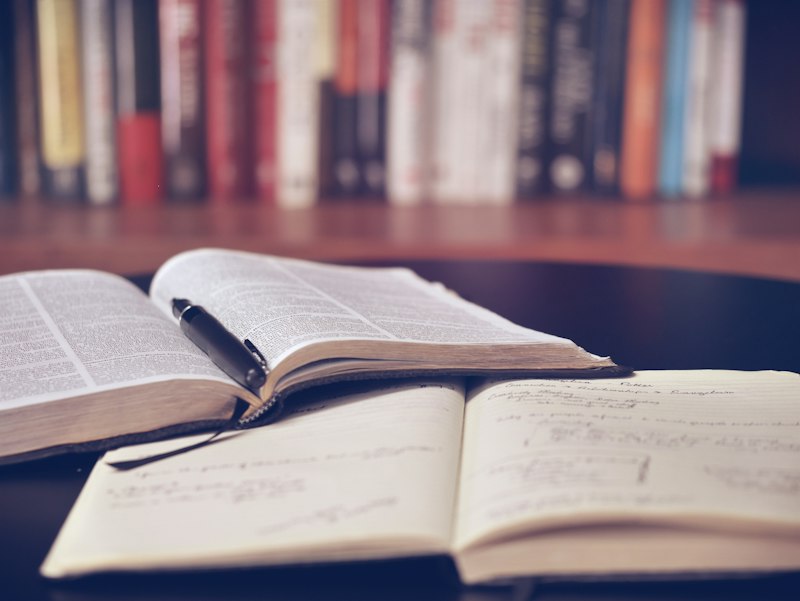
Annotators see writing in books as the highest form of engagement. Their marginalia is a dialogue with the author, a record of their reactions, questions, and connections at the moment of reading. Famous annotators include Mark Twain, whose savage marginal comments on books he disliked are works of literary criticism in themselves, and Sylvia Plath, whose annotated copies of other poets' work reveal the development of her own voice. Annotating makes a book uniquely yours, a collaboration between author and reader that cannot exist in a pristine copy.
The Preservationists
Preservationists see writing in books as defacement. They value the clean page, the unmarked text, the book as it was intended to be experienced. They may also have practical concerns: annotated books cannot be easily resold or lent without the reader's personal notes becoming an unwanted intrusion on the next reader's experience. And there is an aesthetic argument: a well-printed page is a designed object, and marks disrupt that design.
The Compromise
Many readers find a middle ground. They annotate books they own and intend to keep permanently, using pencil for books they might want to erase later and pen for books they are committed to. They keep library books and borrowed books pristine. They use sticky notes for books they want to annotate without permanent marks. The key insight is that different books deserve different treatment. A paperback you will read once and pass on might warrant a bookmark and clean pages. A book that will live on your shelf for decades might deserve the intimacy of your handwritten reactions in the margins.
Cracking Spines
Some readers carefully open books just enough to read each page, preserving the spine's integrity so the book looks nearly new after reading. Others crack the spine open fully for comfortable reading, accepting the creases as proof the book has been enjoyed. Mass-market paperbacks with flexible spines are designed to be opened flat. Hardcovers with rigid spines may be damaged by excessive force. Know your book and treat it accordingly.
Hardcover vs Paperback
Hardcover Advocates
Hardcovers are more durable, often feature better paper quality and printing, and look handsome on a shelf. They hold their shape over years of re-reading and handling. For books you love and plan to keep permanently, hardcovers are the premium investment. Many readers wait specifically for the hardcover release of anticipated books because the format feels like an event.
Paperback Advocates
Paperbacks are lighter, cheaper, more portable, and perfectly adequate for most reading purposes. They fit in bags and pockets. They cost half or a third as much as hardcovers. For books you plan to read once or books you want to carry with you, paperbacks are the practical choice. The mass-market paperback, small and flexible, was specifically designed for portable, disposable reading and excels at that purpose.
The Trend Toward Both
Many readers buy paperbacks for reading and hardcovers for display and permanent collection. The reading copy gets dog-eared, annotated, and carried everywhere. The hardcover sits on the shelf in pristine condition, a decorative and sentimental object. This dual-copy approach is extravagant but satisfying for books that truly matter to you.
New Books vs Used Books
New book advocates support authors and publishers financially and enjoy the pristine condition of an unread book. Used book advocates love the thrift, the treasure-hunting experience of browsing used bookstores, and the environmental benefit of reuse. Some used books carry their own history: previous owners' annotations, bookmarks from another era, inscriptions to and from people you will never know. A used book with someone else's notes in the margins is not damaged; it is enriched with an additional layer of human engagement.
Reading in the Bath
Bath readers insist it is the most luxurious reading experience possible. Anti-bath readers are horrified at the risk to the book. Waterproof e-readers have largely resolved this debate for the technologically inclined, but purists on both sides remain firm in their positions. A dropped paperback can be dried and still read. A dropped hardcover is a tragedy. Know your risk tolerance and your book's replaceability before deciding.
Eating and Drinking While Reading
The coffee ring on the cover. The crumb trapped in the gutter. The sauce stain on page 47. For some readers, these are evidence of a life lived with books, proof that reading is woven into the fabric of daily life. For others, they are acts of vandalism against a cultural artifact. The pragmatic view: if the stain does not obscure the text, it does not matter. The aesthetic view: a book should be treated with the same care you would give any object of value.
The Meta-Debate
All of these debates ultimately come down to one question: are books sacred objects or utilitarian tools? The honest answer is that they are both, and the balance shifts depending on the specific book, the reader, and the context. A first edition signed by the author deserves museum-level care. A mass-market paperback bought for a dollar at a yard sale can be dog-eared, spine-cracked, and sauce-stained without moral consequence.
The most important thing is not how you treat your books but that you read them. A pristine, unread book is far sadder than a battered, stained, annotated copy that has been read and loved to within an inch of its binding. Use your books. That is what they are for.