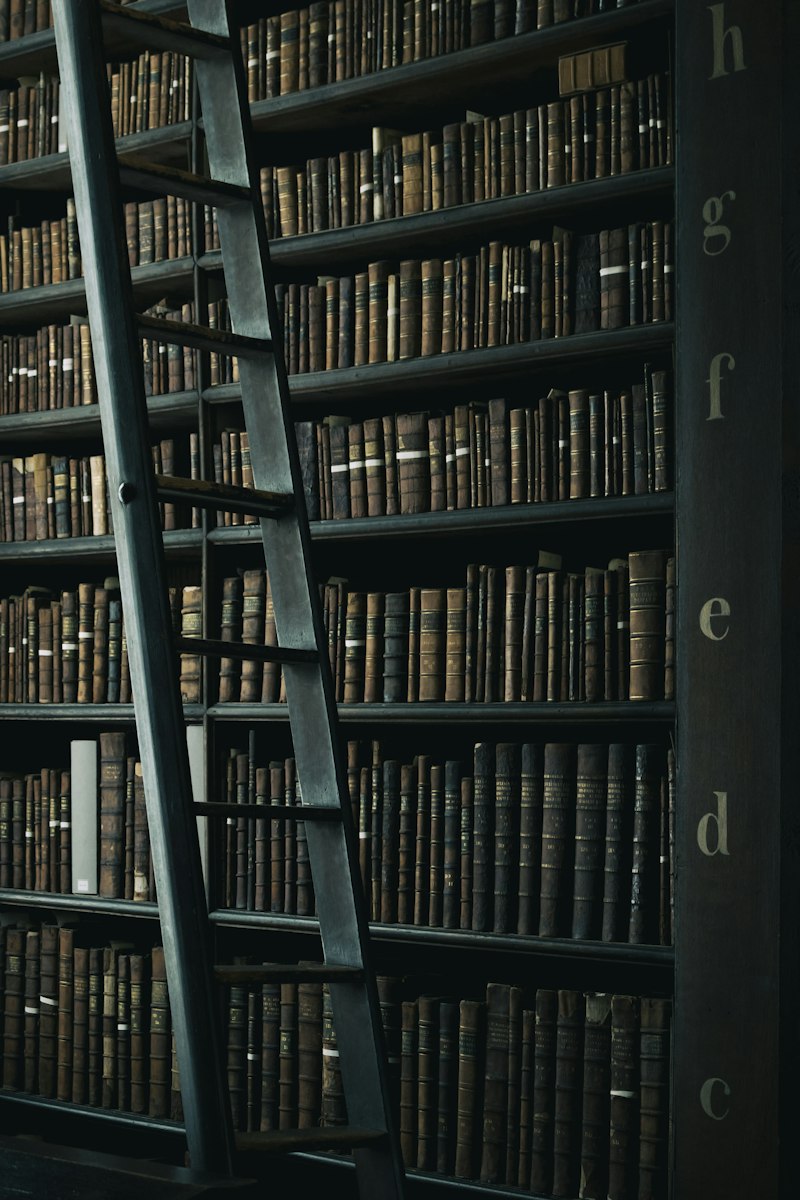



The Library of Shadows
For every great work of literature that has survived to the present day, countless others have been lost to fire, war, neglect, censorship, and deliberate destruction. The history of literature is haunted by the ghosts of books we know existed but will never read — works referenced by ancient scholars, catalogued in medieval inventories, or described in letters, but whose actual texts have vanished forever. These lost works represent an incalculable cultural loss, and contemplating them reminds us both of the fragility of human knowledge and the extraordinary good fortune that has preserved the works we do have.
The Burning of the Library of Alexandria
The Library of Alexandria, founded in the third century BCE, was the ancient world's greatest repository of knowledge. At its peak, it reportedly held between 400,000 and 700,000 scrolls encompassing the entire breadth of ancient scholarship — philosophy, science, mathematics, medicine, history, geography, and literature. The library's destruction, which occurred gradually over several centuries through multiple events including fires, civil conflicts, and deliberate dismantling, is perhaps the greatest cultural catastrophe in human history.
Among the known losses: the complete works of the great Greek dramatists. Of the estimated thousand or more plays written by Aeschylus, Sophocles, and Euripides, only thirty-three survive. We know from ancient sources that the lost plays included works of enormous power and influence. Sophocles alone wrote over a hundred plays; we have seven. The entire corpus of Greek lyric poetry, of which we have only fragments, was once collected and catalogued at Alexandria.
The loss extends beyond literature. Scientific works by Aristarchus of Samos, who proposed a heliocentric model of the solar system eighteen centuries before Copernicus, survived only in partial references by other writers. Mathematical works by Archimedes were known only through later summaries until the recent discovery of a palimpsest. We can only wonder what other discoveries were made and lost in the destruction of Alexandria's collections.
Homer's Other Epics
Homer's Iliad and Odyssey are among the foundational works of Western literature. But ancient sources describe a larger cycle of epic poems about the Trojan War, of which the Iliad and Odyssey are only two. The "Epic Cycle" included the Cypria (events leading up to the Trojan War), the Aethiopis (the death of Achilles), the Little Iliad (the Trojan Horse), the Sack of Ilium, the Returns (the homecomings of various Greek heroes), and the Telegony (Odysseus's later adventures and death).
These poems were known and read throughout antiquity, and plot summaries survive. But the actual texts were lost, probably during the early medieval period when manuscript copying was limited and classical texts were not prioritized. The loss means we have only a fraction of the epic tradition that shaped Greek culture and, through it, all of Western literature.
Shakespeare's Lost Plays
The records of the Stationers' Register and other contemporary sources indicate that Shakespeare wrote at least two plays that have not survived: Love's Labour's Won and Cardenio. Love's Labour's Won may be an alternative title for an existing play, but scholars have never conclusively identified which one. Cardenio, based on an episode from Don Quixote, was performed by the King's Men in 1613 but was never included in the First Folio of 1623 — the collection that preserved most of Shakespeare's plays.
Various manuscripts and adaptations have been proposed as lost Shakespeare works over the centuries, but none has been authenticated. The loss of even a single Shakespeare play is significant, given that his thirty-seven surviving plays represent the peak of English dramatic literature. What would a complete Cardenio reveal about Shakespeare's late style and his engagement with Spanish literature? We will likely never know.
Authors Who Destroyed Their Own Work
Not all literary losses are accidental. Some of the most painful losses were inflicted by the authors themselves. Nikolai Gogol burned the second part of Dead Souls in a fit of religious mania shortly before his death in 1852. Only fragments survived, leaving one of Russian literature's greatest works permanently unfinished.
Franz Kafka instructed his friend Max Brod to burn all his unpublished manuscripts after his death. Brod famously defied this instruction, preserving The Trial, The Castle, and Amerika for posterity. Had Brod been more obedient, we would have lost some of the most influential fiction of the 20th century. The ethical implications of Brod's decision remain debated — was he right to betray his friend's wishes to preserve literary treasures?
Sylvia Plath's husband, Ted Hughes, destroyed the last volume of her journals, claiming he did so to protect their children. This journal, covering the final months of Plath's life, would be an invaluable literary and biographical document. Its destruction has been a source of controversy and anger among Plath scholars and readers for decades.
Lost Medieval and Renaissance Works
The medieval period was particularly destructive to classical literature. The dissolution of the Roman Empire disrupted the copying and circulation of manuscripts. Many ancient texts survived only because individual monasteries happened to preserve copies. When those copies were lost — through fire, Viking raids, or simple neglect — the text vanished forever.
The English Reformation under Henry VIII destroyed hundreds of monastic libraries. The dissolution of the monasteries between 1536 and 1541 scattered or destroyed collections that had been accumulated over centuries. John Leland, the king's antiquary, traveled the country cataloguing monastery collections before their dispersal, and his records describe many works that have never been seen since.
Modern Losses
The twentieth century, despite its improvements in preservation technology, has seen its own devastating losses. The burning of the National Library of Bosnia in 1992, during the siege of Sarajevo, destroyed over two million books and manuscripts, including many unique records of Bosnian cultural heritage. The looting of Iraqi libraries and museums during the 2003 invasion destroyed irreplaceable cuneiform tablets and medieval Islamic manuscripts.
Even in peacetime, literary losses continue. Manuscripts are accidentally discarded by unknowing heirs. Digital files become unreadable as storage formats change. Private collections are dispersed at estate sales without proper cataloguing. The ongoing digitization of library collections is itself a race against time, as acid paper crumbles and ink fades faster than books can be scanned.
Hope Among the Ruins
Despite the enormity of what has been lost, occasional recoveries keep hope alive. The Dead Sea Scrolls, discovered in 1947, preserved biblical and sectarian texts from the Second Temple period. The Nag Hammadi library, found in Egypt in 1945, contained Gnostic texts that had been considered permanently lost. And as recently as 2005, multispectral imaging revealed a lost work by Archimedes hidden beneath a medieval prayer book. These discoveries remind us that the past still holds secrets, and that patient scholarship and advancing technology may yet recover some of what history has tried to destroy.