


Introduction
Some novels capture a moment. Others capture an entire civilization. The Great Gatsby by F. Scott Fitzgerald does both — and in barely fifty thousand words, it achieves a compression and intensity that most novels five times its length cannot approach. Published in 1925 to modest sales and mixed reviews, the book was largely forgotten by the time Fitzgerald died in 1940, a broken man who believed himself a failure. It was resurrected during World War II, when the Armed Services Editions program distributed 150,000 copies to American soldiers overseas, and from that second life it has ascended to a position that its author could never have imagined: it is now widely regarded as the greatest American novel ever written, a distillation of the American experience so pure and so potent that it has become the lens through which much of the world understands the promises and betrayals of American life.
The novel tells the story of Jay Gatsby, a self-made millionaire of mysterious origins who throws lavish parties at his Long Island mansion in the summer of 1922, all in the hope of rekindling a love affair with Daisy Buchanan, a beautiful, careless woman who married another man while Gatsby was away at war. It is narrated by Nick Carraway, a young Midwesterner who moves to New York to learn the bond business and finds himself drawn into Gatsby's orbit — and, through Gatsby, into a world of wealth, glamour, corruption, and ultimately violence that will change him forever.
But The Great Gatsby is far more than a love story or a Jazz Age period piece. It is a meditation on the nature of desire itself — on the human tendency to invest the objects of our longing with a significance they cannot bear, to chase green lights across dark waters, to believe that if we can only reach far enough, try hard enough, want badly enough, we can recapture a golden past that may never have existed in the first place. Gatsby's tragedy is not that he fails to win Daisy; it is that the Daisy he loves — the Daisy of his dreams, the incarnation of all his desires — does not exist and never did. He has fallen in love with an idea, and the real woman can never live up to it.
This is the tragedy of the American Dream writ small and rendered with a prose so beautiful that it hurts to read. Fitzgerald saw, with a clarity born of personal experience, that the Dream's promise of infinite possibility is also a kind of curse — a guarantee of permanent dissatisfaction, because no achievement can ever match the perfection of the imagined goal. The green light at the end of Daisy's dock is perhaps the most famous symbol in American literature, and its meaning is both simple and inexhaustible: it represents everything we want and can never have, everything we reach for and can never grasp, the orgastic future that year by year recedes before us.
Historical Context
The 1920s in America — the Jazz Age, the Roaring Twenties — was a decade of unprecedented prosperity, cultural ferment, and moral upheaval. The economy was booming, driven by new industries (automobiles, radio, film), new financial instruments (consumer credit, stock speculation), and a pervasive optimism that the good times would last forever. Prohibition had outlawed alcohol but had merely driven it underground, creating a vast criminal economy of bootlegging and speakeasies that blurred the line between legitimate wealth and organized crime. Traditional moral standards were loosening; women were voting, working, and claiming new freedoms in dress, behavior, and sexual expression. The old certainties of the Victorian era — duty, thrift, respectability, deferred gratification — were being replaced by a new ethic of consumption, pleasure, and self-invention.
Fitzgerald was both a product and a chronicler of this era. Born in 1896 in St. Paul, Minnesota, to a family of modest means with aspirations to gentility, he attended Princeton University, served briefly in the Army during World War I (though he never saw combat), and burst onto the literary scene in 1920 with the publication of This Side of Paradise, a novel that captured the mood of the postwar generation with such precision that its twenty-three-year-old author became an overnight celebrity. He married Zelda Sayre, a beautiful and vivacious Southern belle, and together they became the golden couple of the Jazz Age — glamorous, extravagant, and spectacularly self-destructive.
Fitzgerald's personal experience of wealth was characterized by a paradox that would become the central theme of his work: he was simultaneously enchanted and repelled by money. He craved the glamour and freedom that wealth provided, but he saw with devastating clarity the moral bankruptcy that often accompanied it. He spent lavishly — on parties, on clothes, on travel, on alcohol — and lived perpetually on the edge of financial ruin. His intimate knowledge of both the allure and the emptiness of the rich gives The Great Gatsby its distinctive double vision: the novel is simultaneously a love letter to the beauty and excitement of wealth and a merciless exposé of its moral hollowness.
The novel was written during the Fitzgeralds' time on the French Riviera and in Paris, where they moved in the literary circles that included Ernest Hemingway, Gertrude Stein, and Ezra Pound. Fitzgerald worked on the novel with unusual care and discipline, revising extensively and paying meticulous attention to every sentence. The result was a novel far more tightly constructed and stylistically polished than his earlier work — a novel that he correctly believed was "something really NEW in form, idea, structure."
The Long Island setting of the novel — the fictional towns of West Egg and East Egg, modeled on the real communities of Great Neck and Manhasset Neck — was chosen with precision. In the 1920s, Long Island's Gold Coast was the playground of America's wealthiest families, a landscape of enormous estates, private beaches, and ostentatious consumption that embodied the extremes of Jazz Age affluence. The distinction between "old money" (East Egg, where the Buchanans live) and "new money" (West Egg, where Gatsby lives) reflects a real social division that fascinated Fitzgerald — the invisible but impenetrable barrier between inherited wealth and self-made fortune, between those who were born into the American aristocracy and those who clawed their way up from the bottom.
Plot Summary
The novel opens with Nick Carraway's arrival on Long Island in the spring of 1922. A Yale graduate from a prominent Midwestern family, Nick has come east to learn the bond business and has rented a small house in West Egg, next door to the enormous mansion of his mysterious neighbor, Jay Gatsby. Across the bay in East Egg, Nick's cousin Daisy lives with her husband Tom Buchanan, a former college football star from an immensely wealthy Chicago family. Tom is having an affair with Myrtle Wilson, the wife of a gas station owner in the desolate valley of ashes that lies between West Egg and New York City.
At dinner with the Buchanans, Nick meets Jordan Baker, a professional golfer with a cool, self-possessed manner and a reputation for dishonesty. Jordan tells Nick that Gatsby is in love with Daisy — that they had a brief romance in Louisville in 1917, before Gatsby went overseas with the Army and Daisy married Tom. Gatsby has bought his mansion specifically because it is across the bay from the Buchanan estate, and his legendary parties — extravagant affairs attended by hundreds of people, most of whom have never met their host — are thrown in the hope that Daisy will wander in one night.
Nick arranges a reunion between Gatsby and Daisy at his cottage, and the two begin an affair. Gatsby shows Daisy his mansion, his shirts, his possessions — all the material evidence of his transformation from the penniless James Gatz to the fabulously wealthy Jay Gatsby. He wants Daisy to see what he has become, to be impressed, to love him again as she loved him before. But there is something desperate and delusional in Gatsby's pursuit. He does not merely want Daisy to love him now; he wants her to declare that she never loved Tom, that the five years of their marriage were meaningless, that the past can be erased and rewritten. "Can't repeat the past?" Gatsby says to Nick, incredulous. "Why of course you can!"
The novel's climax occurs in a suite at the Plaza Hotel in New York, where Tom confronts Gatsby about his relationship with Daisy. The confrontation strips away the layers of illusion that have sustained Gatsby's dream. Tom reveals that Gatsby's wealth comes from bootlegging and other criminal enterprises. He challenges Gatsby to make Daisy declare that she never loved Tom — and Daisy, confronted with the reality that she must choose, cannot do it. "I did love him once — but I loved you too," she tells Gatsby, and this admission of divided loyalty is fatal to Gatsby's dream, which depends on the belief that Daisy's love for him is absolute and exclusive.
The consequences of the Plaza scene unfold with tragic inevitability. Daisy, driving Gatsby's car, strikes and kills Myrtle Wilson, who has run into the road believing the yellow car to be Tom's. Gatsby tells Nick that he will take the blame for the accident — that he will protect Daisy at all costs. Tom, meanwhile, tells George Wilson, Myrtle's grief-stricken husband, that Gatsby was driving the car. Wilson, half-mad with grief, goes to Gatsby's mansion and shoots him dead in his swimming pool before turning the gun on himself.
The novel's final chapters describe Gatsby's funeral — attended by almost no one, in stark contrast to the hundreds who thronged his parties — and Nick's disillusionment with the East. He breaks off his relationship with Jordan, confronts Tom (who feels no remorse for his role in Gatsby's death), and decides to return to the Midwest. The novel's final paragraphs, in which Nick meditates on the green light and the promise of the American continent, are among the most celebrated passages in all of literature — a coda that transforms a story of individual tragedy into a universal meditation on desire, loss, and the human condition.
Character Analysis
Jay Gatsby: The Self-Made Dream
Jay Gatsby is one of the most complex and enigmatic characters in American literature — a figure who embodies both the nobility and the absurdity of the American Dream. Born James Gatz to impoverished farmers in North Dakota, he reinvented himself at seventeen, adopting a new name, a new identity, and a new destiny. His self-transformation is simultaneously heroic and tragic: heroic because it represents the purest form of the American promise that anyone can become anything through determination and hard work; tragic because the dream that drives Gatsby's transformation is built on an illusion.
Gatsby is a romantic in the deepest sense — a man who has organized his entire life around a vision of transcendent possibility, a belief that the world can be made to conform to his desires if only he wants it badly enough. His love for Daisy is not really about Daisy at all; it is about the idea of Daisy — the golden girl who represents everything he has ever wanted: beauty, wealth, status, acceptance, the erasure of his humble origins. Nick recognizes this when he observes that there must have been a moment when Gatsby "forever wed his unutterable visions to her perishable breath." From that moment on, Gatsby was in love not with a woman but with a dream, and no real woman could ever live up to it.
What makes Gatsby sympathetic despite his delusions and his criminality is the purity of his desire. In a world of moral corruption — Tom's brutality, Daisy's carelessness, Jordan's dishonesty, the shallow hedonism of the party-goers — Gatsby's capacity for hope stands out as something rare and beautiful, even if it is also foolish and self-destructive. Nick calls Gatsby "great" not because of his wealth or his parties but because of his "extraordinary gift for hope, his romantic readiness" — qualities that the cynical, materialistic world around him has lost.
Daisy Buchanan: The Golden Girl
Daisy Buchanan is one of the most debated characters in American literature, and the range of interpretations she has inspired reflects the complexity of Fitzgerald's creation. She is beautiful, charming, and captivating — her voice, which Nick describes as "full of money," is the novel's most potent symbol of the allure of wealth. She is also shallow, selfish, and ultimately destructive — a woman who allows Gatsby to take the blame for Myrtle's death and retreats behind the protective barrier of Tom's wealth and social position without a backward glance.
But Daisy is also a victim of the world she inhabits. Born into privilege, trained from birth to be decorative and desirable, married to a man who openly cheats on her, she has learned that the only power available to her is the power of her beauty and her charm — and she has learned to use it strategically. Her famous declaration about her daughter — "I hope she'll be a fool — that's the best thing a girl can be in this world, a beautiful little fool" — is not merely cynical; it is a clear-eyed assessment of the options available to women in her class and era. Daisy is not merely a villain or a victim; she is a product of a system that rewards her for being exactly what she is: beautiful, careless, and ultimately untouchable.
Nick Carraway: The Unreliable Witness
Nick Carraway is the novel's narrator and, in many ways, its most interesting character — though his interest lies precisely in his claim to be uninteresting. Nick presents himself as honest, fair-minded, and non-judgmental — "I am one of the few honest people that I have ever known," he tells us. But the novel systematically undermines this self-assessment. Nick is drawn to Gatsby's glamour even as he disapproves of his methods. He is complicit in Gatsby and Daisy's affair, facilitating their reunion and keeping their secret. He is simultaneously repelled by and fascinated by the wealth and corruption of the East. His narration is shaped by his own prejudices, desires, and blind spots, and part of the novel's richness lies in the gap between what Nick tells us and what the reader can infer.
Nick's role as narrator also raises important questions about storytelling, memory, and the construction of meaning. The novel we are reading is Nick's account of the summer of 1922, written from a retrospective vantage point — and Nick's shaping of the story inevitably reflects his own needs and desires. His idealization of Gatsby, his contempt for Tom, his ambivalence toward Daisy — all of these attitudes color his narration and invite the reader to question the reliability of the account. Fitzgerald's use of a first-person narrator who is simultaneously a character in the story and an interpreter of its meaning creates a layered, ambiguous text that resists simple interpretation and rewards close reading.
Tom Buchanan: The Brute Force of Privilege
Tom Buchanan is the novel's villain, though his villainy is not the melodramatic kind. Tom is not evil in any dramatic sense; he is simply powerful, entitled, and utterly indifferent to the consequences of his actions for other people. He cheats on Daisy openly and without guilt. He flaunts his affair with Myrtle in front of her husband. He uses his physical strength to dominate those around him — breaking Myrtle's nose with a casual blow, intimidating George Wilson into compliance. And when confronted with the possibility that Daisy might leave him for Gatsby, he deploys every weapon at his disposal — his old-money credentials, his knowledge of Gatsby's criminal connections, his emotional manipulation — to destroy his rival.
Tom embodies what Fitzgerald saw as the moral vacancy of the American upper class. His wealth was inherited, not earned; his privileges were bestowed, not achieved; his sense of superiority rests on nothing more substantial than an accident of birth. He has never had to work, to struggle, to prove himself — and the result is a character of profound emptiness, a man who fills the void at his center with material possessions, sexual conquest, and the casual cruelty that is the prerogative of the powerful. Tom and Daisy are, in Nick's famous assessment, "careless people — they smashed up things and creatures and then retreated back into their money or their vast carelessness... and let other people clean up the mess they had made."
Major Themes
The American Dream: Promise and Betrayal
The American Dream is the novel's central preoccupation, and Fitzgerald's treatment of it is both deeply sympathetic and devastatingly critical. Gatsby's story is a version of the American Dream in its purest form: a poor boy from the Midwest reinvents himself, achieves fabulous wealth, and pursues his ideal of happiness with unwavering determination. In the mythology of American self-making, this should be a story of triumph. But Fitzgerald shows that the Dream, pushed to its logical extreme, becomes a form of madness — a refusal to accept the limitations of reality, a willingness to sacrifice everything on the altar of an impossible ideal.
The novel suggests that the American Dream is flawed at its foundation because it conflates material success with spiritual fulfillment. Gatsby achieves everything the Dream promises — wealth, property, social prominence — but none of it brings him what he actually wants: Daisy's love, which is itself a symbol of a deeper longing for acceptance, belonging, and transcendence. The Dream's promise of infinite possibility is also a recipe for infinite disappointment, because no achievement can ever satisfy a desire that is, at its root, not for any particular thing but for the feeling of perpetual becoming — the sense that the best is always yet to come.
"Fitzgerald saw something essential about America that most American writers have been too patriotic or too cynical to acknowledge: that the Dream is simultaneously the nation's greatest gift and its most dangerous delusion. The Great Gatsby is the definitive exploration of that paradox." — T.S. Eliot, who called the novel "the first step that American fiction has taken since Henry James"
Wealth, Class, and Moral Corruption
The novel presents a nuanced portrait of wealth and its relationship to morality. The old-money aristocracy of East Egg — represented by Tom and Daisy — possesses a casual brutality that comes from never having had to earn or justify their privilege. The new-money arrivistes of West Egg — represented by Gatsby — display a vulgar ostentation that reflects their insecurity about their place in the social hierarchy. And the inhabitants of the valley of ashes — George and Myrtle Wilson — are the forgotten casualties of the system, ground down by the machinery of wealth creation that enriches others at their expense.
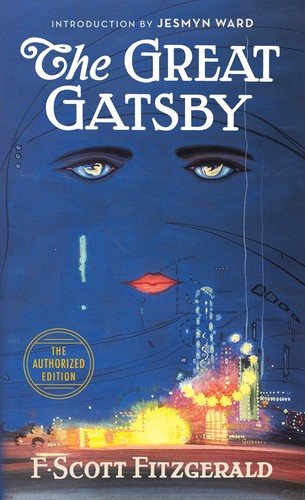
Fitzgerald does not moralize about these distinctions; he dramatizes them with a precision that makes the moral implications unavoidable. The valley of ashes — a gray, desolate wasteland of industrial waste — is the literal dumping ground of the wealth that sustains East Egg and West Egg. It is presided over by the enormous eyes of Doctor T.J. Eckleburg, a faded billboard that has been interpreted as a symbol of the absent God who watches the moral wasteland of American capitalism without intervening. The geographical arrangement of the novel — East Egg, West Egg, the valley of ashes, New York City — is a map of the American class system, each location representing a different relationship to wealth and power.
"What gives The Great Gatsby its enduring power is that Fitzgerald, almost alone among American writers, understood that the American Dream is not a single story but a system — a system that produces both Jay Gatsbys and valleys of ashes, and that the beauty of the one depends upon the existence of the other." — Haruki Murakami
Time, Memory, and the Impossible Past
Gatsby's defining characteristic is his refusal to accept the finality of the past. "Can't repeat the past?" he asks Nick, genuinely baffled by the suggestion. "Why of course you can!" This belief — that through sheer force of will, the past can be recovered and its mistakes corrected — is the engine that drives the novel's plot and the source of Gatsby's peculiar greatness and his ultimate destruction.
Fitzgerald's treatment of time is one of the novel's most sophisticated achievements. The narrative moves fluidly between present and past, between the events of the summer of 1922 and the memories that give those events their meaning. Gatsby's parties, his mansion, his shirts, his car — all of these are attempts to materialize the past, to create a present that matches the golden glow of his memories of Louisville in 1917. But the past, as Nick understands and Gatsby does not, cannot be repeated. Time moves in one direction only, and the attempt to reverse it is not merely futile but destructive, because it requires the denial of everything that has happened in the intervening years — Daisy's marriage, her daughter, the life she has built with Tom.
The novel's final image — "So we beat on, boats against the current, borne back ceaselessly into the past" — captures this theme with extraordinary compression and beauty. We are all, Fitzgerald suggests, like Gatsby: reaching for a future that is really a past, pursuing a dream that recedes even as we pursue it, carried backward by the current of time even as we strain forward. This is not merely Gatsby's tragedy; it is the human condition itself, rendered with a lyricism that transforms observation into revelation.
Love, Obsession, and the Idealization of the Other
Gatsby's love for Daisy is one of the great love stories in literature — and one of the most troubling. It is passionate, devoted, all-consuming — and it is also, at bottom, a form of narcissism. Gatsby does not love Daisy for who she is; he loves her for what she represents — the golden promise of his youth, the validation of his self-made identity, the proof that he has transcended his origins. When Nick warns him that he cannot ask Daisy to say she never loved Tom, Gatsby is baffled: "Of course you can!" he insists. He needs Daisy to deny her own history because her history is an affront to his dream — proof that the world has continued in his absence, that Daisy has lived a life that does not include him.
Fitzgerald understood — from painful personal experience — the danger of idealizing the beloved. His own marriage to Zelda was characterized by a similar dynamic: he fell in love with an idealized version of her that the real woman could never sustain, and their relationship was destroyed by the gap between the dream and the reality. In Gatsby's story, Fitzgerald dramatizes this dynamic with an intensity and clarity that transforms personal experience into universal truth. We all, to some degree, fall in love with our own projections — with the version of the other person that satisfies our deepest needs — and the inevitable discovery that the real person is different from our fantasy is one of the central dramas of human life.
"Fitzgerald was the first American writer to see clearly that wealth in America was not just an economic fact but a spiritual condition — a state of being that promised everything and delivered nothing, or rather, delivered everything except what mattered." — Gertrude Stein
The Corruption of the East
The novel's geographical symbolism extends to the broader opposition between East and West that has been a central theme of American literature since its beginnings. Nick comes from the Midwest — a region associated in American mythology with honesty, simplicity, and moral integrity. He goes east to New York — a region associated with sophistication, opportunity, and corruption. His experience in the East destroys his innocence and sends him home, convinced that "I wanted the world to be... at a sort of moral attention forever."
This East-West opposition reflects a deeper ambivalence at the heart of American culture: the tension between the promise of the frontier (open space, new beginnings, freedom from the past) and the reality of civilization (corruption, hierarchy, the weight of history). Gatsby is a figure of the frontier — a self-made man who has invented himself out of nothing, unburdened by family, tradition, or the accumulated compromises of inherited wealth. But his frontier values — optimism, self-reliance, the belief that the future will be better than the past — are no match for the entrenched power of the Eastern establishment, which destroys him without remorse and without consequence.
Writing Style and Literary Craft
The prose of The Great Gatsby is among the most celebrated in the English language. Fitzgerald's sentences have a luminous, almost incandescent quality — each word seems to glow with an inner light, each image precisely calibrated for maximum emotional effect. The famous description of Gatsby's parties — "In his blue gardens men and girls came and went like moths among the whisperings and the champagne and the stars" — is characteristic: evocative, musical, and suffused with a beauty that is inseparable from a sense of transience and loss. The beauty of Fitzgerald's prose is always tinged with melancholy, always shadowed by the awareness that the things it describes are fragile, fleeting, and already beginning to fade.
Fitzgerald's use of symbolism is masterful and unobtrusive. The green light at the end of Daisy's dock, the eyes of Doctor T.J. Eckleburg, the valley of ashes, Gatsby's yellow car, the weather (the reunion with Daisy takes place during a rainstorm that clears to sunshine), the distinction between East Egg and West Egg — all of these symbols enrich the novel's meaning without ever feeling imposed or artificial. They emerge organically from the narrative, carrying their symbolic weight so naturally that many readers absorb their significance without consciously noticing it.
The novel's structure is a marvel of compression and efficiency. At roughly 47,000 words, it is extraordinarily short for a work of such ambition and complexity. Fitzgerald achieves this compression by eliminating everything inessential and by using Nick's retrospective narration to summarize and interpret events that a more conventional narrative would dramatize in full. The result is a novel that moves with the speed and inevitability of a poem, each scene leading to the next with a momentum that makes the 180-page reading experience feel both complete and breathlessly swift.
Fitzgerald's handling of point of view is particularly sophisticated. Nick is simultaneously inside and outside the story — a participant in the events he describes and a retrospective interpreter who shapes those events into a coherent narrative. This dual position allows Fitzgerald to combine the immediacy of dramatic action with the depth of reflective commentary, creating a narrative texture that is richer and more complex than either pure dramatization or pure reflection could achieve alone.
Critical Reception
The critical history of The Great Gatsby is one of the most dramatic in American literature — a story of initial disappointment, posthumous rediscovery, and eventual canonization that mirrors, in its own way, the novel's themes of loss and recovery. Upon its publication in April 1925, the novel received respectful but unenthusiastic reviews. Some critics recognized its quality — T.S. Eliot wrote to Fitzgerald that the novel "interested and excited me more than any new novel I have seen, either English or American, for a number of years," and Edith Wharton praised its "unusual skill." But others found it slight, superficial, or morally unsatisfying.
More damaging than the mixed reviews was the novel's commercial failure. It sold fewer than 25,000 copies during Fitzgerald's lifetime — a fraction of the sales of This Side of Paradise — and by the time of his death in 1940, it was out of print. Fitzgerald died believing that he had failed as a writer, that his best work was behind him, and that his masterpiece had been rejected by the public. It is one of the most poignant ironies in literary history that the novel he considered his finest achievement would go on to sell more than 25 million copies and become the most widely taught novel in American high schools.
The novel's rehabilitation began during World War II and accelerated in the 1950s and 1960s, when a new generation of critics — including Lionel Trilling, Arthur Mizener, and Malcolm Cowley — championed it as a masterpiece of American literature. By the 1960s, the novel had entered the American literary canon, and by the end of the twentieth century, it was widely regarded as the greatest American novel ever written. Its critical reputation has continued to grow in the twenty-first century, as scholars have explored its treatment of race, class, gender, and American identity with increasing sophistication.
Famous Quotes About This Book
"The Great Gatsby interested and excited me more than any new novel I have seen, either English or American, for a number of years... it seems to me to be the first step that American fiction has taken since Henry James." — T.S. Eliot
"Fitzgerald was the first to see clearly that wealth in America is a spiritual condition as much as a material one, and The Great Gatsby is the definitive diagnosis of that condition — its glamour, its emptiness, its terrible cost." — Gertrude Stein
"I first read The Great Gatsby when I was eighteen, and it changed my understanding of what a novel could do. Fitzgerald showed me that a story could be short and still contain the whole world — that a hundred and eighty pages could hold more truth than a thousand, if every sentence was made to carry its full weight." — Haruki Murakami
Legacy and Cultural Impact
The cultural impact of The Great Gatsby is so pervasive that it has become virtually inseparable from the American identity. The novel is the most widely assigned text in American high schools and colleges, read by millions of students every year as an introduction to the complexities of American literature and the ambiguities of the American experience. It has been adapted into five major films (in 1926, 1949, 1974, 2000, and 2013), an opera, a ballet, and numerous stage productions. Its imagery — the green light, the valley of ashes, the parties, the yellow car — has become part of the visual vocabulary of American culture.
The novel's influence on American literature has been profound. Fitzgerald's prose style — lyrical, compressed, emotionally charged — has influenced generations of American writers, from John Cheever and John Updike to Donna Tartt and Michael Chabon. His treatment of the American Dream — simultaneously celebratory and critical, romantic and clear-eyed — established a template for exploring American identity that subsequent writers have extended and complicated but never surpassed. And his creation of Jay Gatsby — the self-made man whose self-making is both his greatest achievement and his fatal flaw — added a character type to American literature that has been endlessly reinterpreted and reimagined.
The novel entered the public domain in the United States on January 1, 2021, and the immediate explosion of new editions, adaptations, and creative responses testifies to its enduring vitality. From graphic novel versions to feminist retellings, from hip-hop-inflected adaptations to scholarly re-evaluations, The Great Gatsby continues to generate new interpretations and new arguments, demonstrating that its themes — ambition, desire, class, race, the corruption of ideals by material reality — remain as urgent and unresolved as they were in 1925.
Perhaps most significantly, the novel has given Americans a shared vocabulary for discussing the central paradox of their national life: the tension between the ideal of equal opportunity and the reality of entrenched inequality, between the promise of self-invention and the constraints of class and race, between the belief that the future will be better than the past and the nagging suspicion that the best days are already behind us. When Americans talk about "the American Dream," they are, whether they know it or not, talking about Jay Gatsby — and the conversation that Fitzgerald started nearly a century ago shows no sign of ending.
Why You Should Read It Today
In an age of extreme wealth inequality, when billionaires build private space programs while millions struggle to pay rent, The Great Gatsby speaks with renewed urgency about the moral costs of unchecked capitalism and the emptiness of material success pursued as an end in itself. In an age of social media, when everyone is engaged in a project of self-presentation and self-invention, Gatsby's creation of a false identity — his transformation from James Gatz into Jay Gatsby — feels less like a historical curiosity and more like a prescient commentary on contemporary life. In an age of political polarization, when shared truth seems increasingly elusive, the novel's exploration of the relationship between wealth, power, and the manipulation of reality resonates with uncomfortable precision.
But The Great Gatsby is worth reading not merely because it is relevant but because it is beautiful. Fitzgerald's prose is among the finest in the English language, and the experience of reading it — of submitting to its rhythms, absorbing its images, feeling its emotional currents — is one of the great pleasures that literature has to offer. The novel is short enough to read in a single sitting, and there is something to be said for the experience of surrendering yourself to its story for a few uninterrupted hours, allowing its beauty and its sadness to wash over you without the distraction of putting the book down and coming back to it later.
If you read it in high school and remember it vaguely as a book about rich people in the 1920s, read it again. You will discover a different book — darker, more complex, more emotionally devastating than you remembered. The themes that seemed abstract in adolescence — the pursuit of an impossible ideal, the discovery that success does not bring happiness, the realization that the past cannot be recovered — acquire a new poignancy when you have enough life experience to recognize them in your own story. The Great Gatsby is one of those rare books that grows with its readers, revealing new depths and new meanings at every stage of life.
Conclusion
F. Scott Fitzgerald died on December 21, 1940, at the age of forty-four, of a heart attack in the Hollywood apartment where he was working on The Last Tycoon, another novel about the American Dream. He believed himself forgotten, his best work unrecognized, his career a failure. He could not have known that the slim novel he had published fifteen years earlier — the novel that had sold fewer than 25,000 copies and gone out of print — would become the most celebrated American novel of the twentieth century, read by tens of millions of people around the world and taught in virtually every American school.
This posthumous vindication is itself a kind of Gatsby story — a dream fulfilled too late, a recognition that comes after the dreamer is gone. But unlike Gatsby's dream, which was built on illusion, Fitzgerald's achievement is real and permanent. He wrote a novel that captures the American experience with a precision and beauty that no other work of fiction has matched, a novel that is simultaneously a love story and a tragedy, a social critique and a philosophical meditation, a period piece and a timeless exploration of the human heart.
The Great Gatsby ends with one of the most famous passages in all of literature, and it is worth quoting in full: "Gatsby believed in the green light, the orgastic future that year by year recedes before us. It eluded us then, but that's no matter — tomorrow we will run faster, stretch out our arms farther.... And one fine morning — So we beat on, boats against the current, borne back ceaselessly into the past." These words are Fitzgerald's gift to every reader who has ever reached for something beyond their grasp, who has ever believed that the best was yet to come, who has ever felt the tug of the past pulling them backward even as they strain toward the future. They are words of extraordinary beauty and extraordinary sadness, and they remind us that the pursuit of the dream — however futile, however doomed — is what makes us human.