


Introduction: A Book That Changed the World
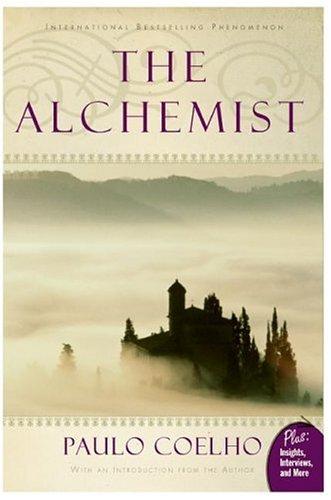
There are books that entertain, books that inform, and then there are books that fundamentally alter the way you see your life. Paulo Coelho's The Alchemist, first published in 1988 in Portuguese under the title O Alquimista, belongs firmly in this last category. With over 150 million copies sold worldwide and translations into more than 80 languages, it holds the Guinness World Record for the most translated book by a living author. These numbers alone tell a remarkable story, but statistics cannot capture what happens when a reader sits down with this slim volume and emerges, a few hours later, with a fundamentally different relationship to their own ambitions and fears.
The novel tells the story of Santiago, an Andalusian shepherd boy who dreams of finding treasure at the Egyptian pyramids. It is a story that can be summarized in a single sentence, yet its meaning cannot be exhausted in a lifetime of reflection. Coelho wrote it in just two weeks, claiming the book was "already written in his soul." Whether you consider that mystical nonsense or profound truth likely depends on whether you have read the book yet. For millions of readers across every continent, The Alchemist arrived at precisely the right moment in their lives, offering permission to pursue what Coelho calls their Personal Legend — the thing they have always wanted to accomplish.
In this comprehensive review, we will explore every facet of this extraordinary novel: its deceptively simple plot, its richly drawn characters, its philosophical underpinnings, and its unprecedented global impact. Whether you are coming to The Alchemist for the first time or returning to it after many years, this analysis aims to deepen your understanding of why this book continues to resonate with readers of every age, background, and belief system.
"It's a beautiful story about the power of following your dreams." — Bill Clinton, 42nd President of the United States
About the Author: Paulo Coelho's Unlikely Path
To understand The Alchemist, it helps to understand the extraordinary life of the man who wrote it. Paulo Coelho de Souza was born on August 24, 1947, in Rio de Janeiro, Brazil. His early life was marked by conflict with his parents, who wanted him to become an engineer. Coelho wanted to be a writer, a desire his parents considered so alarming that they had him committed to a psychiatric institution three times before he turned twenty. He underwent electroconvulsive therapy and endured conditions that would have broken many people permanently.
After leaving the institution for the final time, Coelho drifted through the counterculture of the late 1960s and 1970s. He wrote lyrics for some of Brazil's most famous musicians, including Raul Seixas, and experimented with drugs, occultism, and various spiritual traditions. In 1974, he was arrested by the Brazilian military dictatorship's secret police and subjected to torture. This experience, which he rarely discusses in detail, left deep psychological scars but also reinforced his determination to live life on his own terms.
The turning point came in 1986 when Coelho walked the Camino de Santiago, the ancient pilgrimage route across northern Spain. This 500-mile journey transformed him spiritually and creatively. He described it as the moment he finally understood his own Personal Legend: he was meant to be a writer. Two years later, he published The Alchemist. The book initially sold poorly — so poorly that the original publisher dropped it after selling only 900 copies. Coelho, undeterred, found a new publisher, and the book gradually found its audience through word of mouth. By the mid-1990s, it had become a global phenomenon.
Coelho's life story mirrors Santiago's journey in uncanny ways. Like his protagonist, Coelho faced opposition from his family, endured hardship and danger, was tempted to abandon his quest, and ultimately discovered that the treasure he sought was connected to the journey itself. This autobiographical resonance gives The Alchemist an authenticity that readers instinctively sense. Coelho did not write about following your dreams from the comfort of an armchair. He wrote about it from the hard-won vantage point of someone who nearly destroyed himself before finding the courage to pursue his own.
Today, Coelho is one of the most widely read authors in history. He has published more than thirty books, been elected to the Brazilian Academy of Letters, and received numerous international awards including France's Legion of Honour. He maintains an active presence on social media, where he shares philosophical reflections with tens of millions of followers. Yet for all his subsequent success, he remains best known for the small book he wrote in two weeks in 1988 — the book that, as he puts it, was waiting inside him for his entire life.
Plot Summary: The Shepherd's Journey
The Dream and the Decision
The story begins in the fields of Andalusia, in southern Spain, where a young shepherd named Santiago has a recurring dream about a child who leads him to the Egyptian pyramids and tells him he will find a hidden treasure there. Santiago is content with his life as a shepherd. He loves the freedom of the open road, the companionship of his sheep, and the simple rhythm of moving from pasture to pasture. He became a shepherd, we learn, because it was the only way his father would allow him to travel — seminary was the expected path, but Santiago negotiated his way to the fields instead.
Troubled by the recurring dream, Santiago visits a Romani fortune teller in the town of Tarifa. She interprets the dream literally: he should go to the pyramids and find the treasure. Santiago is skeptical until he meets an old man named Melchizedek, who claims to be the King of Salem. Melchizedek introduces Santiago to the concept of a Personal Legend — the thing that every person wants to accomplish in their life, the very purpose of their existence. He tells Santiago that "when you want something, all the universe conspires in helping you to achieve it." This idea, which will echo throughout the novel, becomes the philosophical cornerstone of Santiago's journey and of the book itself.
Melchizedek gives Santiago two stones, Urim and Thummim, one black and one white, which can help him make decisions when he cannot read the omens of the world. More importantly, he gives Santiago the courage to sell his sheep and buy a ticket to Africa. This is the first of many moments in the book where Santiago must choose between the comfortable and the unknown, between what he has and what he might become.
Trials in the Desert
Santiago's journey begins disastrously. Upon arriving in Tangier, Morocco, he is robbed of all his money by a thief who promises to guide him to the pyramids. Alone, penniless, and unable to speak Arabic, Santiago is forced to take a job with a crystal merchant. He works in the crystal shop for nearly a year, during which time he transforms the merchant's failing business through his energy and innovation. He introduces the idea of selling tea in crystal glasses, creates a display case at the top of a hill, and generally brings new life to a shop that had grown stagnant.
The crystal merchant is a fascinating character in his own right. He is a man who has always dreamed of making a pilgrimage to Mecca but has never gone, partly because he fears that achieving his dream would leave him with nothing to live for. Through his conversations with the merchant, Santiago begins to understand the difference between those who pursue their Personal Legend and those who find reasons not to. The merchant is not a villain; he is a cautionary tale, a portrait of what happens when fear of fulfillment becomes stronger than the desire for it.
Having earned enough money to either buy a new flock of sheep or continue to the pyramids, Santiago faces his second major choice. He could return to the life he knows, comfortable and successful, or press forward into the unknown. He chooses the unknown, joining a caravan crossing the Sahara Desert toward Egypt. It is on this caravan that the real education begins.
The Oasis and the Alchemist
During the desert crossing, Santiago meets an Englishman who is searching for a famous alchemist who lives at the oasis of Al-Fayoum. The Englishman has spent years studying alchemy from books, learning about the Philosopher's Stone, the Elixir of Life, and the Master Work. He represents the intellectual approach to spiritual knowledge — everything learned from texts, nothing from direct experience. Santiago, by contrast, learns from observing the desert, the wind, and the sun. Their contrasting approaches to knowledge become an important thematic element.
At the oasis, Santiago falls in love with Fatima, a woman of the desert who understands his need to pursue his Personal Legend. Their love story is brief but powerful. Fatima tells Santiago that she is a woman of the desert, and that desert women know how to wait. She encourages him to continue his journey, understanding that if he stays for her and abandons his quest, he will eventually resent both her and himself. "If I am really part of your dream," she tells him, "you'll come back one day." This moment crystallizes one of the book's most important and controversial ideas: that true love supports rather than constrains the beloved's destiny.
Santiago also discovers that he has the ability to communicate with the wind and the sun — what the book calls understanding the Language of the World, or the Soul of the World. This ability marks him as someone with genuine spiritual gifts, and it attracts the attention of the Alchemist himself, a mysterious figure who agrees to guide Santiago through the most dangerous part of his journey.
The Final Lesson
The Alchemist leads Santiago through tribal territories where they are captured by warring tribesmen. Forced to demonstrate his powers or die, Santiago must communicate with the desert, the wind, and the sun, and ultimately with the Hand That Wrote All. This climactic scene, in which Santiago literally converses with the elements, is the most overtly mystical passage in the book. It represents the culmination of everything he has learned: that all things are connected, that the universe is alive and responsive, and that the human soul, when properly attuned, can participate in the great work of creation.
The Alchemist demonstrates the actual process of alchemy — turning lead into gold — but makes clear that this physical transformation is merely a symbol of the real work, which is the transformation of the self. He gives Santiago enough gold to continue his journey and departs, leaving Santiago to complete the final leg alone.
At the pyramids, Santiago begins to dig where his dream told him to dig. He is discovered by thieves who beat him and steal his gold. When Santiago tells them about his recurring dream, the leader of the thieves laughs and shares his own recurring dream — about a treasure buried under a sycamore tree in the sacristy of an abandoned church in Spain. It is the very church where Santiago had his original dream. The treasure was at home all along.
Santiago returns to Spain, digs beneath the sycamore tree, and finds a chest of old Spanish gold coins and precious stones. The book ends with Santiago holding the treasure, feeling the wind from Africa on his face, and knowing that he will return to Fatima. The journey that took him around the world has brought him back to where he started — but he is not the same person who left.
Character Analysis
Santiago: The Dreamer Who Acts
Santiago is one of literature's most compelling protagonists precisely because of his ordinariness. He is not a prince or a warrior or a genius. He is a shepherd boy — curious, brave in a quiet way, and open to the world around him. What makes him special is not any innate superiority but his willingness to listen to his dreams and act on them, even when doing so requires him to give up everything he has.
Throughout the novel, Santiago grows from a naive young man into a person of genuine wisdom. His education comes not from books or teachers but from experience and observation. He learns the crystal trade from the merchant, desert survival from the caravan, love from Fatima, and the deepest truths of existence from the Alchemist and from the desert itself. Each encounter teaches him something he needs for the next stage of his journey, and each lesson builds on the ones before.
Santiago's most important quality is his ability to recognize and follow omens. Coelho presents this not as a magical power but as a form of attention — a willingness to see patterns and meaning in the world around him. In a culture that increasingly values distraction and surface-level engagement, Santiago's deep attentiveness feels almost revolutionary. He is a character who pays attention, and the world rewards him for it.
Critics have sometimes complained that Santiago is too passive, that things happen to him rather than because of him. But this criticism misses the point. Santiago's passivity is actually a form of receptivity — he is open to what the universe offers, and his willingness to be led is what distinguishes him from characters like the crystal merchant, who resist the flow of their own destiny. Santiago acts when action is required, but he also knows when to wait, when to listen, and when to surrender to forces larger than himself.
The Alchemist: The Teacher Who Teaches by Not Teaching
The Alchemist himself appears relatively late in the novel, but his presence is felt throughout. He is the archetype of the spiritual teacher — wise, cryptic, occasionally frustrating, and ultimately transformative. Like all great teachers in literature, from Socrates to Yoda, he does not simply give Santiago answers. Instead, he creates situations in which Santiago must discover the answers for himself.
The Alchemist's most important lesson is that true alchemy is not about turning lead into gold but about transforming the self. The physical process of alchemy, which he demonstrates near the end of the book, is merely the outward manifestation of an inner transformation that Santiago has been undergoing throughout his journey. The Alchemist understands this because he has completed his own journey; he is what Santiago might become if Santiago has the courage to continue.
What makes the Alchemist compelling is his combination of power and restraint. He could solve Santiago's problems directly, but he understands that doing so would rob Santiago of the very experiences he needs to grow. When they are captured by tribesmen, the Alchemist could presumably save them both, but instead he forces Santiago to save them by discovering his own power. This pedagogical approach — putting the student in danger to catalyze growth — is ancient and widespread, appearing in traditions from Zen Buddhism to Sufi mysticism to the training methods of special forces units.
Fatima: Love as Liberation
Fatima is perhaps the most controversial character in the novel. Feminist critics have argued that she is a fantasy of the perfect woman — beautiful, supportive, and willing to wait indefinitely for her man to finish his adventure. There is some validity to this critique. Fatima has no Personal Legend of her own, or if she does, we never learn what it is. Her role in the story is defined entirely by her relationship to Santiago.
Yet within the logic of the novel, Fatima represents something important: a love that liberates rather than constrains. In many stories, the love interest functions as an obstacle to the hero's quest — the temptation to settle down, to choose comfort over adventure, to abandon the journey for the warmth of home. Coelho deliberately inverts this trope. Fatima does not ask Santiago to stay. She tells him to go, knowing that his love for her will bring him back, and knowing that a Santiago who abandoned his Personal Legend would not be the man she fell in love with.
This idea — that genuine love means supporting the beloved's growth even when it requires separation — is one of the most powerful and challenging ideas in the book. It runs counter to the possessive model of romantic love that dominates popular culture, where love means never wanting to be apart. Coelho suggests that the highest form of love is one that trusts the beloved's journey, even when that journey leads away from you. Whether readers find this inspiring or troubling often depends on their own experiences with love and sacrifice.
The Englishman: Knowledge Without Wisdom
The Englishman serves as a foil to Santiago and represents the limitations of purely intellectual knowledge. He has read every book about alchemy, he can recite the properties of the Philosopher's Stone, and he knows the theoretical stages of the Master Work. But he has never actually experienced any of it. His knowledge is secondhand, derived from books rather than from direct engagement with the world.
When Santiago tries to tell the Englishman what he has learned from the desert, the Englishman is unimpressed. When the Englishman tries to explain the principles of alchemy to Santiago, Santiago is confused. They are speaking different languages — not Arabic and English, but the language of experience and the language of theory. Only when the Englishman finally puts down his books and begins to observe the world directly does he start to make progress toward understanding.
The Englishman is Coelho's critique of academic knowledge — or, more precisely, of the mistaken belief that reading about something is the same as experiencing it. This is not an anti-intellectual position. Coelho is not saying that books are worthless. He is saying that books are a beginning, not an end, and that the most important knowledge comes from living rather than from studying.
Major Themes
The Personal Legend: Purpose and Destiny
The central concept of The Alchemist is the Personal Legend — the idea that every person has a unique purpose or destiny that they are meant to fulfill. Coelho presents this not as a religious doctrine but as a universal spiritual truth that transcends any particular tradition. Your Personal Legend is the thing you have always wanted to do, the dream that will not let you go, the purpose that makes your life meaningful.
The novel suggests that the universe actively supports those who pursue their Personal Legend. "When you want something," Melchizedek tells Santiago, "all the universe conspires in helping you to achieve it." This is perhaps the most quoted and most debated idea in the book. Critics dismiss it as magical thinking, a form of cosmic entitlement that ignores the role of privilege, luck, and structural inequality. Supporters see it as a metaphor for the way that commitment and clarity of purpose open doors that would otherwise remain closed.
The truth, as usual, lies somewhere in between. Coelho is not saying that wishing makes it so. Santiago does not simply dream of treasure and have it appear. He works for it, suffers for it, and nearly dies for it. The universe conspires to help him, but it does so by sending him challenges that force him to grow, not by removing obstacles from his path. The conspiracy of the universe, in Coelho's vision, is not a guarantee of easy success but a promise that the struggle will be meaningful.
What makes the Personal Legend concept so powerful is its universality. Whether you are a shepherd in Andalusia or a software engineer in San Francisco, the question "What is my Personal Legend?" cuts to the heart of what it means to live a purposeful life. Coelho does not tell you what your Personal Legend should be. He simply insists that you have one, that discovering it is the most important work of your life, and that failing to pursue it is the greatest tragedy a human being can experience.
The Language of the World: Universal Connection
Closely related to the Personal Legend is the concept of the Language of the World — the idea that all things are connected and communicate with one another through a universal language that transcends words. The desert speaks to those who listen. The wind carries messages. The sun understands human longing. This is not animism exactly, nor is it pantheism. It is something more like a mystical ecology — the idea that the universe is a living, conscious whole and that human beings, when properly attuned, can participate in its ongoing conversation.
Santiago's ability to understand the Language of the World develops gradually throughout the novel. At first, he can only read simple omens — a hawk's flight pattern, a beetle's movements. By the end, he is communicating directly with the wind and the sun, participating in what the book calls the Soul of the World. This progression mirrors the traditional stages of mystical development found in many spiritual traditions: from ordinary awareness to heightened perception to direct communion with the divine.
The Language of the World also serves as a metaphor for intuition — that form of knowing that operates below the level of conscious thought and that often proves more reliable than rational analysis. When Santiago senses danger before there is any visible sign of it, when he knows which direction to travel without consulting a map, he is reading the Language of the World. Coelho suggests that this capacity is innate in all of us but has been buried under layers of social conditioning, rational education, and fear. The journey of the alchemist, whether literal or metaphorical, is partly a process of recovering this lost language.
Alchemy as Metaphor: The Transformation of Self
The title of the book points to its deepest theme: alchemy, the ancient practice of attempting to transform base metals into gold. In the novel, physical alchemy is real — the Alchemist actually turns lead into gold near the end of the story. But Coelho makes clear that physical alchemy is merely the outward manifestation of a more important inner process: the transformation of the self from its base, fearful, limited state into something golden, luminous, and fully realized.
Santiago undergoes this transformation over the course of the novel. The naive shepherd boy who left Andalusia is not the same person who returns to dig up the treasure. He has been refined by experience, purified by suffering, and transformed by love and knowledge. He has, in alchemical terms, completed the Master Work — not by turning lead into gold but by turning himself from someone who dreamed of treasure into someone worthy of finding it.
This metaphorical reading of alchemy has deep roots in Western esotericism. Carl Jung, the great psychologist, devoted years to studying alchemical texts and concluded that they were primarily psychological documents — symbolic descriptions of the process of individuation, the journey toward psychological wholeness. Coelho, whether directly influenced by Jung or arriving at similar conclusions independently, presents alchemy in exactly this way. The real gold is not in the chest buried under the sycamore tree. The real gold is the person Santiago has become by the time he digs it up.
Philosophical Underpinnings
While The Alchemist reads like a simple fable, its philosophical roots run deep. Coelho draws on multiple traditions, weaving them together into a syncretic spiritual vision that is one of the book's greatest strengths and, for some critics, one of its greatest weaknesses.
From Sufism, the mystical tradition within Islam, Coelho takes the idea of the spiritual journey as a physical journey. The great Sufi poets — Rumi, Hafiz, Attar — frequently used the metaphor of travel to describe the soul's progress toward God. Santiago's journey across the desert to the pyramids echoes these Sufi quest narratives, and the figure of the Alchemist has much in common with the Sufi master or sheikh who guides the seeker toward illumination.
From Christianity, Coelho takes the idea of providence — that God has a plan for each person and that the events of our lives, however random they seem, are actually part of a larger design. The concept of the Personal Legend is essentially a secularized version of the Christian idea of vocation or calling. When Melchizedek tells Santiago that the universe conspires to help those who follow their dreams, he is expressing, in non-denominational language, the Christian belief in divine providence.
From the Hermetic tradition — the body of esoteric knowledge attributed to the ancient Egyptian sage Hermes Trismegistus — Coelho takes the principle of correspondence: "As above, so below." This idea, that the macrocosm is reflected in the microcosm and vice versa, underlies the novel's entire cosmology. Santiago's inner transformation mirrors the physical transformation of lead into gold. His personal journey reflects the universal journey of all souls. The desert is both a physical landscape and a spiritual state.
From existentialism, somewhat surprisingly, Coelho takes the idea that meaning is not given but created through action. Despite the novel's emphasis on destiny and providence, Santiago's Personal Legend does not simply happen to him. He must choose it, actively and repeatedly, at every crossroads. The universe may conspire to help, but it cannot force Santiago to follow his dream. He must exercise his freedom at every moment, and it is this free choice, renewed again and again in the face of doubt and danger, that makes his journey meaningful.
Symbolism and Imagery
The Desert as Teacher
The Sahara Desert is far more than a setting in The Alchemist. It is a character, a teacher, and a mirror for Santiago's inner landscape. Coelho draws on a long tradition of desert mysticism — from the Desert Fathers of early Christianity to the Sufi hermits of Islamic tradition — in presenting the desert as a place of spiritual transformation. The desert strips away everything that is inessential. There are no distractions, no comforts, no places to hide. In the desert, you are confronted with the raw elements of existence: sun, sand, wind, silence. And in that confrontation, Coelho suggests, something essential about the human soul is revealed.
Santiago's relationship with the desert evolves throughout the novel. At first, the desert is simply an obstacle — a vast, inhospitable landscape that must be crossed to reach the pyramids. Gradually, as Santiago learns to read the Language of the World, the desert becomes a source of wisdom. He begins to understand its moods, to anticipate its dangers, and to hear the messages it carries on the wind. By the end of the novel, when Santiago communicates directly with the desert, the wind, and the sun, the landscape has become fully animated — a living participant in his spiritual development rather than a passive backdrop.
The desert also functions as a metaphor for the periods of difficulty and aridity that every spiritual seeker must endure. In the Christian mystical tradition, these periods are called "the dark night of the soul." In the Sufi tradition, they are the necessary trials that purify the seeker's devotion. Coelho suggests that these desert experiences — moments of doubt, fear, loneliness, and apparent failure — are not obstacles to the Personal Legend but essential components of it. The treasure cannot be found without crossing the desert, and the desert cannot be crossed without being transformed by it.
The Urim and Thummim: Guidance and Free Will
The two stones that Melchizedek gives Santiago — one black, one white, called Urim and Thummim — are drawn from the Hebrew Bible, where they are described as objects used by the High Priest to divine God's will. In the novel, they serve a similar purpose: when Santiago cannot read the omens of the world, he can use the stones to receive simple yes-or-no answers to his questions. But Melchizedek also tells Santiago that he should try to make his own decisions, using the stones only as a last resort.
This tension between divine guidance and individual choice runs throughout the novel. The universe conspires to help Santiago, but it does not make his choices for him. The omens point the way, but Santiago must choose to follow them. The stones are a safety net, but they are also a crutch — and Santiago's growth is measured partly by his decreasing reliance on them. By the end of the novel, he no longer needs the stones because he has learned to read the omens directly, to trust his own intuition, and to make decisions from a place of wisdom rather than fear.
The Urim and Thummim also symbolize the binary nature of the choices that define our lives. At every crossroads, Santiago faces a fundamental either/or: go forward or turn back, risk or safety, the known or the unknown. These binary choices are deceptively simple — just like the black-and-white stones — but their consequences are profound. Every time Santiago chooses to go forward, he moves closer to his Personal Legend. Every time he is tempted to turn back, he risks losing everything he has gained. The stones remind us that the most important choices in life are often the simplest ones — and the hardest.
The Philosopher's Stone and the Elixir of Life
The twin goals of traditional alchemy — the Philosopher's Stone, which can turn lead into gold, and the Elixir of Life, which can cure all diseases and grant immortality — appear in the novel as both literal realities and spiritual metaphors. The Alchemist actually possesses both, but he treats them as almost incidental to his real work, which is the transformation of consciousness. This attitude reflects the historical reality of alchemy far more accurately than most popular depictions. The great alchemists of the medieval and Renaissance periods — figures like Paracelsus, Nicolas Flamel, and Roger Bacon — were not merely proto-chemists trying to get rich by turning lead into gold. They were spiritual seekers who used the language of chemical transformation to describe the refinement of the soul.
In the novel, Santiago's journey is itself the alchemical process. He begins as base metal — raw, unrefined, full of potential but not yet actualized. Through the fire of experience, the pressure of adversity, and the catalyst of love, he is gradually transformed into gold — a person of wisdom, courage, and spiritual depth. The physical treasure he finds at the end is merely the outward sign of an inner transformation that has already been completed. The lead has already become gold. The boy has already become a man. The dreamer has already become the dream.
Santiago's Recurring Dream
The recurring dream that sets Santiago's journey in motion is itself a rich symbol. Dreams have been regarded as messages from the divine in virtually every human culture, from the prophetic dreams of the Hebrew Bible to the vision quests of Native American traditions to the dream analysis of modern psychotherapy. Coelho taps into this universal tradition by presenting Santiago's dream as both a personal message and a universal truth: that every person has a destiny, and that the clues to that destiny are embedded in the fabric of their daily experience, waiting to be noticed and followed.
The fact that Santiago has the dream twice is significant. In biblical interpretation, a repeated dream indicates certainty — it means that the message is truly from God and will surely come to pass. Coelho uses this convention to underscore the reliability of Santiago's vision. The dream is not a random firing of neurons. It is a communication from the Soul of the World, a message that Santiago ignores at his peril. The novel's entire plot unfolds from Santiago's decision to take the dream seriously — to treat it not as an idle fantasy but as a genuine call to action.
Comparisons With Other Works
Understanding The Alchemist in the context of world literature illuminates both its originality and its debts. The most obvious comparison is with Antoine de Saint-Exupery's The Little Prince, another short philosophical fable that uses simple language and a journey narrative to explore profound truths about life, love, and death. Both books are beloved by millions, both have been dismissed by some critics as sentimental, and both achieve a universality that more "serious" novels often lack. The key difference is tonal: The Little Prince is suffused with melancholy, a sense of loss and mortality, while The Alchemist is fundamentally optimistic, a story about finding rather than losing.
Another important comparison is with Hermann Hesse's Siddhartha, a novel about a young man's spiritual quest that draws on Eastern philosophy in much the same way that The Alchemist draws on Western and Islamic mysticism. Both novels follow a protagonist who leaves home, encounters teachers, falls in love, and eventually achieves a form of enlightenment. Both use a simple, parable-like prose style. And both have been embraced by readers who are seeking spiritual meaning outside the framework of organized religion. The difference is that Hesse's novel is more intellectually rigorous, while Coelho's is more emotionally accessible — a distinction that partly explains why The Alchemist has reached a much larger audience.
The novel also bears comparison with the great quest narratives of Western literature, from Homer's Odyssey to Cervantes' Don Quixote to Tolkien's The Lord of the Rings. Like all quest narratives, The Alchemist follows a hero who leaves the familiar, enters the unknown, faces trials, and returns transformed. Joseph Campbell, the great mythologist, would recognize Santiago's journey as a textbook example of the "hero's journey" — the universal narrative pattern that Campbell identified in myths and stories from every human culture. Coelho is consciously working within this tradition, and his genius lies not in inventing a new pattern but in distilling the old one to its purest essence.
The Alchemist and the Problem of Suffering
One of the most challenging aspects of The Alchemist is its treatment of suffering. Coelho presents suffering not as meaningless affliction but as a necessary part of the journey toward self-realization. Santiago suffers — he is robbed, he is alone, he is captured, he is beaten — but each episode of suffering moves him closer to his Personal Legend. The universe does not protect him from pain; it uses pain as a tool for transformation.
This view of suffering is consistent with many spiritual traditions. The Buddha taught that suffering is an inherent part of existence and that the path to liberation runs through it, not around it. The Christian tradition speaks of the "dark night of the soul" — the period of spiritual desolation that often precedes a breakthrough in faith. The Sufi tradition teaches that the seeker must be "broken open" by suffering in order to receive divine grace. Coelho draws on all of these traditions in his treatment of Santiago's journey, presenting suffering as refining fire rather than pointless cruelty.
However, this view of suffering is not without its problems. Critics have argued that it can lead to a dangerous passivity in the face of injustice — if suffering is meaningful and purposeful, then why fight against it? If the universe sends us hardship to help us grow, then are we not obligated to accept hardship rather than resist it? Coelho would probably reject this interpretation — Santiago does not simply accept his suffering; he actively works to overcome it — but the danger of misreading is real, and some readers have drawn exactly this lesson from the book.
A more nuanced reading recognizes that Coelho distinguishes between two types of suffering: the suffering that comes from pursuing your Personal Legend, which is meaningful and transformative, and the suffering that comes from refusing to pursue it, which is meaningless and deadening. The crystal merchant suffers from the second type — his life is comfortable but stagnant, and his refusal to pursue his dream of Mecca has left him in a state of quiet despair. Santiago suffers from the first type — his suffering is acute but temporary, and each episode leaves him stronger, wiser, and closer to his goal. The message is not that suffering is good but that meaningful suffering — suffering in service of something larger than yourself — is qualitatively different from the empty suffering of a life unlived.
The Alchemist's Legacy in Popular Culture
The cultural footprint of The Alchemist extends far beyond the literary world. The book has been referenced in songs by artists from Pharrell Williams to Florence and the Machine. It has been cited in commencement speeches at universities around the world. It has been quoted in films, television shows, and podcasts. The concept of the "Personal Legend" has entered the popular vocabulary, appearing in self-help books, motivational speakers' presentations, and corporate training programs.
In the music world, the Brazilian singer Vanessa da Mata wrote a song inspired by the book, and multiple musicians have named albums or songs after concepts from the novel. The rapper Logic cited the book as a major influence on his approach to his career, and the singer-songwriter Ben Howard has spoken publicly about how the book changed his perspective on his art. The book's influence is particularly strong among creative people — musicians, artists, writers, filmmakers — who find in Santiago's journey a mirror of their own struggle to pursue their creative visions in the face of doubt and opposition.
In the business world, The Alchemist has become something of a sacred text among entrepreneurs. The book's themes of risk-taking, persistence in the face of failure, and the willingness to follow your vision even when others doubt you resonate powerfully with the entrepreneurial mindset. Companies have used the book in leadership training programs, and startup founders frequently cite it as an inspiration. LinkedIn, the professional networking platform, has reported that The Alchemist is one of the most commonly cited books in professional profiles, suggesting that its influence extends deep into the culture of business and leadership.
The Book's Influence on Self-Help and Motivational Culture
One of the most interesting aspects of The Alchemist's legacy is its influence on the modern self-help and motivational culture. The book's central ideas — that you should follow your dreams, that the universe supports those who pursue their true purpose, that fear is the only real obstacle — have become staples of motivational speaking, life coaching, and personal development literature. Tony Robbins, Oprah Winfrey, Deepak Chopra, and countless other self-help figures have cited or echoed Coelho's ideas, sometimes with attribution and sometimes without.
This influence has been both positive and problematic. On the positive side, The Alchemist has given millions of people a framework for thinking about purpose and meaning in their lives. The concept of the Personal Legend, in particular, has been enormously useful as a way of articulating the feeling that there is something specific you are meant to do with your life. On the problematic side, the book's ideas have sometimes been reduced to bumper-sticker philosophy — "follow your dreams" stripped of the nuance and struggle that give Coelho's fable its depth. Santiago does not just follow his dreams. He sells his sheep, gets robbed, works in a crystal shop for a year, nearly dies in the desert, and gets beaten by thieves at the pyramids. The universe conspires to help him, but it does so by putting him through hell.
This tension between the book's complexity and its popular simplification is worth noting because it reveals something important about how great books are received. Readers take from a book what they are ready to take. Those who need permission to dream will find that permission in The Alchemist. Those who need a reminder that dreams require sacrifice will find that reminder too, if they read carefully. The book contains both messages, and which one you hear depends on where you are in your own journey.
Writing Style: The Art of Simplicity
Coelho's prose style in The Alchemist is deliberately simple, almost parable-like. Sentences are short and declarative. Descriptions are spare. Dialogue is stripped to its essence. The entire book can be read in a single sitting, and its language is accessible to readers of almost any age or background. This simplicity is both the book's greatest commercial asset and the quality that draws the most criticism from literary critics.
Detractors argue that the writing is simplistic rather than simple, that Coelho mistakes platitudes for profundity, and that the prose lacks the texture and complexity of truly great literature. There is a kernel of truth in these criticisms. Coelho's sentences will never be studied for their structural innovation, and his metaphors, while effective, are not especially original. He is not a stylist in the way that Nabokov or Morrison or McCarthy are stylists.
But this criticism misses the point of what Coelho is doing. The Alchemist is not a novel in the conventional literary sense. It is a fable — a form that has always valued clarity over complexity and universality over specificity. The great fabulists, from Aesop to the Brothers Grimm to Antoine de Saint-Exupéry, whose The Little Prince is the obvious literary ancestor of The Alchemist, wrote in a deliberately simple style because they were aiming at truths that transcend cultural and linguistic boundaries. Coelho's simplicity is a strategic choice, not a limitation. It is what allows the book to speak to a shepherd in Brazil and a banker in Tokyo and a student in Nigeria with equal force.
The prose style also reflects the book's spiritual content. In many mystical traditions, the deepest truths are expressed in the simplest language. The Tao Te Ching, the sayings of Jesus, the koans of Zen Buddhism — all use simple, even cryptic language to point toward realities that elaborate philosophical arguments cannot capture. Coelho positions himself in this tradition, using the fable form and its simple language as a vessel for ideas that are anything but simple.
"I've read it many times, and each time it speaks to something different in my life. The Alchemist is one of those rare books that teaches you about yourself." — Will Smith
The Role of Fear in Santiago's Journey
If the Personal Legend is the engine that drives Santiago forward, fear is the force that holds him back. At every major crossroads in the novel, Santiago must overcome a specific form of fear: the fear of the unknown when he sells his sheep, the fear of failure when he is robbed in Tangier, the fear of loss when he leaves Fatima at the oasis, and the fear of death when he is captured by the tribesmen. Coelho presents fear not as an emotion to be eliminated but as a companion to be understood — a signal that you are on the edge of something important.
The novel's treatment of fear is nuanced in ways that its detractors often overlook. Coelho does not suggest that following your Personal Legend means never being afraid. He suggests that it means being afraid and acting anyway — choosing courage over comfort, growth over safety, the unknown over the familiar. Santiago is afraid throughout most of the novel. His courage lies not in the absence of fear but in his refusal to let fear make his decisions for him.
This understanding of courage — as action in the presence of fear rather than in the absence of it — has deep roots in philosophical and spiritual traditions. Aristotle defined courage as the mean between cowardice and recklessness, a quality that acknowledges danger while refusing to be paralyzed by it. The Bhagavad Gita counsels action without attachment to outcomes, which is essentially what Coelho asks of Santiago. Even modern psychology, with its concept of "exposure therapy" — the deliberate confrontation of feared situations — supports the idea that growth requires moving toward what frightens us rather than away from it.
Coelho also makes an important distinction between different kinds of fear. There is the fear of loss — the fear of giving up what you have for something uncertain. There is the fear of failure — the fear that your quest will prove futile and that you will end up worse than where you started. There is the fear of success — the fear that achieving your dream will change you in ways you cannot predict or control. And there is the fear of the unknown — the deepest fear of all, the fear of stepping beyond the boundaries of everything you have ever known into territory that has no maps and no guarantees.
Each of these fears is legitimate, and Coelho treats them with respect. He does not mock Santiago for being afraid or suggest that his fears are irrational. He simply shows that the cost of surrendering to fear — the slow death of the unlived life — is greater than the cost of confronting it. The crystal merchant, who has spent decades avoiding his fear of traveling to Mecca, is the novel's most vivid illustration of this principle. He has preserved his safety at the cost of his vitality, and by the time Santiago meets him, he is more dead than alive — a cautionary example of what happens when fear wins.
The Feminine in The Alchemist
The role of women in The Alchemist has been a subject of considerable debate. The novel's female characters are few, and their roles are largely defined in relation to Santiago's quest. Fatima, the most prominent female character, is loving, patient, and supportive — but she has no quest of her own, no Personal Legend that we are told about, no ambitions beyond waiting for Santiago's return. The fortune teller in Tarifa is wise but marginal. Santiago's mother is never mentioned. The narrative world of The Alchemist is overwhelmingly male, and this has led some critics to argue that the novel's vision of self-realization is implicitly gendered — that the Personal Legend, as Coelho presents it, is really a man's journey, with women serving as waypoints rather than protagonists.
There is validity to this critique, and Coelho himself has acknowledged it indirectly by writing subsequent novels — particularly Brida and The Witch of Portobello — with female protagonists. But the critique also misses something important about the novel's mythological framework. In the tradition of the hero's journey, as described by Joseph Campbell, the feminine often plays the role of the "goddess" or the "temptress" — a figure who represents either the reward for the hero's quest or the temptation to abandon it. Fatima plays both roles simultaneously: she is the reward that awaits Santiago at the end of his journey, and she is the potential temptation that could cause him to abandon it. Her refusal to be the temptation — her insistence that Santiago continue his quest — is what makes her, within the logic of the myth, a truly powerful figure.
This does not entirely resolve the feminist critique. The fact that Fatima's power is exercised in service of Santiago's quest, rather than in pursuit of her own, remains problematic. But it does suggest that the novel is operating within a specific mythological tradition that has its own logic and its own values — a tradition in which the journey of the individual soul toward its destiny is the central drama, and in which everything else, including love, serves that drama. Whether this tradition is inherently patriarchal or simply focused on a particular type of story is a question that readers will answer differently depending on their perspective.
Critical Reception: Adored and Dismissed
Few books in modern publishing history have generated such a dramatic split between popular reception and critical opinion. Readers have embraced The Alchemist with a fervor that borders on the devotional. It is one of the bestselling books of all time, regularly appearing on lists of the most influential books people have ever read. Entire communities have formed around its ideas, and Santiago's journey has become a cultural touchstone referenced in everything from TED talks to rap lyrics to corporate leadership seminars.
Literary critics, by contrast, have generally been unkind. The New York Times called the prose "unimpressive." Academic literary critics have dismissed it as New Age self-help dressed up as fiction. Some have argued that the book's message — follow your dreams and the universe will help — is not only simplistic but actively harmful, encouraging people to take reckless risks based on mystical beliefs rather than rational assessment.
The truth, as is often the case with phenomenon books, resists both extremes. The Alchemist is not great literature by the standards of the Western literary canon. Its characters lack psychological depth, its plot is episodic rather than structurally complex, and its prose style, while clear, is not distinguished. But it is a genuinely powerful fable that speaks to something deep in the human psyche — the longing for purpose, the fear of pursuing our deepest desires, and the hope that the universe is not indifferent to our struggles.
The book's critical reputation has also been shaped by cultural snobbery. There is a long tradition in literary criticism of dismissing popular books precisely because they are popular, as if commercial success were proof of artistic failure. The Alchemist has suffered from this bias. Its very accessibility — the quality that makes it speak to millions — is held against it by critics who equate difficulty with value. But accessibility is not the same as superficiality, and a book that changes lives, even if it does so through simple language and straightforward storytelling, has achieved something that most critically acclaimed novels never will.
"The Alchemist is a beautiful book about magic, dreams, and the treasures we find on the way. One of my favorites." — Madonna
Famous Quotes About This Book
Part of what makes The Alchemist remarkable is the caliber of people who have publicly praised it. This is not merely a popular book; it is a book that has been endorsed by presidents, musicians, athletes, and actors — people who have access to the finest literature in the world and who choose, again and again, to recommend this particular novel.
"It's an extraordinary story about the essential wisdom of listening to our hearts, learning to read the omens strewn along life's path, and, above all, following our dreams." — Bill Clinton
"After reading The Alchemist, I understood that the only way to improve my game was to take risks and follow my heart." — Kobe Bryant
"A wise and inspiring fable about the pilgrimage that life should be." — Julia Roberts
These endorsements are significant not because celebrity opinions should carry more weight than anyone else's, but because they demonstrate the book's ability to reach across boundaries of culture, profession, and life experience. A president, a pop star, a basketball player, and a movie star all found something meaningful in the same slim volume. That kind of universal resonance is rare and worth taking seriously, regardless of what literary critics may think.
Global Impact: A Book Without Borders
The global impact of The Alchemist is difficult to overstate. It has been translated into 83 languages, setting a Guinness World Record. It has sold over 150 million copies worldwide. It is a required text in schools from Brazil to Iran. It has been adapted into graphic novels, theatrical productions, and there have been recurring discussions about a film adaptation, with various directors and stars attached over the years.
But the book's impact extends far beyond sales figures. It has become a cultural reference point, a shorthand for the idea of following your dreams. When people speak of their "Personal Legend," they are referencing Coelho's concept even if they have never read the book. The phrase has entered the cultural lexicon in the same way that "Big Brother" (from Orwell) and "Catch-22" (from Heller) have — as a piece of literary language that has transcended its source and become part of common speech.
The book has also had a measurable impact on travel and pilgrimage. The Camino de Santiago, which inspired Coelho's spiritual awakening and which he wrote about in his earlier book The Pilgrimage, has seen a dramatic increase in walkers since The Alchemist was published. While many factors contribute to the Camino's growing popularity, the Coelho connection is frequently cited by walkers as part of their motivation. Similarly, travel companies have created "Alchemist"-themed tours of Andalusia, Tangier, and the Sahara, following Santiago's route.
In the business world, The Alchemist has become one of the most frequently recommended books among entrepreneurs and corporate leaders. Its themes of risk-taking, persistence, and following your intuition resonate strongly with the startup mentality, and the book is regularly featured on reading lists from Silicon Valley to Wall Street. Whether Coelho intended his fable to be read as a business guide is debatable, but its influence in that sphere is undeniable.
Perhaps most significantly, The Alchemist has become a common gift book — a book that people give to friends, children, and loved ones at moments of transition. High school graduations, career changes, divorces, retirements — whenever someone is at a crossroads, The Alchemist is likely to appear, offered by someone who found comfort or courage in its pages and hopes to pass that gift along. This person-to-person transmission is how the book originally found its audience, and it continues to be its primary mode of distribution, even in the age of algorithms and targeted advertising.
Why You Should Read It Today
In an era of information overload, algorithmic distraction, and pervasive cynicism, The Alchemist offers something increasingly rare: sincerity. Coelho's fable is unironic, unapologetic, and deeply earnest in its belief that life has meaning and that each person has a purpose. You may find this naive. You may find it refreshing. You will almost certainly find it thought-provoking.
The book is particularly relevant in a moment when many people, especially young people, report feeling lost, purposeless, and disconnected from any sense of meaning. The crisis of meaning is one of the defining challenges of contemporary life, and while The Alchemist does not offer a systematic solution, it does offer something that systematic solutions often lack: inspiration. It makes you want to believe in your dreams again, even if you are not sure you do. And that wanting, Coelho would argue, is the first step.
Read it on a quiet afternoon. Read it in one sitting if you can. Read it with an open mind and a willingness to be moved. You may discover, as millions of readers before you have discovered, that the book you are reading is less about a shepherd boy in Spain and more about you — your fears, your dreams, and the distance between them.
Memorable Passages and Their Meanings
Part of The Alchemist's enduring appeal lies in its wealth of quotable passages — lines that readers underline, copy into journals, and share with friends. These passages function as distilled wisdom, each one capturing a complex truth in a few simple words. Let us examine some of the most celebrated and consider what they reveal about the novel's deeper themes.
"And, when you want something, all the universe conspires in helping you to achieve it." This is the novel's most famous line, and also its most controversial. On the surface, it sounds like wish-fulfillment fantasy — the idea that wanting something badly enough will make it happen. But Coelho means something more nuanced. The "conspiring" of the universe is not a guarantee of easy success. It is the alignment of circumstances, encounters, and challenges that create the conditions for growth. The universe conspires by sending Santiago hardship as well as help, obstacles as well as opportunities. The conspiracy is toward transformation, not toward comfort.
"There is only one thing that makes a dream impossible to achieve: the fear of failure." This line, spoken by the Alchemist near the end of the novel, identifies fear as the primary obstacle to self-realization. Not lack of talent, not lack of resources, not bad luck or adverse circumstances — fear. Coelho argues that most people who fail to pursue their Personal Legend do so not because the world prevents them but because they prevent themselves. They are afraid of what they might lose, afraid of what others might think, afraid of the responsibility that success would bring. This insight, while simple, is powerfully liberating. If fear is the only real obstacle, then the only real task is finding the courage to act despite it.
"People learn, early in their lives, what is their reason for being." This claim, made by Melchizedek, suggests that self-knowledge is not something we acquire through years of study and experience but something we are born with — an innate understanding of our purpose that is gradually buried under layers of socialization, expectation, and fear. Children know what they want to be when they grow up. Teenagers feel the pull of certain activities and interests. Young adults sense, however dimly, the direction their lives should take. The problem, Coelho suggests, is not discovering your purpose but recovering it — stripping away the accumulated debris of convention and expectation to reveal the desire that was always there.
"Tell your heart that the fear of suffering is worse than the suffering itself." This is perhaps the most practically useful insight in the novel. Most of us spend more time worrying about potential suffering than actually suffering. The anticipation of pain — the imagined scenarios, the worst-case projections, the catastrophizing that keeps us up at night — is often more debilitating than the pain itself. Santiago discovers this repeatedly throughout his journey: the things he feared most turned out to be far less terrible than he had imagined, and the things that actually hurt him — being robbed, being beaten, being separated from Fatima — were survivable precisely because they were real rather than imagined.
"The secret of happiness is to see all the marvels of the world, and never to forget the drops of oil on the spoon." This parable, told by Melchizedek, is one of the most elegant in the novel. A boy is sent by a wise man to explore a beautiful palace while carrying a spoon with two drops of oil. If he looks at the palace, he spills the oil. If he watches the oil, he misses the palace. The moral: the secret of happiness is to balance engagement with the world and attention to one's own inner life — to be fully present to the beauty around you while never losing awareness of what you are carrying within. This is a profoundly Buddhist insight, dressed in Western clothing, and it captures one of the central challenges of human existence.
Reading The Alchemist at Different Ages
One of the most fascinating aspects of The Alchemist is how profoundly different it reads at different stages of life. When you encounter it as a teenager or young adult, the book is an invitation — a call to adventure, a permission slip to dream big and take risks. Santiago's journey mirrors the excitement and terror of leaving home for the first time, of choosing a path when all paths seem equally possible and equally frightening. At this age, the book's optimism feels exhilarating. The universe conspires to help you? Of course it does. You are young, and everything is ahead of you, and the world is full of omens waiting to be read.
Reading it in your thirties or forties, after you have made choices and lived with their consequences, the book takes on a different coloring. The crystal merchant, who chose safety over his dream of Mecca, becomes a more sympathetic and more troubling figure. You recognize him not as a cautionary tale but as a mirror — a reflection of the compromises you have made, the dreams you have deferred, the Personal Legends you have abandoned or forgotten. The question "Is it too late?" hangs over every page, and the book's answer — that it is never too late, that the universe is still conspiring, that your Personal Legend is still waiting — feels less like encouragement and more like a challenge.
At fifty or sixty, the book reads differently again. The emphasis shifts from the quest to the treasure — not the gold coins buried under the sycamore tree, but the realization that the journey itself was the treasure. You begin to understand what the Alchemist was trying to teach Santiago: that the purpose of the quest is not the destination but the transformation. The old man in the plaza, the crystal merchant, the desert, the love of Fatima — each of these was a gift, and Santiago was too focused on the pyramids to fully appreciate them. Only at the end, when he returns home, does he understand that the treasure was not the gold but the person he became while seeking it.
This multi-layered readability is a hallmark of genuine literature. A book that means the same thing every time you read it is a book with only one dimension. The Alchemist, for all its simplicity, has at least three: the dimension of hope, the dimension of reckoning, and the dimension of wisdom. Which one you experience depends on where you are in your own journey, and the fact that all three are contained within the same slim volume is one of Coelho's most remarkable achievements.
The Alchemist and World Spiritual Traditions
One of the most remarkable aspects of The Alchemist is its ability to resonate with readers from virtually every spiritual and religious tradition. Coelho draws on Christianity, Islam, Judaism, Buddhism, Hinduism, and indigenous spiritual practices without privileging any single tradition. The result is a novel that feels simultaneously universal and deeply personal — a story that speaks to the spiritual aspirations of humanity as a whole rather than to the adherents of any particular faith.
Christian readers find in The Alchemist echoes of the parable of the talents, the story of the prodigal son, and the concept of divine providence. Santiago's journey mirrors the biblical pattern of exodus and return — leaving the familiar, wandering in the wilderness, and arriving at a promised land that turns out to be the place you started. The figure of Melchizedek, who appears in the Book of Genesis as a mysterious priest-king who blesses Abraham, directly connects the novel to the Judeo-Christian tradition. Coelho uses this figure deliberately, positioning Santiago's journey within a biblical framework while simultaneously transcending it.
Muslim readers find in the novel echoes of the Sufi tradition, with its emphasis on the spiritual journey, the guidance of a master, and the direct experience of the divine. The desert setting, the figure of the alchemist as a Sufi sheikh, and the concept of understanding the Language of the World all resonate with the Sufi ideal of fana — the annihilation of the individual ego in the overwhelming presence of God. The fact that much of Santiago's journey takes place in the Islamic world, and that many of the wisest characters in the novel are Muslim, gives the book a natural appeal to Muslim readers that few Western novels can match.
Buddhist readers find in the novel echoes of the concept of dharma — one's duty or path in life — and the Buddhist emphasis on mindfulness, presence, and the observation of the natural world. Santiago's gradual development of the ability to read omens is essentially a process of deepening mindfulness — learning to pay attention to what is actually happening rather than to what you expect or fear. The parable of the drops of oil on the spoon, which teaches the importance of balancing engagement with the world and attention to one's inner life, is essentially a Buddhist teaching in Western clothing.
Hindu readers find echoes of the Bhagavad Gita, particularly in the novel's treatment of duty, destiny, and the relationship between individual action and cosmic order. Santiago's Personal Legend is his svadharma — his unique purpose, the role that only he can play in the cosmic drama. The Alchemist's teachings about the transformation of the self echo the Hindu concept of moksha — liberation from the cycle of birth and death through self-realization. And the novel's overall arc — from ignorance through suffering to wisdom — mirrors the Hindu understanding of the spiritual journey as a process of awakening to the divine nature that was always within us.
This multi-traditional resonance is not accidental. Coelho has studied and practiced multiple spiritual traditions throughout his life, and he has described himself not as a member of any particular religion but as a seeker — someone who finds truth in many traditions and is loyal to none exclusively. This ecumenical spirituality is reflected in The Alchemist, which draws freely from multiple wells and offers its water to anyone who is thirsty, regardless of the label on their cup.
The Alchemist in the Classroom
The Alchemist has become a standard text in schools and universities around the world, used in courses on everything from comparative religion to creative writing to business leadership. Its accessibility makes it an ideal entry point for students who might be intimidated by more complex philosophical texts, and its themes are broad enough to support discussion in a wide range of academic contexts.
In literature courses, the book is often taught alongside other quest narratives — Homer's Odyssey, Cervantes' Don Quixote, Hesse's Siddhartha — allowing students to trace the evolution of the hero's journey archetype across cultures and centuries. In philosophy courses, it serves as an introduction to concepts from existentialism, mysticism, and the perennial philosophy. In business schools, it is used to spark discussions about risk, innovation, and the psychology of entrepreneurship.
Teachers report that the book generates unusually passionate discussions among students. The question of whether the universe really conspires to help those who follow their dreams invariably divides the classroom, with some students embracing the idea wholeheartedly and others pushing back with arguments about privilege, structural inequality, and the role of luck. These debates, which the book is perfectly designed to provoke, are often among the most intellectually productive moments in a course — moments when students move beyond textual analysis into genuine philosophical engagement.
The book is also frequently used in therapeutic and counseling contexts. Career counselors, life coaches, and psychotherapists have all found The Alchemist useful as a tool for helping clients identify their goals, confront their fears, and reimagine their lives. The concept of the Personal Legend provides a framework for thinking about purpose that is more flexible and more personal than the traditional career planning models used in most counseling programs. For clients who feel stuck or lost, the simple question "What is your Personal Legend?" can be the beginning of a transformative conversation.
Conclusion: The Treasure Was Always There
The great irony of The Alchemist — and its deepest wisdom — is that Santiago's treasure was buried at home all along. He traveled across continents, risked his life, fell in love, and conversed with the elements, only to discover that what he was looking for was waiting beneath the tree where he had his first dream. This ending has been interpreted in many ways: as a comment on the circular nature of spiritual journeys, as a metaphor for the idea that everything we need is already within us, or simply as a good plot twist.
But the ending is not saying that the journey was unnecessary. Santiago could not have found the treasure without the journey, because the journey is what taught him how to see. The treasure was always there, but Santiago could not have recognized it or valued it without the transformation he underwent along the way. The journey does not lead to the treasure. The journey is the treasure. Or rather, the journey is what makes the treasure meaningful.
This is Coelho's final and most important message: that the pursuit of your Personal Legend will change you in ways that the achievement of it never could. The person you become on the way to your dream is more valuable than the dream itself. And the universe, in its infinite wisdom, knows this — which is why it conspires to help you, not by giving you what you want but by transforming you into someone who no longer needs it.
The Alchemist is not a perfect book. It is not the most sophisticated or the most nuanced or the most beautifully written. But it is, for millions of readers, the most important book they have ever read. And that, in the end, may be the only kind of perfection that matters.
The Alchemist's Place in Brazilian Literature
While The Alchemist is set primarily in Spain and North Africa and draws on traditions from across the Western esoteric canon, it is fundamentally a Brazilian novel, written by a Brazilian author and shaped by the literary and cultural traditions of Brazil. Understanding this context adds another layer of meaning to the book and helps explain some of its distinctive qualities.
Brazilian literature has a strong tradition of magical realism, influenced by both Latin American magical realism (particularly the work of Gabriel Garcia Marquez and Jorge Luis Borges) and the rich folklore traditions of Brazil itself — traditions that blend indigenous, African, and European elements into a uniquely Brazilian synthesis. Coelho's willingness to present the supernatural as ordinary — Santiago's conversations with the wind and the sun, the Alchemist's transformation of lead into gold — is consistent with this tradition, which treats the boundary between the natural and the supernatural as permeable and negotiable.
Brazilian culture also has a strong tradition of syncretism — the blending of different religious and spiritual traditions into new combinations. This syncretism is visible in religions like Umbanda and Candomble, which combine Catholic, African, and indigenous elements into coherent spiritual systems. Coelho's own spiritual practice is deeply syncretic, drawing on Christianity, Sufism, Hermeticism, and various indigenous traditions without committing exclusively to any of them. This syncretic approach is reflected in The Alchemist, which draws on multiple traditions simultaneously and refuses to privilege any single one.
Within Brazilian literary history, Coelho occupies a unique and somewhat controversial position. He is by far the most widely read Brazilian author in the world — more widely read than Machado de Assis, Jorge Amado, or Clarice Lispector, all of whom are considered greater literary artists. Brazilian literary critics have often dismissed Coelho's work as simplistic and commercially driven, unworthy of comparison with the great tradition of Brazilian literature. But Coelho's global success has also been a source of pride, and his ability to communicate Brazilian spiritual and cultural values to a worldwide audience is an achievement that no other Brazilian writer has matched.
Frequently Asked Questions About The Alchemist
Is The Alchemist based on a true story?
No, The Alchemist is not based on a true story in the literal sense, but it draws heavily on Paulo Coelho's own life experiences and spiritual journey. Coelho's pilgrimage along the Camino de Santiago in 1986 — two years before he wrote the novel — was the transformative experience that gave him the courage to pursue his own dream of becoming a writer. Like Santiago, Coelho faced opposition from his family, endured hardship and danger, and ultimately discovered that his treasure — his vocation as a writer — had been within him all along. The novel's philosophical framework draws on real traditions of alchemy, Sufism, and Hermeticism, and many of its settings — Andalusia, Tangier, the Sahara — are places that Coelho has visited and written about extensively.
Why is The Alchemist so popular?
Several factors contribute to the book's extraordinary popularity. First, its brevity and accessibility make it an easy read that can be finished in a single sitting, lowering the barrier to entry for people who might not consider themselves avid readers. Second, its themes — following your dreams, overcoming fear, finding your purpose — are universal, resonating across cultures, languages, and generations. Third, the book has benefited from an unusually powerful word-of-mouth effect: readers who are moved by the book tend to give it to friends, creating a chain of recommendation that has sustained sales for decades. Fourth, celebrity endorsements from figures like Bill Clinton, Madonna, and Will Smith have given the book a cultural cachet that extends beyond the literary world. And fifth, the book's message is fundamentally optimistic — it tells readers that their dreams matter, that the universe supports them, and that it is never too late to pursue their destiny. In a world that often feels cynical and discouraging, this message has an almost irresistible appeal.
What age group is The Alchemist appropriate for?
The book is appropriate for readers of virtually any age. There is no explicit violence, sexual content, or profanity, and its language is simple enough for a bright twelve- or thirteen-year-old to read without difficulty. That said, the book's themes are most meaningful to readers who have some life experience — who have faced choices, experienced setbacks, and begun to wonder about the direction of their lives. Most readers who become devoted fans of the book encounter it in their late teens or twenties, when questions of identity, purpose, and direction are most urgent. But the book rewards rereading at every stage of life, offering different insights depending on where the reader is in their own journey.