

Reading at the Crossroads
Reading is changing — but it is not dying. Despite decades of predictions that screens would kill books and video would replace text, the evidence suggests that people are reading more words than ever before. What is changing is how we read, what we read, where we read, and what reading means in a world of abundant information and competing demands for attention. As we look toward 2030 and beyond, the future of reading is being shaped by technological innovation, cultural evolution, economic forces, and the enduring human need for stories, knowledge, and connection through the written word. Some of these changes will be dramatic; others will be subtle. Together, they will transform the reading experience in ways both exciting and concerning.
The Physical Book: Resilient and Evolving
The most confident prediction about the future of reading is that physical books will survive. After early projections that e-books would dominate the market by 2020, print has proven remarkably resilient. Print book sales have stabilized and even grown in recent years, while e-book growth has plateaued. The tactile pleasure of holding a book, the visual appeal of a curated bookshelf, and the psychological benefits of reading without screens have proven to be durable advantages that technology cannot replicate.
However, the physical book will evolve. Print-on-demand technology will continue to reduce waste by producing books only when ordered. Sustainable materials — recycled paper, plant-based inks, biodegradable binding materials — will become standard as environmental awareness grows. Book design may become more creative and luxurious as physical books increasingly compete on aesthetic qualities that digital formats cannot match. Special editions, illustrated versions, and beautifully designed objects will command premium prices from readers who value books as physical artifacts.
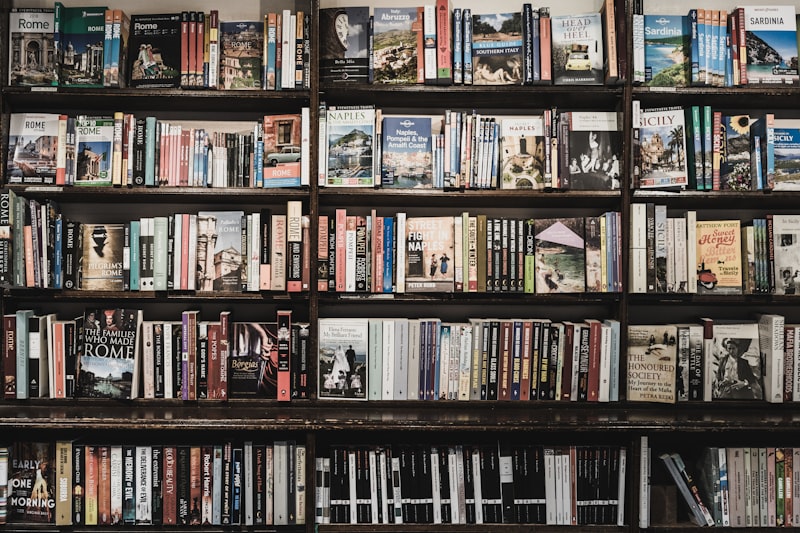
Independent bookstores, which have experienced a renaissance in recent years, will likely continue to thrive as community spaces that offer what online retailers cannot: personal recommendations, author events, and the serendipity of browsing. The bookstore of the future may look less like a warehouse of inventory and more like a curated gallery, with smaller selections, more events, and a stronger emphasis on community.
AI and Personalized Reading
Artificial intelligence will transform the reading experience in several ways. AI-powered recommendation systems will become dramatically more sophisticated, moving beyond simple "readers who liked X also liked Y" algorithms to understand individual readers' preferences at a deep level — their emotional states, reading pace, complexity preferences, and thematic interests.
More controversially, AI may enable personalized narratives — stories that adapt to individual readers' preferences, adjusting plot, character, and complexity in real time. This technology, already in early development, raises profound questions about the nature of literature. Is a story that changes for each reader still a "book" in any meaningful sense? Can a work of art have integrity if it has no fixed form? These questions will become increasingly urgent as the technology matures.
AI will also transform the accessibility of reading. Real-time translation that approaches human quality will make the world's literature available in every language, breaking down barriers that have kept most readers confined to literature in their native tongue. Books written in small languages will reach global audiences. The dream of a truly universal library — every book available to every reader in their own language — may be within reach by 2030.
Audio and Multimodal Reading
Audiobooks are the fastest-growing segment of the publishing industry, and their growth shows no signs of slowing. AI-generated narration, which is becoming increasingly natural and expressive, will dramatically reduce the cost of audiobook production, making it economically feasible to produce audio versions of virtually every book published. By 2030, the audiobook may no longer be a supplementary format but a primary one for many readers.
The line between audiobooks and podcasts is already blurring, and this convergence will accelerate. Serialized audio fiction, enhanced with sound effects and music, creates an experience that sits between traditional audiobooks and radio drama. These "immersive audio" productions may attract listeners who don't consider themselves readers, expanding the audience for narrative storytelling.
Multimodal reading experiences that combine text, audio, images, and interactive elements will become more common, particularly in educational and children's publishing. A science book might include embedded videos, interactive diagrams, and audio explanations alongside traditional text. These enhanced books will offer richer learning experiences but also raise concerns about attention and the value of sustained focus on text alone.
Social Reading and Community
Reading has traditionally been a solitary activity, but technology is making it increasingly social. Platforms like Letturia connect readers around shared books and reading goals. Social reading features — the ability to highlight, annotate, and discuss passages with other readers in real time — are transforming the reading experience from private contemplation to communal conversation.
BookTok, the TikTok community devoted to book recommendations and discussions, has already demonstrated social media's power to drive reading trends and book sales. By 2030, the integration of social features into reading platforms will be seamless. Readers will be able to see what their friends are reading, join real-time reading groups, and participate in author conversations without leaving their reading apps. Books like The Hunger Games and The Midnight Library have shown how social momentum can transform a book into a cultural phenomenon.
Virtual and augmented reality may create new forms of social reading. Imagine a virtual book club where participants sit together in a digital recreation of a famous library, or an augmented reality experience that overlays literary annotations on real-world locations associated with a novel. These technologies could make the social dimensions of reading richer and more immersive.
The Attention Challenge
The greatest threat to reading's future is not any technology but the competition for attention. In an era of infinite scrolling, algorithmic feeds, and on-demand video, sustained reading faces unprecedented competition for the limited resource of human attention. Studies suggest that average attention spans have decreased, and that the ability to engage in deep, sustained reading — what Maryanne Wolf calls "deep reading" — is deteriorating, particularly among younger people.
Addressing this challenge will require conscious effort from individuals, families, schools, and communities. Digital literacy education that teaches not just how to use technology but how to resist its attentional demands will become increasingly important. Schools that prioritize sustained reading — requiring students to read full books rather than excerpts, and providing dedicated quiet reading time — will produce better readers and thinkers.
Paradoxically, the very technologies that threaten reading attention may also help protect it. App-blocking tools, focus modes, and digital wellness features can help readers create distraction-free reading environments. The growing "digital minimalism" movement suggests that many people are actively seeking ways to reclaim their attention from technology — and redirecting it toward reading.
What Will Not Change
Amid all this change, certain fundamentals will remain. Humans will still need stories — narratives that help us make sense of our lives, understand others, and imagine possibilities beyond our immediate experience. The written word will remain the most efficient, flexible, and intimate medium for conveying complex ideas and emotional experiences. And the deep, private experience of reading — the encounter between a single mind and a single text, in silence and concentration — will remain one of the most valuable and irreplaceable activities available to human beings. The future of reading may look different from its past, but its essence — the miraculous act of making meaning from marks on a page — will endure as long as humans seek to understand themselves and each other.