


Introduction: The Novel That Opened a Window
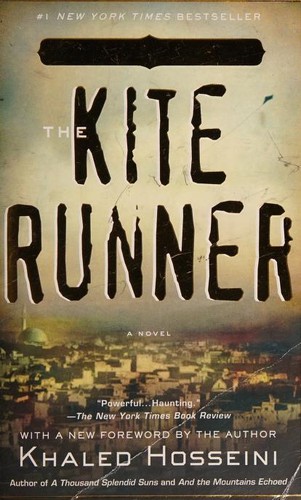
Before The Kite Runner, most Americans knew Afghanistan only as a place on the news — a country defined by war, terrorism, and the Taliban. Khaled Hosseini's debut novel, published in 2003, changed that. It did what journalism and foreign policy analysis could not: it made Afghanistan human. It gave Western readers not a geopolitical abstraction but a neighborhood in Kabul, with its pomegranate trees and kite-flying tournaments and the smell of lamb cooking over charcoal. It gave them not a conflict but a friendship — between Amir, the privileged son of a wealthy Pashtun businessman, and Hassan, the Hazara servant boy who loves Amir with a devotion that Amir does not deserve and cannot repay.
The Kite Runner has sold more than 12 million copies in the United States alone and has been translated into over 70 languages. It spent more than two years on the New York Times bestseller list, was adapted into a critically acclaimed film in 2007, and has been taught in schools and universities around the world. Its success was unexpected — a first novel by an unknown Afghan-American physician, published by a relatively small press, about a country that most Americans could not locate on a map. Yet the novel found an enormous audience, and it found that audience because it told a universal story in an utterly specific setting.
At its core, The Kite Runner is a story about guilt and the possibility of redemption. It asks whether a person who has committed a terrible act of cowardice can ever make amends — whether there is, as the novel's most famous line puts it, "a way to be good again." This question is as old as literature itself, but Hosseini gives it new urgency by setting it against the backdrop of Afghanistan's modern history, a history of invasion, civil war, and the rise of one of the most repressive regimes the world has ever known. The personal and the political are inextricable in The Kite Runner, and this fusion is one of the novel's greatest strengths.
"The Kite Runner is one of those stories that reminds you why you love reading. It gives you characters you care about, puts them through hell, and makes you believe in the possibility of redemption." — Isabel Allende, author of The House of the Spirits
About the Author: Khaled Hosseini
Khaled Hosseini was born on March 4, 1965, in Kabul, Afghanistan. His father was a diplomat in the Afghan Foreign Ministry, and his mother was a teacher of Farsi and history at a large high school in Kabul. The family lived in a prosperous neighborhood in the Wazir Akbar Khan district — the same neighborhood where Amir and Baba live in the novel — and Hosseini's childhood, like Amir's, was defined by privilege, education, and the cultural richness of pre-war Kabul.
In 1976, when Hosseini was eleven, his father was posted to the Afghan embassy in Paris. The family was still in France when the Soviet Union invaded Afghanistan in 1979, and they were unable to return. They sought political asylum in the United States and eventually settled in San Jose, California, in 1980. Hosseini was fifteen years old, spoke no English, and found himself navigating a new culture while mourning the loss of the country he loved. These experiences of displacement, cultural dislocation, and the longing for a lost homeland pervade The Kite Runner and give it an emotional authenticity that no amount of research could replicate.
Hosseini studied biology at Santa Clara University and received his medical degree from the University of California, San Diego, School of Medicine in 1993. He practiced internal medicine for more than a decade while writing The Kite Runner in the early mornings before work. The novel, which he began in 2001 shortly after the September 11 attacks and the subsequent American invasion of Afghanistan, was partly inspired by a desire to show Americans the Afghanistan he remembered — a country of beauty, culture, and complex humanity, not merely a training ground for terrorists.
Since the publication of The Kite Runner, Hosseini has written two additional novels — A Thousand Splendid Suns (2007) and And the Mountains Echoed (2013) — both of which became international bestsellers. He has also become a prominent humanitarian, serving as a United Nations Goodwill Ambassador for UNHCR and establishing the Khaled Hosseini Foundation to provide humanitarian assistance to the people of Afghanistan. His literary career and his humanitarian work are driven by the same impulse: to make the people of Afghanistan visible, to tell their stories, and to insist on their humanity in a world that often reduces them to statistics or stereotypes.
"Writing The Kite Runner was an act of remembrance. I wanted to reclaim Afghanistan from the headlines and give it back its humanity — its kite tournaments and its pomegranate trees, its poetry and its hospitality, alongside its tragedies." — Khaled Hosseini
Plot Summary
Kabul Before the Fall
The novel opens in San Francisco in 2001, with Amir, now a published novelist in his mid-thirties, receiving a phone call from Rahim Khan, his father's old friend and business partner, who is dying in Peshawar, Pakistan. "There is a way to be good again," Rahim Khan tells him, and with that cryptic promise, the narrative plunges back to Kabul in the 1970s, to the world that Amir left behind and has been trying to forget ever since.
The Kabul of Amir's childhood is a city of contrasts. It is beautiful and cultured, with its gardens, its bazaars, and its traditions of poetry and storytelling. But it is also deeply stratified along ethnic and class lines. Amir is a Pashtun, a member of Afghanistan's dominant ethnic group. Hassan is a Hazara, a member of a persecuted minority that has been subjected to discrimination, violence, and enslavement for centuries. Amir and Hassan are the same age, have grown up together, and are closer than most brothers. But they are not equals, and both of them know it. Amir is the master's son; Hassan is the servant's son. They play together, but they do not eat together. They share a childhood, but they do not share a future.
The relationship between Amir and Hassan is the emotional engine of the novel. Hassan is devoted to Amir with a loyalty that is absolute and unconditional. He is brave, honest, generous, and gifted — a natural athlete who is also a natural storyteller, despite being illiterate. He would do anything for Amir, and he proves it repeatedly. Amir, by contrast, is insecure, jealous, and conflicted. He craves his father Baba's approval but cannot seem to earn it. He resents Hassan for being braver, more athletic, and seemingly more loved by Baba than he is. And he senses, without fully understanding, that his relationship with Hassan is built on a foundation of inequality that makes genuine friendship impossible.
The Kite Tournament and the Alley
The pivotal event of the novel takes place during the annual kite-fighting tournament in Kabul. Kite fighting is Afghanistan's great national pastime — a sport in which contestants fly kites with glass-coated strings and attempt to cut each other's kites from the sky. When a kite is cut, boys chase it through the streets, competing to be the first to catch it. The last kite standing wins the tournament, and the boy who catches the last fallen kite wins a trophy of his own.
Amir wins the tournament, cutting the last kite from the sky. Hassan, who is the best kite runner in Kabul — a boy who seems to know instinctively where a falling kite will land — runs to catch it. When he does not return, Amir goes looking for him and finds him in an alley, cornered by Assef, a vicious neighborhood bully who is half-Afghan and half-German and who will later become a Taliban commander. Assef demands the kite. Hassan refuses. And then Assef and his friends assault Hassan in the most brutal way possible.
Amir watches. He stands at the end of the alley and watches his best friend being violated, and he does nothing. He does not call for help. He does not intervene. He runs away. This act of cowardice — this failure to act when action was most needed — is the original sin of the novel, the wound that will fester for twenty-six years before Amir has the chance to atone for it.
What follows is a slow, agonizing deterioration of the relationship between Amir and Hassan. Consumed by guilt and shame, Amir cannot bear to be around Hassan — every interaction is a reminder of what he saw and what he failed to do. He begins to mistreat Hassan, hoping to provoke a confrontation that would at least be honest. When that fails, he frames Hassan for theft, planting money and a watch under Hassan's mattress. Ali, Hassan's father, takes Hassan and leaves Baba's household, despite Baba's desperate pleas for them to stay. It is the last time Amir will see Hassan alive.
America and the Call to Return
In 1981, after the Soviet invasion, Baba and Amir flee Afghanistan. The journey itself is harrowing — hidden in the tank of a fuel truck, crossing the border into Pakistan in darkness and terror. They eventually make their way to Fremont, California, where Baba works at a gas station and Amir attends high school and then community college. In America, Baba — a wealthy, powerful man in Kabul — is diminished, struggling with a language he cannot master and a culture that does not recognize his status. But he retains his dignity and his principles, and Amir, for all his guilt about Hassan, finds a kind of peace in the anonymity of immigrant life.
Amir meets Soraya, the daughter of a former Afghan general, at a flea market where Afghan immigrants sell their wares on weekends. Their courtship and marriage are described with warmth and humor, and for a time, Amir seems to have found happiness. He publishes a novel, builds a life, and buries the past. But the past, as Faulkner said, is never dead. It is not even past. When Rahim Khan calls from Peshawar, Amir knows that the time for reckoning has come.
The Return to Kabul
Rahim Khan's revelation is twofold. First, he tells Amir that Hassan is dead — killed by the Taliban, shot in the street outside the house he had been watching over for Rahim Khan. Second, he reveals a secret that changes everything: Hassan was not merely Amir's servant and friend. He was Amir's half-brother — the illegitimate son of Baba and Sanaubar, Ali's wife. The man who lectured Amir about the importance of honesty had been living the biggest lie of all.
But Rahim Khan's call is not merely about revealing secrets. It is about a mission. Hassan's son, Sohrab, is alone in Kabul, possibly in an orphanage, possibly in worse circumstances. Rahim Khan asks Amir to go back to Afghanistan and bring Sohrab out. It is the chance Amir has been waiting for — the chance to atone for his betrayal of Hassan, to rescue Hassan's son as he failed to rescue Hassan himself. "There is a way to be good again."
Amir's return to Kabul under Taliban rule is one of the most harrowing sections of the novel. The city he remembers — beautiful, cultured, alive — has been transformed into a wasteland of rubble and fear. The Taliban patrol the streets, enforcing their brutal interpretation of Islamic law with public executions and random violence. Amir finds Sohrab not in an orphanage but in the possession of a Taliban commander — Assef, the same boy who assaulted Hassan twenty-six years earlier, now a bearded zealot who stones adulterers in the soccer stadium and keeps young boys as playthings.
The confrontation between Amir and Assef is the novel's climax. Assef agrees to release Sohrab only after fighting Amir, and the beating that follows is savage — Assef batters Amir with brass knuckles, breaking his ribs, splitting his lip, rupturing his spleen. But as the blows land, Amir begins to laugh. He laughs because he is finally getting what he has always felt he deserved — punishment for his cowardice. He laughs because the pain is, in some perverse way, redemptive. He is saved by Sohrab, who fires a brass ball from his slingshot into Assef's eye — echoing a moment from the beginning of the novel when the young Hassan threatened Assef with the same weapon.
A New Beginning
The novel's final section follows Amir's attempt to bring Sohrab to America. The process is bureaucratically nightmarish, emotionally devastating, and nearly ends in tragedy when Sohrab, who has been promised that he will never have to go back to an orphanage, attempts suicide after learning that he may have to spend time in one as part of the adoption process. Sohrab survives, but the boy who arrives in America is a shell — silent, withdrawn, unreachable, a child whose capacity for trust has been destroyed.
The novel ends on a note of cautious, fragile hope. At an Afghan gathering in Fremont, Amir buys a kite and flies it with Sohrab. When another kite approaches and Amir cuts it, he looks at Sohrab and sees a flicker of something — not quite a smile, but a twitch at the corner of his mouth, the ghost of a smile. "Do you want me to run that kite for you?" Amir asks, echoing the words that Hassan spoke to him a quarter of a century earlier. "For you, a thousand times over." The ending does not promise happiness. It does not guarantee that Sohrab will heal or that Amir's guilt will be absolved. It offers only the possibility that the cycle of pain can be broken, that the sins of the father need not be the sins of the son, and that love — even damaged, imperfect, guilty love — can be the beginning of redemption.
Character Analysis
Amir: The Coward Who Wants to Be Good
Amir is one of the most complex protagonists in contemporary fiction — a character who is simultaneously sympathetic and reprehensible, a man whose greatest strength is his awareness of his own weakness. He is not a hero in any traditional sense. He is a coward who watches his best friend be assaulted and does nothing. He is a liar who frames an innocent boy for theft. He is a man who spends decades running from his past instead of confronting it. And yet the novel asks us to care about him, to root for his redemption, and somehow, despite everything, we do.
The key to Amir's character is his relationship with guilt. Unlike a true villain, who would rationalize his actions or forget them, Amir is consumed by what he has done. His guilt does not make him a better person — in the short term, it makes him worse, driving him to cruelty and dishonesty in a futile attempt to escape his own conscience. But it also keeps him connected to his moral sense. Amir knows that what he did was wrong. He knows that he is less than he should be. And it is this knowledge — this refusal to let himself off the hook — that eventually drives him to act.
Amir's journey from cowardice to courage is not a simple arc. He does not wake up one morning and decide to be brave. His return to Kabul is motivated partly by guilt, partly by duty, and partly by a desire to finally prove — to himself, to his dead father, to the ghost of Hassan — that he is capable of doing the right thing when it matters. His courage in the confrontation with Assef is not the fearless courage of an action hero. It is the desperate courage of a man who has realized that the only thing worse than being beaten to death is continuing to live as a coward.
Hassan: The Servant With a Lion's Heart
Hassan is, in many ways, the moral hero of the novel — a character whose goodness is so pure and so unwavering that it casts Amir's failures into painful relief. He is brave where Amir is timid, generous where Amir is selfish, honest where Amir is duplicitous. His devotion to Amir is absolute: "For you, a thousand times over," he says, and he means it. He would die for Amir, and in a sense, he eventually does — killed defending the house that Amir's family abandoned.
But Hassan is not a saint. He is a fully human character whose goodness is not the result of simplicity or naivety but of moral choice. He knows that Amir saw what happened in the alley. He knows that Amir framed him for theft. And he chooses to forgive — not because he does not understand what was done to him, but because his love for Amir is stronger than his anger. This forgiveness, which some critics have described as unrealistic or even troubling in its suggestion that the oppressed should forgive their oppressors, is one of the novel's most powerful and most debated elements.
Hassan also represents the Hazara people and their history of persecution. His suffering is not merely personal; it is the suffering of an entire ethnic group, marginalized, exploited, and brutalized for centuries. Hosseini uses Hassan's story to illuminate the ethnic tensions that have shaped Afghan society, showing how prejudice and hierarchy corrode even the most intimate relationships. Hassan's tragedy is not just that he was betrayed by his best friend. It is that the entire social order was designed to betray him — to ensure that no matter how brave, how loyal, how good he was, he would always be the servant, never the master.
Baba: The Flawed Father
Baba is one of the great father figures in contemporary fiction — a man of immense presence, generosity, and moral authority who is also, we eventually learn, a hypocrite. He lectures Amir about the importance of honesty, telling him that theft is the only sin and that every other sin is a variation of theft. Yet Baba has stolen the most fundamental thing of all: the truth. By concealing Hassan's parentage, he has stolen Hassan's identity, stolen Amir's knowledge of his own brother, and stolen Ali's trust. The man who preaches against theft is himself the greatest thief in the novel.
This revelation complicates but does not destroy Baba's character. He is not a villain. He is a man who made a terrible mistake and spent the rest of his life trying to compensate for it — by treating Hassan with unusual kindness, by building an orphanage, by standing up for strangers, by refusing to let injustice go unchallenged. His generosity is genuine, but it is also a form of penance. He cannot undo what he has done, so he tries to balance the scales through acts of goodness. It is a deeply human response to guilt, and Hosseini portrays it with empathy and understanding.
Sohrab: The Silent Survivor
Sohrab, Hassan's son, is the novel's most heartbreaking character. He has endured unspeakable abuse at the hands of the Taliban, and the trauma has left him almost catatonic — a boy who flinches at touch, speaks in monosyllables, and seems to have retreated into a place where no one can reach him. His suicide attempt, triggered by the possibility of returning to an orphanage, is the novel's darkest moment — a moment when the accumulated weight of everything that has been done to Hassan's family seems finally unbearable.
Yet Sohrab is also the novel's hope. His survival, however fragile, represents the possibility that the cycle of violence and betrayal can be interrupted. The ghost of a smile at the end of the novel — that barely perceptible twitch at the corner of his mouth — is the most hard-won moment of joy in the entire book. It does not redeem anything. It does not fix anything. But it suggests that healing is possible, even for those who have suffered the most, and that love, patiently and persistently offered, can eventually find its way through even the thickest walls of trauma.
Major Themes
Guilt and Redemption
The central theme of The Kite Runner is the possibility of redemption — the question of whether a person who has committed a terrible act can ever make amends. Amir's entire adult life is shaped by the guilt of what he did and did not do in the alley. His return to Kabul is an act of penance, and his rescue of Sohrab is his attempt to repay the debt he owes to Hassan. But the novel is careful not to present redemption as simple or complete. Amir cannot undo the past. He cannot bring Hassan back to life. He cannot erase the suffering that his cowardice caused. All he can do is try — try to be good, try to be brave, try to be the person he should have been twenty-six years earlier.
This nuanced treatment of redemption is one of the novel's greatest strengths. Hosseini does not offer the comforting fantasy that a single heroic act can wash away years of guilt. He offers something more realistic and ultimately more hopeful: the idea that redemption is not an event but a process, not a destination but a direction. Amir will never be fully redeemed. But he can spend the rest of his life moving toward redemption, and that movement — however incomplete, however imperfect — is itself a form of grace.
The Father-Son Relationship
The relationship between fathers and sons is central to the novel's structure and meaning. Amir's desperate need for Baba's approval drives much of his childhood behavior, including his decision not to intervene in the alley — he is afraid that standing up for Hassan, a Hazara, will further alienate him from his father. The revelation that Baba is Hassan's father adds another layer to this theme, suggesting that the failures of fathers are passed down to their sons, shaping their lives in ways they cannot fully understand.
But the novel also suggests that the cycle can be broken. Amir's decision to adopt Sohrab is an act of fatherhood that redeems — or at least begins to redeem — the failures of both his father and himself. By becoming a father to Hassan's son, Amir is doing what Baba could not: acknowledging the connection between the two families, accepting responsibility for the past, and offering love without shame or secrecy. Fatherhood, in The Kite Runner, is both the source of the deepest wounds and the means of healing them.
Afghanistan: A Nation's Tragedy
While The Kite Runner is primarily a personal story, it is also a political one. The novel traces Afghanistan's modern history from the relatively peaceful monarchy of the 1970s through the Soviet invasion, the civil war, and the rise of the Taliban. Hosseini does not present this history as background or context. He presents it as a force that shapes his characters' lives as powerfully as their personal choices. The Soviet invasion drives Amir and Baba into exile. The civil war destroys the Kabul they knew. The Taliban transforms Hassan's home into a prison and his son into a victim.
Hosseini's portrait of Taliban-era Kabul is one of the most powerful depictions of life under totalitarianism in contemporary fiction. The public executions in the stadium, the arbitrary enforcement of ever-changing rules, the pervasive atmosphere of fear and suspicion — all of this is rendered with the specificity of someone who knows the culture from the inside and can show exactly how it has been deformed. Hosseini does not merely tell us that the Taliban are brutal. He shows us what that brutality looks like in the lived experience of ordinary people — the shopkeeper who cannot sell kites, the widow who cannot leave her house, the boy who has been taken from an orphanage for the pleasure of a commander.
Ethnic Prejudice and Social Hierarchy
The relationship between Pashtuns and Hazaras is one of the novel's most important subtexts. The Hazara people, who are ethnically distinct from the Pashtun majority and who practice a different form of Islam, have been persecuted in Afghanistan for centuries. They have been enslaved, massacred, and systematically excluded from positions of power and prestige. Hassan's status as a Hazara defines his social position as surely as Amir's status as a Pashtun defines his. The friendship between the two boys is genuine, but it exists within a framework of inequality that both boys understand and that neither can change.
Hosseini uses the Pashtun-Hazara dynamic to explore broader questions about ethnic prejudice and social hierarchy. How does prejudice shape intimate relationships? Can genuine friendship exist across lines of power and privilege? What happens when a society's most fundamental divisions are encoded in its ethnic structure? These questions have relevance far beyond Afghanistan, and part of the novel's global appeal is its ability to illuminate universal dynamics of prejudice through the specific lens of Afghan culture.
Symbolism and Motifs
Kites: Freedom, Competition, and Connection
The kite is the novel's central and most versatile symbol. On the most literal level, kite fighting is the great passion of Amir's childhood — the one arena in which he can earn his father's approval. The kite tournament that Amir wins is the happiest moment of his young life, and the kite that Hassan runs for him becomes the instrument of their destruction. The kite is simultaneously a source of joy and a catalyst for tragedy, and this duality mirrors the novel's broader exploration of how the best things in our lives can become entangled with the worst.
On a symbolic level, the kite represents the relationship between Amir and Hassan. Kite fighting requires two people: the kite flyer, who controls the kite from the ground, and the kite runner, who chases and retrieves the defeated kites. Amir flies; Hassan runs. Amir commands; Hassan serves. The roles are fixed, determined by birth and social position, and they cannot be reversed. This asymmetry defines the relationship and makes genuine equality impossible, no matter how much affection exists between the two boys.
The kite also represents Afghanistan itself — beautiful, fragile, at the mercy of the wind and of those who hold the string. The country that Amir and Hassan knew, the country of kite tournaments and pomegranate trees, is cut from the sky by the Soviet invasion and the Taliban, just as the defeated kites are cut from the sky in the tournament. When Amir flies a kite with Sohrab at the end of the novel, the act represents not only his personal redemption but his reconnection with the Afghanistan of his childhood — a country that, like the kite, can still fly if someone is willing to hold the string.
The Pomegranate Tree
On the hill behind Baba's house, there is a pomegranate tree under which Amir and Hassan spend countless hours. Amir reads stories to Hassan (who is illiterate) while they sit in its shade, and the tree becomes a symbol of their friendship — a living thing, rooted and growing, that provides shelter and sustenance. Amir carves "Amir and Hassan, the sultans of Kabul" into the trunk, marking their bond permanently in the living wood.
After the alley incident, Amir returns to the tree and pelts Hassan with pomegranates, trying to provoke a fight — trying to create a justifiable conflict that would at least be honest, unlike the festering guilt that is slowly poisoning him. Hassan refuses to fight. Instead, he takes a pomegranate and crushes it against his own forehead, letting the juice run down his face like blood. "Are you satisfied now?" he asks. "Do you feel better?" This scene — in which the fruit of their shared tree becomes a weapon, and the juice of the pomegranate becomes a substitute for blood — is one of the most powerful in the novel. The tree of friendship has become the tree of violence, and the fruit that once nourished them now stains them.
When Amir returns to Kabul years later, he finds the pomegranate tree bare and withered, barely alive. The inscription is still visible, but the tree that bore it has been hollowed out by years of neglect and drought. Like the tree, the friendship between Amir and Hassan has been stripped bare by time and circumstance — but the inscription remains, a reminder that what existed between them was once real and vital and good.
The Scar and the Harelip
Physical marks play an important symbolic role in the novel. Hassan's harelip — the cleft in his upper lip — is a mark of birth that identifies him as different, as flawed, as other. In a culture where physical appearance signals social status, the harelip reinforces Hassan's position as a servant and an outsider. Baba pays for Hassan's lip to be surgically repaired as a birthday gift, but the gesture, while kind, is also ambiguous — an act of paternal love that Baba cannot publicly acknowledge because it would reveal his secret.
When Amir is beaten by Assef near the end of the novel, his upper lip is split — creating a scar that mirrors Hassan's harelip. This physical marking is the novel's most powerful symbol of connection and atonement. Amir now carries on his face the same mark that Hassan carried on his — a visible sign of the bond between them, a wound that cannot be hidden and that tells the world who he is. The scar transforms Amir's body into a text that tells the story of his guilt and his redemption, linking him permanently to the friend he betrayed and the brother he never knew.
The Novel's Treatment of Islam
Hosseini's treatment of Islam in The Kite Runner is nuanced and deliberate. He presents Islam not as a monolith but as a lived tradition that means different things to different people. Baba is a secular Muslim who drinks whiskey, questions the authority of the mullahs, and declares that theft is the only real sin. Hassan and Ali are devout, finding comfort and meaning in prayer and scripture. Assef and the Taliban represent a perversion of Islam — a political ideology dressed in religious clothing that uses the faith as a tool of power and control.
This range of Islamic experience is important because it challenges the monolithic image of Islam that dominates Western media. Hosseini shows that Islam, like any great religion, contains multitudes — that it can be a source of compassion and cruelty, of wisdom and fanaticism, of liberation and oppression. The novel does not judge Islam. It judges specific human beings who use religion for specific purposes, some noble and some monstrous. This distinction is crucial, and Hosseini's ability to maintain it throughout the novel is one of its most important achievements.
The Taliban's Islam, as depicted in the novel, is a grotesque distortion of the faith — a system of arbitrary rules enforced through terror, in which men who stone women for adultery also keep young boys as sexual slaves. Hosseini presents this hypocrisy without commentary, letting the contradiction speak for itself. The reader does not need to be told that Assef's Islam is false. The evidence is overwhelming. And by presenting the Taliban's version of Islam alongside the sincere, compassionate Islam of characters like Hassan and Ali, Hosseini makes clear that the problem is not Islam itself but the human capacity for corruption that can deform any belief system.
The Immigrant Experience
The middle section of The Kite Runner, set in the Afghan community of Fremont, California, offers one of the most vivid and authentic depictions of the immigrant experience in contemporary American fiction. Hosseini captures the specific texture of immigrant life with remarkable precision: the flea market where Afghan families sell their wares and exchange gossip, the cultural expectations that follow families across oceans, the generational tensions between parents who long for the old country and children who are trying to become American.
Baba's transformation from a wealthy, powerful man in Kabul to a gas station attendant in California is one of the novel's most poignant subplots. He is the same man in both places — proud, generous, principled, larger than life — but America does not recognize his stature. He cannot speak the language fluently, he does not understand the customs, and his authority, which was absolute in Kabul, counts for nothing in Fremont. Watching Baba diminish is one of the novel's most painful experiences, and it captures something true about the immigrant experience that is often overlooked: the loss not just of place and language but of identity, of the social self that one has spent a lifetime constructing.
For Amir, by contrast, America is a gift. It is a place where he can reinvent himself, where the past can be buried under new achievements and new identities. He learns English, attends community college, becomes a writer, marries Soraya, and builds a life that is recognizably American. America is, as he puts it, "a place to bury my memories." But memories, as the novel insists, do not stay buried. They resurface, demanding attention, refusing to be forgotten. Amir's American life, however successful, is built on a foundation of unresolved guilt, and the phone call from Rahim Khan reveals the cracks in that foundation.
Writing Style
Hosseini's prose style is direct, accessible, and emotionally generous. He does not experiment with form or play postmodern games with narrative structure. He tells his story in a straightforward, chronological fashion (with the necessary flashback structure), using clean, simple language that allows the emotional content to speak for itself. Some critics have described his style as "workmanlike" or "conventional," and there is some truth to these characterizations. Hosseini is not a prose stylist in the manner of Morrison or Nabokov. His sentences do not call attention to themselves.
But this directness is also the novel's strength. Hosseini's subject matter — childhood betrayal, ethnic cleansing, child abuse, suicide — is so emotionally charged that a more ornate style might actually diminish its impact. By keeping his prose simple and transparent, Hosseini allows the events to hit the reader with their full force, unmediated by literary artifice. The novel's most devastating scenes — Hassan's assault, Sohrab's suicide attempt, the final kite-flying scene — are powerful precisely because they are described without flourish or embellishment. The facts are enough.
Hosseini is also skilled at evoking place. His descriptions of Kabul — both the vibrant, pre-war city and the devastated Taliban-era wasteland — are vivid and specific, full of sensory detail that makes the setting feel real and lived-in. The kite-fighting scenes are particularly well-crafted, capturing the excitement, the strategy, and the sheer physical joy of a sport that most Western readers have never experienced. Through these descriptions, Hosseini accomplishes one of the novel's most important goals: making Afghanistan real to readers who have never been there and who may never go.
Critical Reception
The critical reception of The Kite Runner has been generally positive, though not without reservations. The New York Times praised it as "a story of fierce yet quiet power," while the Washington Post called it "haunting." The novel was a finalist for the PEN/Faulkner Award and won numerous other prizes, including the South African Boeke Prize and the San Francisco Chronicle Best Book of the Year.
"The Kite Runner is a story about the price of peace, about the cost of being a bystander, and about the possibility — however slim — of making things right. It is, in every sense, a moral novel, and we are the better for it." — The New York Times Book Review
Critics who have been less enthusiastic about the novel have tended to focus on its melodramatic plot, arguing that the accumulation of coincidences and revelations — the discovery that Hassan is Amir's brother, the reappearance of Assef as a Taliban commander, the echoing of the slingshot moment — strains credulity. Others have criticized the novel's treatment of Hassan, arguing that he is too perfect, too forgiving, and too selfless to be fully human — a noble savage rather than a complex character. Still others have questioned whether the novel, despite its Afghan setting, is really more American than Afghan in its sensibility — a story of immigrant assimilation dressed up as a story about Afghanistan.
These criticisms have merit, but they do not diminish the novel's achievement. The Kite Runner is not a perfect novel, and it does not pretend to be one. It is a novel that aims for the heart rather than the head, and it hits its target with remarkable accuracy. Its flaws — the occasional melodrama, the sometimes schematic plotting, the convenient coincidences — are the flaws of a storyteller who cares more about emotional truth than formal perfection. And emotional truth, in the end, is what gives the novel its power.
The Novel as Moral Education
One of the most important functions of The Kite Runner is its capacity to serve as a form of moral education — not in the didactic, preachy sense, but in the deeper sense of expanding the reader's moral imagination. By placing us inside Amir's consciousness, the novel forces us to confront uncomfortable questions about our own capacity for cowardice, our own willingness to look away, and our own strategies for avoiding guilt. Amir's failures are extreme, but they are not alien. Most of us have experienced moments when we failed to act, when we chose safety over justice, when we watched something happen that we should have tried to prevent.
The novel's moral power lies in its refusal to let Amir — and by extension, the reader — off the hook. It would be easy to dismiss Amir's failure in the alley as the act of a frightened twelve-year-old boy, too young and too small to confront a violent bully. And there is truth in that excuse. But the novel does not allow it to stand. Amir was not merely frozen by fear. He made a calculation: the kite was more important than Hassan. His father's approval was more important than his friend's safety. And this calculation — rational, self-interested, morally catastrophic — is the kind of calculation that adults make every day, though usually with less dramatic consequences.
By showing us Amir's moral failure from the inside — not as an observer's judgment but as a participant's experience — Hosseini achieves something that abstract moral philosophy rarely can. He makes us feel what it is like to be a coward, what it is like to live with guilt, and what it costs to pursue redemption. This emotional knowledge is a form of moral education that changes people in ways that arguments and principles never could. Readers of The Kite Runner frequently report that the novel made them think differently about their own lives — about the moments they failed to act, the apologies they never made, and the debts they have left unpaid.
The Film Adaptation
The 2007 film adaptation of The Kite Runner, directed by Marc Forster and written by David Benioff (who would later co-create the Game of Thrones television series), was a faithful and emotionally powerful translation of the novel to the screen. The film captured the beauty of pre-war Kabul through location shooting in western China (standing in for Afghanistan, where filming was impossible due to security concerns), and its performances — particularly by the young actors Zekeria Ebrahimi and Ahmad Khan Mahmoodzada as Amir and Hassan — were widely praised.
The film also generated significant controversy. The rape scene, which is depicted obliquely in the film but explicitly referenced, put the young actors at risk of retaliation in Afghanistan, where the sexual assault of a boy is considered deeply shameful. Paramount Pictures ultimately relocated the child actors and their families out of Kabul before the film's release, a decision that underscored the real-world consequences of the novel's subject matter. The film was eventually banned in Afghanistan by the government, which cited concerns about ethnic tensions and the depiction of sexual violence.
As an adaptation, the film succeeds in capturing the emotional arc of the novel while necessarily simplifying its plot and reducing its scope. The immigrant sections are compressed, the Rahim Khan revelations are streamlined, and much of the novel's internal monologue is lost. But the core of the story — the friendship, the betrayal, the return, and the fragile hope of the ending — survives the translation intact. The final kite-flying scene, in particular, is as moving on screen as it is on the page, a testament to the power of Hosseini's storytelling and the universality of the emotions it evokes.
The Kite Runner and the Literature of Diaspora
The Kite Runner belongs to a rich tradition of diaspora literature — novels written by immigrants about the countries they left behind and the lives they built in their adopted homes. This tradition includes some of the most important works of the past century: V.S. Naipaul's A House for Mr. Biswas, Salman Rushdie's Midnight's Children, Jhumpa Lahiri's The Namesake, Chimamanda Ngozi Adichie's Americanah, and many others. What unites these works is their exploration of the divided self — the person who belongs to two cultures and, in some fundamental sense, to neither.
Hosseini's contribution to this tradition is distinctive in several ways. First, he writes about a country — Afghanistan — that was virtually absent from diaspora literature in English before The Kite Runner. While South Asian, African, and Caribbean writers had produced a substantial body of diaspora fiction in English, Afghan voices were almost entirely unheard. Hosseini's novel filled a void, giving the Afghan diaspora a literary presence it had never had and introducing Afghanistan to the Western literary consciousness.
Second, Hosseini writes about diaspora in the context of war, occupation, and political upheaval. Unlike some diaspora novels, in which immigration is a matter of choice — a search for better opportunities, a desire for adventure, a pursuit of education — The Kite Runner portrays immigration as a matter of survival. Amir and Baba do not leave Afghanistan because they want to; they leave because staying would mean death. This forced displacement adds a layer of urgency and loss to the immigrant experience that distinguishes Hosseini's work from more celebratory accounts of immigrant life.
Third, Hosseini explores the specific psychological dynamics of immigrant guilt — the guilt of the person who escaped when others could not, who built a comfortable life in America while the country they left behind descended into chaos and suffering. Amir's guilt about Hassan is, in part, a specific instance of this more general immigrant guilt — the knowledge that you were lucky, that your survival was not earned, and that people you loved were left behind to suffer. This guilt is a pervasive feature of the immigrant experience, and Hosseini captures it with extraordinary precision and empathy.
The novel's treatment of the Afghan diaspora community in Fremont — the flea market, the wedding customs, the generational tensions, the maintenance of cultural identity in a foreign land — is one of its most valuable contributions. Hosseini shows how immigrant communities preserve their culture through ritual, language, food, and social convention, creating islands of familiarity in an ocean of strangeness. These communities provide essential support and continuity, but they also exert pressure toward conformity and tradition that can be stifling for younger members. Amir's courtship of Soraya, which follows traditional Afghan protocols even in the very un-traditional setting of a California flea market, beautifully illustrates this tension between old-world customs and new-world realities.
Hosseini's Subsequent Works
The success of The Kite Runner gave Hosseini the platform to continue telling stories about Afghanistan, and his subsequent novels have deepened and complicated the picture he began to draw in his debut. A Thousand Splendid Suns (2007) shifts the focus from men to women, telling the intertwined stories of two Afghan women whose lives span three decades of war and upheaval. The novel explores the specific forms of oppression that Afghan women face — domestic violence, forced marriage, denial of education — and does so with the same empathy and emotional power that characterized The Kite Runner.
And the Mountains Echoed (2013) is a more structurally ambitious work, telling a multi-generational story that spans continents and decades and examines the ways in which a single act of sacrifice reverberates through the lives of everyone it touches. The novel is less emotionally direct than Hosseini's earlier works but more intellectually complex, and it shows a writer who is continuing to grow and experiment even as he returns to the themes — family, loss, displacement, redemption — that have defined his career.
Together, the three novels form an unofficial trilogy of Afghan life that is unprecedented in world literature. No other writer has given the English-speaking world such an intimate, detailed, and emotionally resonant portrait of Afghanistan and its people. Hosseini has become, in a very real sense, Afghanistan's literary ambassador — the writer through whom the world encounters the beauty, the tragedy, and the resilience of a country that has been misrepresented and misunderstood for decades.
Cultural Impact
The cultural impact of The Kite Runner has been enormous, particularly in the way Western audiences perceive Afghanistan and its people. Before the novel, Afghanistan was largely absent from Western popular culture, except as a backdrop for war stories. After it, Afghanistan became a place with a history, a culture, and a human population. Book clubs across America discussed the Hazara-Pashtun conflict. University courses on Afghan history and culture saw enrollment spikes. And a generation of readers developed a personal connection to a country they had previously known only through news broadcasts.
The novel also had a significant impact on the Afghan diaspora community. Many Afghan-Americans reported that the book gave them a way to explain their culture and their history to non-Afghan friends and colleagues. At the same time, some members of the community were critical of the novel's portrayal of Afghan society, arguing that it reinforced negative stereotypes about violence and ethnic prejudice. This tension — between the novel's value as a cultural bridge and its limitations as a representation of a complex society — remains a subject of ongoing debate within the Afghan diaspora.
The 2007 film adaptation, directed by Marc Forster and featuring a cast of largely unknown Afghan and Afghan-American actors, brought the story to an even wider audience. The film was praised for its faithfulness to the novel and for its performances, though it also sparked controversy in Afghanistan, where some viewers objected to the depiction of ethnic violence and the assault scene. Several of the young actors who played Hassan and Amir in the film's childhood sequences had to be relocated from Kabul due to safety concerns — a reminder that the novel's themes of ethnic prejudice and violence are not merely historical but ongoing.
The Novel's Structure and Narrative Arc
Hosseini structures The Kite Runner in three distinct sections that mirror the three-act structure of classical drama. The first act, set in 1970s Kabul, establishes the relationship between Amir and Hassan, builds toward the kite tournament, and culminates in the devastating events of the alley. The second act, set in America, shows Amir's attempt to build a new life and bury the past. The third act, set in Taliban-era Kabul and its aftermath, brings Amir face to face with the consequences of his earlier cowardice and offers him the chance to redeem himself.
This three-act structure gives the novel a compelling dramatic momentum that pulls the reader forward, but it also creates a pattern of symmetry and repetition that gives the story its thematic depth. Events from the first act are echoed and inverted in the third. The kite tournament that Amir wins as a boy is mirrored by the kite-flying scene with Sohrab at the end. The slingshot that the young Hassan uses to threaten Assef is the same weapon that Sohrab uses to save Amir. The harelip that marked Hassan is echoed by the scar that marks Amir. These repetitions create a sense of cosmic justice — the feeling that the universe is bringing things full circle, allowing debts to be paid and wrongs to be righted.
The novel's first-person narration is also crucial to its effect. Amir tells his own story, and his narration is characterized by a confessional tone that makes the reader feel like a trusted confidant. He does not spare himself. He tells us about his cowardice, his jealousy, his pettiness, and his cruelty with a frankness that is both uncomfortable and admirable. This confessional quality is what makes Amir sympathetic despite his flaws — we trust people who tell the truth about themselves, and Amir tells the truth about himself with a consistency and courage that he was unable to muster when it mattered most.
Hosseini also uses the first-person narration to control the flow of information in ways that create suspense and emotional impact. The revelation of Hassan's parentage, for example, is withheld until the novel's midpoint, and its impact is amplified by everything we have learned about the relationship between Amir, Baba, and Hassan in the first half. Similarly, the revelation that Assef has become a Taliban commander is delayed until the climactic confrontation, transforming what might have been a simple rescue mission into a confrontation with Amir's deepest fears and darkest memories.
Afghanistan Before and After: Historical Context
To fully appreciate The Kite Runner, it helps to understand the historical context in which it is set. The Afghanistan of Amir's childhood — the 1970s — was a constitutional monarchy under King Zahir Shah, a period of relative stability and modernization. Kabul was a cosmopolitan city where men and women attended university together, where cinemas showed Bollywood and Hollywood films, and where kite-flying tournaments drew crowds of thousands. This is the Afghanistan that Hosseini remembers, and it is the Afghanistan he lovingly recreates in the novel's opening chapters.
The peace ended in 1973 when Zahir Shah was deposed by his cousin, Mohammed Daoud Khan, who declared a republic. Daoud was himself overthrown and killed in 1978 by the People's Democratic Party of Afghanistan, a communist movement backed by the Soviet Union. The communist government's attempts to modernize Afghan society — including land reform, women's education, and the suppression of religious authority — provoked widespread resistance, particularly in rural areas. In December 1979, the Soviet Union invaded Afghanistan to prop up the communist government, beginning a decade-long war that killed an estimated 1.5 million Afghans and created 5 million refugees.
The Soviet withdrawal in 1989 did not bring peace. Instead, it ushered in a period of civil war among the various mujahideen factions that had fought the Soviets. Kabul was devastated by rocket attacks and street fighting. The infrastructure of the country was destroyed. Lawlessness, banditry, and warlordism became the norm. It was in this context of chaos and despair that the Taliban emerged in 1994, promising order, justice, and a return to Islamic values. By 1996, the Taliban controlled most of the country, including Kabul.
The Taliban's rule, which lasted until the American invasion of 2001, was characterized by extreme social repression. Women were forbidden from attending school or working outside the home. Men were required to grow beards and attend prayers. Music, television, and kite flying were banned. Public executions and amputations were carried out in soccer stadiums. The joyful, vibrant Kabul of Amir's childhood was transformed into a city of silence and fear.
Hosseini captures all of this in the novel — not as historical background but as lived experience. When Amir returns to Kabul under Taliban rule, the contrast between the city he remembers and the city he finds is devastating. The beggar who turns out to be a former university professor, the empty streets where children once played, the rubble of buildings that once housed families and businesses — all of these details convey the magnitude of Afghanistan's loss more powerfully than any history book could.
Why You Should Read It Today
In a world that seems increasingly fragmented — divided by ethnicity, religion, politics, and culture — The Kite Runner offers something that is in desperately short supply: empathy. It asks you to enter the consciousness of someone whose life is nothing like yours, to understand his fears, his shame, his longing, and his hope. It asks you to care about a country you may never visit and a people you may never meet. And it does this not through argument or information but through story — the oldest and most powerful technology for building empathy that humans have ever invented.
Read it because it is a great story, beautifully told. Read it because it will change the way you think about Afghanistan and about the millions of refugees who have fled that country. Read it because it will make you think about your own cowardices and your own possibilities for redemption. Read it because in a culture that often seems to have lost its capacity for moral seriousness, The Kite Runner takes morality seriously — not as a set of rules to be followed but as a daily practice of trying to be good, failing, and trying again.
And read it because of its final image: a man and a boy flying a kite together, the boy's lips barely twitching toward a smile, the man running after the fallen kite with the words of a dead friend on his lips. "For you, a thousand times over." It is one of the most beautiful endings in contemporary fiction, and it earns every ounce of its emotional weight because we know what it cost — what it cost the characters and what it cost the author to write it. In a world of easy sentiments, The Kite Runner offers something harder and more valuable: sentiment that has been earned through suffering, and hope that has been tested by despair.
The Role of Storytelling in The Kite Runner
Storytelling is not merely a technique in The Kite Runner; it is a theme. Amir is a storyteller — first as a boy who writes stories for Hassan, then as a published novelist in America. His relationship with Hassan is, in many ways, a relationship between a storyteller and his most devoted listener. Hassan, who is illiterate, lives for the stories that Amir reads and tells him. His face lights up when Amir produces a new story, and his reactions — his gasps, his tears, his laughter — are the purest form of literary appreciation in the novel.
The tragedy of their relationship is partly a tragedy of storytelling. Amir uses stories to manipulate Hassan — teasing him with words he does not know, making fun of his ignorance, using his superior literacy as a weapon. This corruption of storytelling — using it to dominate rather than to connect — mirrors the larger corruption of their relationship. Amir has the power of words, and he uses that power to maintain his superiority over someone who loves him unconditionally.
But storytelling also provides the means of redemption. Amir becomes a novelist, and his novel — which draws on his childhood in Kabul — is the first step toward acknowledging the past he has tried to forget. Writing, for Amir, is a form of confession — a way of telling truths that he cannot speak aloud. When Rahim Khan reads Amir's first story and tells him that he has the gift, it is the most important validation Amir receives in his childhood — more important, even, than winning the kite tournament. The validation comes not from Baba, who has little interest in writing, but from Rahim Khan, who understands that storytelling is its own form of courage.
The novel itself is, in a sense, Amir's ultimate act of storytelling. He is telling us his story — the whole story, with nothing held back, nothing sanitized, nothing excused. By telling it, he is doing what he could not do as a boy: he is facing the truth. The act of narration is itself a form of atonement — not because it erases what happened but because it refuses to look away from it. In telling his story, Amir is finally being brave — finally doing the thing that Hassan, with his simple, unwavering honesty, always did naturally.
Trauma and Recovery in The Kite Runner
Hosseini's treatment of trauma in The Kite Runner is psychologically sophisticated and deeply compassionate. Each of the novel's major characters responds to trauma differently, and these different responses form a taxonomy of human coping strategies that is both clinically accurate and narratively compelling.
Hassan's response to his assault is silence and acceptance. He does not speak about what happened to him, does not seek revenge, and does not express anger toward Amir for watching and doing nothing. This response, which some readers find implausibly saintly, is in fact a well-documented trauma response — what psychologists call "freeze" or "submit." Victims of sexual violence often respond with silence, not because they are not suffering but because the trauma is too overwhelming to process through normal emotional channels. Hassan's silence is not a sign of weakness or acceptance. It is a sign of the depth of his wound.
Amir's response to trauma is avoidance and displacement. He cannot face what he has done, so he pushes Hassan away, frames him for theft, and eventually flees to another country. In America, he buries the past under a new identity, a successful career, and a happy marriage. This strategy works — for a while. But avoidance, as every psychologist knows, is not resolution. The avoided material does not disappear; it goes underground, festering beneath the surface of consciousness, emerging in disguised forms: insomnia, anxiety, creative blocks, the inability to conceive a child. Amir's life in America is outwardly successful but inwardly hollow, and Rahim Khan's phone call breaks through the dam of avoidance, flooding Amir with the memories and emotions he has spent twenty-six years suppressing.
Sohrab's response to trauma is withdrawal — a near-total retreat from human connection. Having been subjected to the worst forms of abuse, he has learned that the world is not safe and that adults are not trustworthy. His silence, his flinching, his reluctance to be touched — all of these are classic symptoms of complex post-traumatic stress in children. Hosseini portrays Sohrab's condition with heartbreaking accuracy, showing both its devastation and its slowly, tentatively, opening toward the possibility of recovery.
The novel's treatment of recovery is equally sophisticated. Hosseini does not suggest that trauma can be healed by a single dramatic act of courage or compassion. Amir's beating at the hands of Assef provides a moment of catharsis — a physical purgation of guilt — but it does not heal him. Healing, the novel suggests, is a long, uncertain process that requires patience, persistence, and the willingness to accept that full recovery may never come. The ghost of a smile on Sohrab's face at the end of the novel is not a resolution. It is a beginning — the first tentative sign that healing is possible, even if it will take years or decades to unfold.
This nuanced treatment of trauma gives The Kite Runner a depth that its sometimes melodramatic plot might not suggest. Hosseini is not interested in simple narratives of victimhood and rescue. He is interested in the complex, messy, often contradictory ways in which human beings respond to suffering — and in the possibility that even the most damaged people can find their way back to something like wholeness, if they are given enough time and enough love.
For You, a Thousand Times Over
The phrase "For you, a thousand times over" — spoken first by Hassan to Amir, and then by Amir to Sohrab — is the novel's emotional spine. It is a declaration of unconditional love, a promise of absolute loyalty, and a willingness to serve without expectation of reciprocity. When Hassan says it, the words are innocent and genuine — the expression of a boy who loves his friend without reservation or condition. When Amir says it, the words carry the weight of everything that has happened between the two families — the betrayal, the guilt, the death, and the hard-won possibility of redemption.
The repetition of the phrase across the span of the novel creates a kind of emotional echo that resonates long after the book is finished. The words mean something different each time they are spoken, because the context has changed and the speaker has changed. Hassan's version is a gift, freely given. Amir's version is a debt, finally acknowledged. The shift from gift to debt, and from innocence to experience, captures the entire arc of the novel in a single phrase. It is one of those rare literary devices that manages to be both structurally elegant and emotionally overwhelming.
Conclusion
The Kite Runner is a novel about the worst things people do and the best things people can become. It is about a boy who watched his friend be destroyed and did nothing, and about a man who traveled across the world to try to make it right. It is about a country that was beautiful and was ruined, and about the people who carry that beauty inside them wherever they go. It is about guilt and grace, cowardice and courage, the sins of fathers and the redemption of sons.
It is not a perfect novel. Its plot is sometimes too neat, its coincidences too convenient, its emotions too close to the surface. But these are the flaws of generosity, not of carelessness. Hosseini is a writer who gives everything — every emotion, every scene, every character — his full attention and his full compassion. The result is a novel that may not satisfy every literary criterion but that satisfies the most important one: it makes you feel, and what it makes you feel changes you.
Frequently Asked Questions About The Kite Runner
Is The Kite Runner autobiographical?
Hosseini has said that while the novel is not autobiographical, it draws on his own experiences in significant ways. Like Amir, Hosseini grew up in a privileged Kabul household in the 1970s, attended an American school, and fled Afghanistan with his family after the Soviet invasion. Like Amir, he settled in California and built a new life as an Afghan-American. But the novel's central drama — the friendship with Hassan, the betrayal, the return — is entirely fictional. Hosseini has been careful to distinguish between the emotional truths of the novel, which are drawn from his own experience of loss, displacement, and longing for a vanished homeland, and the specific events of the plot, which are invented.
Is kite fighting a real tradition?
Yes. Kite fighting, known as "gudiparan bazi" in Dari, is a popular tradition in Afghanistan and other parts of South and Central Asia. The glass-coated strings described in the novel are real — competitors coat their kite strings with a mixture of ground glass and rice glue, creating a cutting edge that can sever an opponent's string. The kite runner tradition is also real: when a kite is cut loose, boys chase it through the streets, competing to catch it as it falls. The tradition was banned by the Taliban in the late 1990s as part of their broader prohibition on recreational activities, but it has been revived since the fall of the Taliban government in 2001. Hosseini's descriptions of kite fighting are among the most vivid and accurate in English-language literature, and they have introduced millions of readers to a tradition they would otherwise never have known.
What is the significance of the Hazara-Pashtun conflict?
The Hazara are an ethnic minority in Afghanistan, making up roughly 10 to 20 percent of the population. They are primarily Shia Muslim in a predominantly Sunni country, and they are physically distinct from the Pashtun majority, with features that suggest Mongol ancestry. The Hazara have been persecuted in Afghanistan for centuries — enslaved, massacred, and systematically excluded from positions of power. This persecution intensified under the Taliban, who targeted the Hazara for ethnic cleansing, most notably in the 1998 massacre at Mazar-i-Sharif, where thousands of Hazara civilians were killed. Hosseini uses the Pashtun-Hazara dynamic in The Kite Runner to explore the ways in which ethnic prejudice shapes personal relationships, showing how even the most intimate bonds can be corroded by the institutional structures of inequality.
Twenty years after its publication, The Kite Runner remains one of the most widely read and most deeply loved novels of the twenty-first century. It has introduced millions of readers to a country and a culture they would otherwise never have known. It has given the world an unforgettable story of friendship, betrayal, and the long road back to goodness. And it has proven, as only the best novels can, that literature is not a luxury but a necessity — a way of understanding the world, and ourselves, that no other form of expression can replace. For you, a thousand times over.