


Introduction
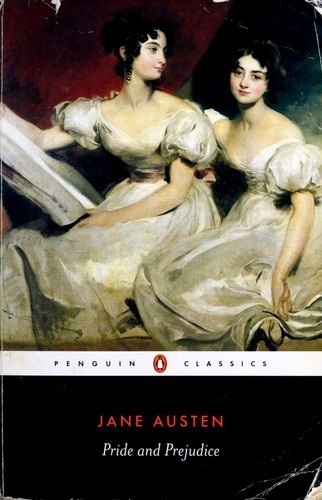
There are opening sentences that announce themselves as immortal from the moment they are written. "It is a truth universally acknowledged, that a single man in possession of a good fortune, must be in want of a wife." With these words, Jane Austen launched what would become the most beloved and enduring novel in the English language — a book that, more than two centuries after its publication, continues to enchant readers, inspire adaptations, and provoke passionate debates about love, class, gender, and the eternal dance between pride and prejudice.
Pride and Prejudice, published in January 1813, is a miracle of literary art. It is simultaneously a comedy of manners and a profound exploration of human character; a love story and a social critique; a period piece and a timeless meditation on the difficulties of truly knowing another person. Its heroine, Elizabeth Bennet, is one of the great characters in world literature — intelligent, witty, principled, flawed, and utterly irresistible. Its hero, Fitzwilliam Darcy, is the prototype for every brooding, misunderstood romantic lead who has followed in his wake. And its author, writing with a precision and economy that have rarely been matched, created a novel so perfectly constructed that it seems almost effortless — though, as any writer will tell you, true effortlessness is the hardest effect to achieve.
Austen herself described Pride and Prejudice as "my own darling child" and worried that it was "rather too light, and bright, and sparkling." This self-deprecating assessment captures something real about the novel's tone — it is lighter and more playful than Austen's other major works, particularly Mansfield Park and Persuasion. But the lightness is deceptive. Beneath the sparkling surface, Austen is conducting a rigorous examination of how social structures shape individual lives, how economic pressures distort personal relationships, and how the twin forces of pride and prejudice prevent people from seeing each other clearly. The novel's comedy is not mere entertainment; it is the vehicle through which Austen delivers her most penetrating insights about human nature.
In this comprehensive review, we will explore Pride and Prejudice from every angle — its historical context, its intricate plot, its unforgettable characters, its major themes, its literary craft, and its extraordinary afterlife in culture and criticism. Whether you are a devoted Austenite who has read the novel dozens of times or a newcomer approaching it for the first time, this review aims to illuminate the depths of a book that rewards every rereading with new pleasures and new discoveries.
Historical Context
Jane Austen wrote Pride and Prejudice during one of the most turbulent periods in European history. The novel was originally drafted in 1796-97 under the title First Impressions, during the wars that followed the French Revolution. It was revised and published in 1813, while the Napoleonic Wars raged across Europe and Britain lived under the constant threat of French invasion. Yet you would scarcely know any of this from reading the novel itself. Austen's famous "two inches of ivory" — her own description of her artistic canvas — deliberately excludes the grand sweep of history in favor of the domestic, the personal, and the particular.
This deliberate narrowness of focus has led some critics, both in Austen's time and subsequently, to dismiss her work as trivial — concerned only with tea parties and marriage proposals while the world burned. This criticism fundamentally misunderstands what Austen was doing. By focusing on the domestic sphere — on the choices, constraints, and negotiations that shaped women's lives in Regency England — Austen was writing about politics in the deepest sense: the politics of power, gender, class, and economic survival that operated within the family and the community. The marriage market that drives the plot of Pride and Prejudice is not a frivolous social ritual; it is the primary mechanism through which women secured their economic future in a society that denied them most other means of support.
The Regency period (roughly 1795-1837) was a time of rigid social stratification in England. The landed gentry — families like the Darcys, who derived their wealth from inherited estates — occupied the highest rung of respectable society below the aristocracy. The professional classes — lawyers, clergymen, military officers — occupied a lower but still respectable position. Below them were the tradesmen and merchants, whose wealth might rival or exceed that of the gentry but whose social standing was permanently diminished by the fact that they worked for their money rather than living off rents and investments. This class system is the framework within which every relationship in Pride and Prejudice operates, and Austen's genius lies in her ability to dramatize its workings without either endorsing or condemning it outright.
For women in this period, marriage was not merely a personal choice but an economic imperative. Women could not own property in their own right (until the Married Women's Property Act of 1882), could not pursue most professions, and were legally and financially dependent on their male relatives. An unmarried woman without independent means faced a future of genteel poverty, dependent on the charity of relatives. Mrs. Bennet's obsessive campaign to marry off her five daughters is not merely comic hysteria; it is a rational response to a genuine crisis. If Mr. Bennet dies — and the Longbourn estate is entailed away from the female line to the odious Mr. Collins — his wife and daughters will have virtually nothing. Understanding this economic reality transforms the reader's understanding of the novel's marriage plot from a romantic fantasy into a clear-eyed examination of survival in a patriarchal society.
Austen herself lived the reality she described. She never married, though she received at least one proposal, and she spent much of her adult life dependent on her brothers for financial support. Her novels earned her a modest income — she received a total of about 631 pounds for the four novels published during her lifetime — but she never achieved financial independence. She died in 1817, at the age of forty-one, probably of Addison's disease, having published six novels that would eventually be recognized as among the greatest in the English language. The gap between Austen's modest circumstances during her lifetime and her towering literary reputation after her death is one of the great ironies of literary history.
Plot Summary
The plot of Pride and Prejudice is set in motion by the arrival of Mr. Bingley, a wealthy and amiable young man, at Netherfield Park, a country estate near the village of Meryton in Hertfordshire. Mrs. Bennet, whose five daughters represent her primary project and concern, immediately identifies Bingley as a potential husband for one of them. At the first public ball, Bingley dances with Jane Bennet, the eldest and most beautiful of the sisters, and a mutual attraction is immediately apparent.
Bingley's friend, Mr. Darcy, also attends the ball, but his reception is very different. Darcy is wealthier and more socially elevated than Bingley — the owner of the great estate of Pemberley in Derbyshire, with an income of ten thousand pounds a year. But where Bingley is open, friendly, and eager to please, Darcy is reserved, proud, and apparently contemptuous of the provincial society in which he finds himself. He famously refuses to dance with Elizabeth Bennet, the second eldest Bennet sister, dismissing her as "tolerable, but not handsome enough to tempt me." Elizabeth overhears this slight and is both amused and offended by it, and the stage is set for the novel's central dynamic: the gradual, painful, and ultimately transformative process by which two proud and prejudiced people learn to see each other — and themselves — clearly.
The novel's middle sections develop multiple interlocking plots that test and reveal the characters of the principals. Jane and Bingley's courtship is disrupted when Darcy, aided by Bingley's snobbish sisters, persuades Bingley that Jane does not truly care for him and that an alliance with the Bennet family would be beneath his dignity. Elizabeth, meanwhile, encounters the charming and plausible Mr. Wickham, a militia officer who tells her a tale of grievous ill-treatment at Darcy's hands. Wickham claims that Darcy denied him a valuable living that had been promised by Darcy's late father, and Elizabeth, already predisposed to dislike Darcy, accepts this story uncritically.
The Bennet family's embarrassments multiply. Mr. Collins, the pompous clergyman who stands to inherit Longbourn, proposes to Elizabeth in a scene of excruciating comic brilliance. When she refuses him, he promptly proposes to her friend Charlotte Lucas, who accepts — a decision that distresses Elizabeth but makes perfect rational sense given Charlotte's limited options. Mrs. Bennet's vulgarity, Mary's pedantry, and Kitty and Lydia's reckless flirtatiousness with the militia officers provide a constant backdrop of social mortification that confirms Darcy's worst assessments of the family.
The novel's turning point comes at Hunsford, where Elizabeth is visiting Charlotte and Mr. Collins at their parsonage near Rosings Park, the estate of Darcy's aunt, Lady Catherine de Bourgh. To Elizabeth's astonishment, Darcy proposes to her — but in terms so insulting, dwelling so extensively on the social inferiority of her family and the degradation he would suffer by allying himself with them, that Elizabeth refuses him with equal vehemence. In rejecting him, she accuses him of ruining Jane's happiness by separating her from Bingley and of treating Wickham unjustly.
Darcy responds with a letter — one of the most important documents in English literature — that systematically addresses Elizabeth's accusations. He admits to separating Jane and Bingley but explains his reasons: he believed Jane's attachment was not genuine, and he considered the Bennet family's behavior a legitimate cause for concern. More devastatingly, he reveals the truth about Wickham: far from being Darcy's victim, Wickham is a profligate and a fortune hunter who attempted to elope with Darcy's fifteen-year-old sister, Georgiana, in order to gain her thirty-thousand-pound dowry. Elizabeth reads the letter and is forced to confront an uncomfortable truth: she has been wrong. Her prejudice against Darcy led her to accept Wickham's lies without question and to judge Darcy unfairly. "Till this moment," she reflects, "I never knew myself."
This moment of self-recognition is the novel's emotional and thematic center. From this point forward, Elizabeth's view of Darcy begins to shift, and a parallel transformation occurs in Darcy himself. When Elizabeth visits Pemberley during a tour of Derbyshire with her aunt and uncle, the Gardiners, she encounters a different Darcy — gracious, hospitable, and genuinely welcoming to her middle-class relatives. The housekeeper's praise of Darcy as a generous and fair-minded master confirms what his letter suggested: that the proud, disagreeable man Elizabeth met at the Meryton ball is not the whole of who he is.
The crisis that precipitates the novel's resolution involves Lydia, the youngest and most reckless of the Bennet sisters, who elopes with Wickham — a scandal that threatens to ruin the entire family. In Regency England, an unmarried woman living openly with a man was socially destroyed, and her disgrace would taint all of her sisters by association. It is Darcy who secretly intervenes, tracking down the couple, paying Wickham's debts, and bribing him to marry Lydia. He does this not for public credit but out of genuine love for Elizabeth and a sense of responsibility for having failed to expose Wickham's character earlier.
The novel's final movement brings all the threads together with satisfying symmetry. Bingley returns to Netherfield and proposes to Jane. Darcy proposes to Elizabeth a second time, humbly and sincerely, and she accepts. Lady Catherine de Bourgh's outraged attempt to prevent the match by confronting Elizabeth actually alerts Darcy to the change in Elizabeth's feelings and encourages him to try again. The double wedding unites the novel's two central couples, and the final chapters sketch their happy futures with gentle irony and genuine warmth.
Character Analysis
Elizabeth Bennet: The Proto-Feminist Heroine
Elizabeth Bennet is, by common critical consensus, one of the greatest characters in English literature. She is intelligent without being pedantic, witty without being cruel, principled without being rigid, and independent without being reckless. She speaks her mind in a society that discourages female outspokenness, judges people by their character rather than their social position, and refuses to marry for anything less than genuine love and mutual respect — a stance that, in the economic context of Regency England, represents a significant risk.
What makes Elizabeth revolutionary is not just her intelligence or her wit but her insistence on being treated as an equal. When Darcy first proposes, she refuses him not because she does not love him (she doesn't, at that point) but because his proposal is an insult — a condescending offer of marriage that emphasizes the honor he is doing her by stooping to her level. Elizabeth's refusal is an assertion of dignity that transcends her historical moment. She is saying, in effect, that she would rather remain unmarried than accept a partner who does not respect her as an equal. In a society where marriage was women's primary means of economic survival, this is an act of extraordinary courage — or perhaps of extraordinary faith that a better option will present itself.
Elizabeth is not perfect, and Austen is too honest a writer to pretend otherwise. Elizabeth's prejudice against Darcy leads her to accept Wickham's lies without scrutiny and to judge Darcy more harshly than the evidence warrants. Her famous moment of self-recognition — "Till this moment, I never knew myself" — is not merely a realization about Darcy but a confrontation with her own capacity for self-deception. Elizabeth's willingness to acknowledge her errors and change her mind is ultimately more admirable than her original judgment, because it requires a kind of intellectual humility that is far rarer than intelligence.
"I think one of the reasons why Jane Austen is so beloved is because she created in Elizabeth Bennet a character who is allowed to be wrong — magnificently, entertainingly wrong — and who grows through the painful process of admitting it. That is a radical act for a female character in any era, and it remains deeply inspiring." — Karen Joy Fowler
Mr. Darcy: The Reformation of Pride
Fitzwilliam Darcy is one of the most complex and fascinating characters in English literature, and his journey from proud, disagreeable social superior to humble, devoted lover is the novel's most compelling arc. When we first meet Darcy, he is everything Elizabeth accuses him of being: arrogant, dismissive, and contemptuous of anyone he considers beneath him. His refusal to dance with Elizabeth, his patronizing first proposal, his interference in Jane and Bingley's relationship — all of these actions reflect a genuine pride that Austen neither excuses nor exaggerates.
But Austen also makes clear that Darcy's pride is not the whole of his character. His letter to Elizabeth reveals a man of honor who has been deeply wounded by Wickham's betrayal and who is protective of his younger sister to the point of secrecy. His behavior at Pemberley — his courtesy to the Gardiners, his consideration for his tenants, his genuine kindness — reveals a private character very different from his public persona. Darcy's pride, the novel suggests, is partly a defense mechanism — a way of protecting himself from a world that he finds difficult to navigate socially, despite his formidable intelligence and his exalted social position.
Elizabeth's rejection at Hunsford is the catalyst for Darcy's transformation. Her accusation that he has not behaved "in a gentleman-like manner" strikes him to the core, because it challenges not just his behavior but his identity — his fundamental sense of himself as a good and honorable person. Darcy's response is not to dismiss Elizabeth's criticism but to take it seriously and to change. When they meet again at Pemberley, he is visibly altered — more open, more considerate, more willing to meet people on their own terms rather than judging them by the standards of his class. This transformation is not instant or easy; it is the product of painful self-examination and genuine moral effort. It is this effort that makes Darcy worthy of Elizabeth — not his wealth or his estate but his willingness to become a better person for the sake of someone whose good opinion he values.
Jane Bennet and Mr. Bingley: Goodness and Its Limits
Jane and Bingley serve as a counterpoint to Elizabeth and Darcy — a simpler, sweeter love story that illustrates both the virtues and the limitations of uncritical goodness. Jane's defining characteristic is her determination to think well of everyone. She cannot believe that Wickham is dishonest or that Darcy is unkind; she always looks for the charitable interpretation of people's behavior. Bingley, similarly, is amiable, generous, and eager to please — a thoroughly likeable young man who makes friends easily and sees the best in everyone.
The difficulty with this kind of goodness is that it can be easily exploited. Jane's reserve — her reluctance to display her feelings openly — allows Darcy to convince Bingley that she does not truly care for him. Bingley's pliability — his tendency to defer to the judgment of stronger personalities — allows Darcy and his sisters to separate him from the woman he loves. Jane and Bingley are not bad people; they are simply too good for a world that rewards assertiveness and punishes diffidence. Their story suggests that goodness alone is not sufficient; it must be accompanied by the strength of character that Elizabeth and Darcy, for all their faults, possess in abundance.
Mr. and Mrs. Bennet: A Marriage of Opposites
The Bennet parents represent one of the novel's darkest and most perceptive portraits — a marriage that has failed not spectacularly but quietly, through the slow erosion of respect and the mutual recognition of incompatibility. Mr. Bennet, intelligent and sardonic, married Mrs. Bennet for her beauty, expecting that youth and good looks would be sufficient foundation for a lifetime of companionship. Mrs. Bennet, limited in understanding and desperate in temperament, married for security and social position. The result is a relationship in which the husband retreats into his study and his books, amusing himself with ironic observations about his wife's absurdities, while the wife channels her anxiety and frustration into an obsessive campaign to marry off her daughters.
Austen treats the Bennets with a combination of comedy and genuine pathos. Mrs. Bennet's nerves, her scheming, and her social blunders are a reliable source of humor, but they are also symptoms of a real and legitimate anxiety: without advantageous marriages for her daughters, the family faces genuine financial hardship. Mr. Bennet's detachment is entertaining — his dry wit is one of the novel's pleasures — but it is also a form of irresponsibility. He has failed to save money, failed to discipline his younger daughters, and failed to protect his family from the consequences of Lydia's recklessness. The Bennet marriage serves as a cautionary tale that reinforces the novel's central argument about the importance of marrying for the right reasons — not beauty alone, not fortune alone, but genuine compatibility of mind and character.
Supporting Characters: A Gallery of Types
One of Austen's greatest gifts is her ability to create vivid, memorable characters in a few deft strokes. Mr. Collins, the obsequious clergyman, is a masterpiece of comic characterization — pompous, self-important, and utterly lacking in self-awareness. His proposal to Elizabeth, in which he lists the practical reasons for marriage while demonstrating a complete inability to understand the woman he is proposing to, is one of the funniest scenes in English literature. Lady Catherine de Bourgh, Darcy's imperious aunt, embodies the aristocratic arrogance that the novel critiques — the assumption that wealth and birth confer not merely social superiority but moral authority. Wickham, with his charm and his lies, represents the danger of judging by appearances — a living embodiment of the "prejudice" half of the novel's title. And Charlotte Lucas, Elizabeth's practical friend who marries Collins for security rather than love, provides a sobering counterpoint to Elizabeth's romantic idealism. Charlotte's choice is not presented as wrong but as pragmatic — a realistic assessment of her options that Elizabeth, with her superior attractions and her refusal to compromise, cannot fully understand.
Major Themes
Pride, Prejudice, and Self-Knowledge
The novel's title identifies its two central themes, and Austen explores them with a subtlety that prevents easy moralizing. Pride and prejudice are not simply faults to be overcome; they are deeply human tendencies that shape how we perceive and interact with others. Darcy's pride in his social position blinds him to Elizabeth's worth and leads him to behave with a condescension that defeats his own purposes. Elizabeth's prejudice against Darcy leads her to accept Wickham's slanders uncritically and to reject the possibility that Darcy might be a better person than he appears. Both characters are intelligent and fundamentally decent, and both are wrong — not because they lack good judgment but because their judgment is distorted by emotional and social biases that they cannot see.
The novel's deepest insight is that pride and prejudice are not merely individual failings but systemic forces embedded in the social structure. Darcy's pride is not merely personal arrogance; it is the product of a class system that teaches him from birth that he is superior to most of the people he encounters. Elizabeth's prejudice is not merely personal pique; it is a defensive response to a social system in which she is constantly reminded of her inferior position. The novel does not resolve these structural inequalities — Elizabeth marries into the aristocracy, but the system that produced Darcy's pride and Elizabeth's prejudice remains unchanged. Austen is too clear-eyed to offer easy solutions, but she does suggest that individual self-knowledge — the willingness to examine one's own assumptions and admit when one is wrong — is the first step toward genuine understanding.
Marriage, Money, and Female Agency
Marriage in Pride and Prejudice is not merely a romantic institution; it is an economic one. The novel presents a spectrum of marriages that illustrate the various motives and outcomes that the institution encompasses. At one extreme is the Bennet marriage — a union based on superficial attraction that has curdled into mutual contempt. At the other extreme is the hoped-for ideal represented by Elizabeth and Darcy — a marriage based on genuine love, mutual respect, and intellectual companionship. In between are Charlotte's pragmatic marriage to Mr. Collins (security without love), Lydia's reckless elopement with Wickham (passion without judgment), and Jane and Bingley's sweet but somewhat passive union (affection without the depth of understanding that Elizabeth and Darcy achieve).
For the women in the novel, marriage is the primary — and often the only — means of securing economic stability and social respectability. This economic reality gives the marriage plot a gravity and urgency that modern readers sometimes miss. When Elizabeth refuses Mr. Collins, she is not merely declining an unappealing suitor; she is risking her family's financial future, since Collins's marriage to a Bennet daughter would at least keep Longbourn in the family after Mr. Bennet's death. When she refuses Darcy the first time, she is turning down one of the most advantageous matches in England. These refusals are acts of extraordinary agency in a world that offers women very few choices, and they establish Elizabeth as a character who will accept nothing less than a relationship based on equality and mutual respect.
"What is most remarkable about Miss Austen is her ability to combine, in one seamless narrative, the comedy of social manners with the tragedy of social constraint. She shows us women making the best choices available to them within a system designed to limit those choices, and she does so with a wit and intelligence that make the reading itself an act of liberation." — Virginia Woolf
Class, Status, and Social Mobility
The class system is the invisible architecture of Pride and Prejudice, shaping every interaction and every judgment. Darcy's initial disdain for Elizabeth, Bingley's sisters' contempt for the Bennet family, Lady Catherine's outrage at the prospect of Elizabeth marrying her nephew — all of these reactions are rooted in class consciousness, in the assumption that social position determines personal worth. Austen does not mount a frontal assault on the class system — she was, after all, a product of it — but she systematically exposes its irrationality by demonstrating that personal merit and social rank are unrelated.
Elizabeth's uncle and aunt Gardiner, who live in Cheapside (a commercial district of London that Bingley's sisters find horrifying), are among the most intelligent, cultivated, and genuinely well-bred characters in the novel. Mr. Collins, who enjoys Lady Catherine's patronage and occupies a respectable social position, is a buffoon. Wickham, whose manners are impeccable and whose charm is irresistible, is a scoundrel. Darcy himself, the embodiment of aristocratic privilege, must learn to judge people by their character rather than their address. The novel's marriage plot — which unites Elizabeth Bennet, the daughter of a minor gentleman with embarrassing relations, with Fitzwilliam Darcy, the master of Pemberley — is itself a commentary on class and social mobility, suggesting that genuine worth transcends the artificial boundaries of rank and station.
"That young lady had a talent for describing the involvements and feelings and characters of ordinary life which is to me the most wonderful I ever met with. The big bow-wow strain I can do myself like any now going; but the exquisite touch, which renders ordinary commonplace things and characters interesting, from the truth of the description and the sentiment, is denied to me." — Sir Walter Scott
Appearance Versus Reality
One of the novel's most persistent themes is the gap between appearance and reality — between how people present themselves and who they actually are. Wickham appears charming, honorable, and sympathetic; he is actually dishonest, selfish, and predatory. Darcy appears proud, cold, and disagreeable; he is actually generous, loyal, and deeply feeling. Jane appears calm and indifferent; she is actually deeply in love with Bingley. Charlotte appears to accept her marriage to Collins with equanimity; she is actually making a calculated sacrifice of happiness for security.
Austen uses this theme to develop her argument about the dangers of first impressions (the novel's original title). Elizabeth's initial judgment of both Wickham and Darcy is wrong, and her errors stem from the same source: she trusts appearances rather than evidence. Wickham tells a convincing story, so she believes him. Darcy behaves unpleasantly, so she assumes the worst about him. The novel's moral is not that first impressions are always wrong but that they should be tested against evidence and revised when the evidence demands it. The willingness to revise one's judgments — to admit error and change one's mind — is, for Austen, the hallmark of a mature and intelligent person.
Wit and Irony as Moral Instruments
Austen's wit is not merely decorative; it is a moral instrument — a way of exposing folly, puncturing pretension, and revealing the gap between what people say and what they mean. The novel's irony operates on multiple levels simultaneously. The famous opening sentence, for example, appears to state a universal truth but actually describes a universal delusion: it is not the single man who wants a wife but the surrounding community that wants him to have one. This ironic inversion sets the tone for the entire novel, in which conventional wisdom is repeatedly examined and found wanting.
Elizabeth's wit is her most distinctive characteristic and her primary weapon against a social system that seeks to diminish her. When Lady Catherine demands to know whether she is engaged to Darcy, Elizabeth's refusal to answer is not merely impertinent; it is an assertion of personal autonomy against aristocratic authority. When she tells Darcy that her feelings for him have undergone "so material a change" since his first proposal, the understatement is both comic and deeply revealing. Austen uses wit not to evade emotion but to express it more precisely — to capture the complexity of feeling that more earnest prose might flatten.
Writing Style and Literary Craft
Jane Austen's prose style is one of the great achievements of English literature — a style so perfectly suited to its purposes that it has become virtually synonymous with the art of the novel itself. Her sentences are models of clarity, precision, and rhythmic grace. She favors balanced constructions, periodic sentences, and a narrative voice that moves seamlessly between the perspectives of her characters and the ironic commentary of the author. The result is a prose that is simultaneously intimate and detached, sympathetic and judgmental, warm and crystalline.
Austen's use of free indirect discourse — a narrative technique in which the narrator's voice blends with a character's thoughts without formal indicators like "she thought" or "he felt" — was innovative for her time and remains influential today. This technique allows Austen to inhabit her characters' perspectives while maintaining the critical distance necessary for irony. When we read that Mr. Collins was "not a sensible man, and the deficiency of nature had been but little assisted by education or society," we hear the narrator's voice, but we also hear the assessment that anyone of reasonable intelligence would make. The effect is to make the reader feel like an insider — a perceptive observer who shares the narrator's clear-eyed view of human folly.
The novel's dialogue is another of its triumphs. Austen had an extraordinary ear for speech, and each character's dialogue is distinctively their own. Mr. Collins's speeches are elaborate, self-important, and comically tone-deaf. Mrs. Bennet's utterances are breathless, repetitive, and driven by anxiety. Elizabeth's conversation is quick, playful, and pointed. Darcy's early speech is formal and condescending; his later speech is warmer but still careful. Through dialogue alone, Austen reveals character with an economy and precision that many authors cannot achieve with pages of description.
The novel's structure is a model of elegant construction. The plot advances through a series of carefully calibrated scenes — balls, dinners, visits, walks, conversations — each of which develops character, advances the story, and deepens the novel's themes. The pacing is impeccable: the first half builds tension through misunderstanding and misdirection; the pivotal letter scene at the midpoint reverses everything the reader thought they knew; and the second half traces the consequences of that reversal with gathering momentum toward the satisfying but never predictable conclusion. Every scene earns its place; nothing is wasted; and the novel's two hundred pages contain more incident, insight, and emotional depth than many novels three times its length.
Critical Reception
The critical history of Pride and Prejudice is a study in evolving literary taste. Upon its publication in 1813, the novel received positive but relatively modest attention. Reviews were generally favorable, praising the book's wit, its realistic characters, and its skillful plotting. But Austen was not recognized during her lifetime as the literary titan she would later become. Her novels were published anonymously — "By the Author of Sense and Sensibility" — and her identity was known only within a small circle of family and friends.
The Victorian period saw the beginning of Austen's elevation to canonical status. George Henry Lewes and other critics championed her work for its realism, its psychological acuity, and its technical mastery. But it was in the twentieth century that Austen's reputation reached its current heights. Academic critics like F.R. Leavis placed her in the "great tradition" of English novelists, alongside George Eliot and Henry James. Feminist critics reread her work as a sophisticated analysis of gender relations and female agency. Postcolonial critics examined the silences and absences in her novels — the wealth derived from colonial trade, the servants and laborers who sustain the genteel world she depicts.
In popular culture, Pride and Prejudice has achieved a status matched by very few novels. The 1995 BBC television adaptation, starring Colin Firth as Darcy and Jennifer Ehle as Elizabeth, became a cultural phenomenon that reignited interest in Austen and launched a cottage industry of Austen-inspired media. The 2005 film adaptation, directed by Joe Wright and starring Keira Knightley, brought the novel to a new generation of viewers. And the proliferation of Austen-inspired novels, from Helen Fielding's Bridget Jones's Diary (a loose modern retelling of Pride and Prejudice) to Seth Grahame-Smith's Pride and Prejudice and Zombies, testifies to the seemingly inexhaustible cultural appetite for Austen's characters and stories.
Famous Quotes About This Book
"Jane Austen is the painter of domestic life, and the master of the human heart in all its ordinary manifestations. In Pride and Prejudice she achieved something close to perfection — a novel that is at once a brilliant comedy, a profound study of character, and a searching examination of the society that shaped her and her characters alike." — Virginia Woolf
"What I love about Pride and Prejudice is that it is fundamentally a novel about the difficulty of knowing another person — and the even greater difficulty of knowing yourself. Elizabeth Bennet thinks she understands Darcy, and she is wrong. She thinks she understands herself, and she is wrong about that too. The novel's great achievement is to show that this kind of wrongness is not a failure of intelligence but a universal human condition." — Karen Joy Fowler
"That young lady had a talent for describing the involvements and feelings and characters of ordinary life which is to me the most wonderful I ever met with." — Sir Walter Scott
Legacy and Cultural Impact
The cultural impact of Pride and Prejudice is vast and still expanding. The novel has been adapted into more films, television series, stage plays, and musicals than almost any other work of literature. It has inspired countless novels, from straightforward retellings to radical reimaginings. It has generated an entire subculture — the Janeites — dedicated to celebrating, studying, and recreating the world that Austen described. It has influenced fashion, tourism (Chatsworth House, believed to be one inspiration for Pemberley, receives additional visitors specifically because of the Austen connection), and even the language of romantic relationships.
The novel's most significant legacy, however, may be its influence on the romantic comedy as a genre. The basic template of Pride and Prejudice — two people who initially dislike each other gradually fall in love as they come to understand each other's true character — has become the dominant narrative structure of romantic fiction and film. From When Harry Met Sally to 10 Things I Hate About You, from Bridget Jones's Diary to countless Hallmark movies, the Darcy-Elizabeth dynamic has been endlessly recycled, adapted, and reimagined. The "enemies to lovers" trope, one of the most popular in contemporary romance fiction, owes its existence to Austen's novel.
Elizabeth Bennet herself has become a feminist icon — a symbol of female intelligence, independence, and refusal to compromise. In surveys of favorite literary characters, she consistently ranks among the most popular, admired, and identified-with figures in all of fiction. Her appeal transcends cultural and historical boundaries: readers in Japan, India, Brazil, and Nigeria have embraced Elizabeth as a kindred spirit, finding in her struggles and triumphs a reflection of their own experiences with pride, prejudice, and the search for a love that respects their full humanity.
The novel has also had a significant impact on literary criticism and theory. Austen's work has been analyzed through virtually every critical lens — formalist, structuralist, feminist, Marxist, postcolonial, queer, and more — and each approach has revealed new dimensions of meaning in a text that seems inexhaustible. The sheer volume of scholarly work devoted to Austen — thousands of books, tens of thousands of articles, entire academic journals — testifies to the richness and complexity of her achievement. She is the most studied novelist in the English language after Shakespeare, and Pride and Prejudice is her most studied work.
Why You Should Read It Today
If you have never read Pride and Prejudice, you are missing one of the great pleasures of the English language. The novel is funny, wise, beautifully written, and deeply satisfying in its resolution. Its characters feel as vivid and recognizable as people you might meet today, and its insights into human nature — the way pride distorts our self-image, the way prejudice distorts our perception of others, the way love can transform both — are as relevant now as they were two centuries ago.
If you think you already know the story from adaptations, think again. No film or television version, however good, can capture the full depth and subtlety of Austen's prose. The novel's pleasures are specifically literary — the rhythm of her sentences, the precision of her irony, the seamless integration of comedy and seriousness, the way a single phrase can simultaneously describe a character's thoughts, reveal their self-deception, and comment on the social structures that have shaped them. These are pleasures that can only be experienced on the page.
For readers who have read the novel before, a rereading almost always proves rewarding. Like all great novels, Pride and Prejudice reveals different things at different stages of life. Younger readers tend to focus on the romance; older readers notice the social criticism and the darker undercurrents. Readers in their twenties may identify with Elizabeth's defiance; readers in their forties may notice the pathos of Charlotte Lucas's pragmatism. Every rereading deepens one's appreciation for Austen's art and one's understanding of the world she describes — a world that is at once very different from our own and, in its essential dynamics of pride, prejudice, love, and money, remarkably similar.
In a literary landscape increasingly dominated by irony without warmth and seriousness without humor, Pride and Prejudice stands as a reminder that the greatest art can be both entertaining and profound, both comic and compassionate, both a pure pleasure to read and a genuine challenge to think about. That is Austen's gift, and it is one that every generation of readers has the privilege of receiving anew.
Conclusion
Jane Austen died at forty-one, leaving behind six completed novels and a legacy that has grown with every passing decade. Of those six novels, Pride and Prejudice is the most widely loved, the most frequently adapted, and — for many readers — the most perfect. It is not her most ambitious work (that distinction belongs to Mansfield Park or Persuasion), nor her most formally experimental (that might be Emma, with its brilliantly unreliable narrator). But it is the novel in which all of Austen's gifts — her wit, her insight, her compassion, her mastery of form — come together most harmoniously, creating a work that feels as fresh and alive today as it did when it first appeared in 1813.
The novel endures because it tells a truth that does not age: that genuine understanding between two people is difficult, rare, and precious; that the barriers to such understanding — pride, prejudice, social pressure, self-deception — are formidable; and that overcoming those barriers requires not just intelligence but humility, not just courage but the willingness to be wrong. Elizabeth and Darcy's love story resonates not because it is a fairy tale but because it is hard-won — the product of painful self-examination, mutual challenge, and genuine moral growth. It offers no guarantees and no shortcuts. It merely insists that the effort to truly know another person — and to be truly known in return — is the most worthwhile endeavor in human life.
That is a message worth hearing in any century, and Jane Austen delivers it with a brilliance that makes Pride and Prejudice not merely a great novel but a permanent companion — a book to which readers return again and again throughout their lives, finding new pleasures, new insights, and new reasons to be grateful for the existence of a writer whose two inches of ivory contained the whole of human experience.